The Amazon Rainforest dominates the South American continent. The Amazon River Basin is somewhere between 35% and 45% of the land area of the continent, depending on the source. At the northern end of the river system, one of the oldest geological formations on the planet is found – the Guiana Shield. Due to the nature of the rock, building in this region is practically impossible, resulting in one of most untouched regions of the Amazon.
Historically the region was divided between five different colonial powers. Today: Spanish Guiana is part of Venezuela; British Guiana is the independent nation of Guyana; Dutch Guiana is the independent nation of Suriname; French Guiana is still called French Guiana and is considered an integral part of France; and Portuguese Guiana is part of Brazil.
Some interesting trivia on the region:
1. French Guiana constitutes 13% of the land area of the nation of France. French Guiana’s status as part of France means that France’s longest land border is with Brazil.
2. Guyana is the least visited country on the South American continent, with Suriname in second.
3. The former Spanish Guiana is home to some of the most impressive waterfalls on the planet.
4. With 95% of Suriname covered in forest, it is the most forested nation on earth.
5. Suriname and Guyana both claim to be carbon negative, due to the large forests and comparatively little industry.
There are a two locations of particular interest for me in the Guianas – Angel Falls, the highest single-drop waterfall on earth, which I have wanted to visit since I was very young. The other is found at the tri-point of Venezuela, Brazil and Guyana – Mount Roraima. Unfortunately both are accessed from Venezuela, and at the time of my travel to the region, Venezuela airspace had just been closed due to concerns about a potential war with the US. I don’t like mentioning politics here, but a few weeks after I was in the region, then Venezuelan president Nicolás Maduro would be extracted by the US military. Venezuela is near the top of my to-visit list, and I hope to return some day to see these natural wonders of the world, in addition to other incredible mountains further north.
As to Suriname in particular – in high school, I had done a group project on this country. Why did we pick Suriname? I guess because other groups were picking countries we all know well, and sometimes it is fun to pick a country that many people have never heard of. Seeing sloths had also been on my bucket list since I was very young, and apparently it’s basically a sure-thing in Suriname, as they are common even in the capital. I was also aware that it was a great country to see jaguars in the wild, although I would ultimately not be able to find a tour to the jungle that would fit my brief stay in the country – the downside of making travel plans at the last minute.
Upon landing in Suriname, I found myself in a slow moving queue at passport control. When I got to the front of the queue, the official looked at my passport and said “come with me”. I was taken to a back room, where I was questioned – initially fairly intensely. They asked for my proof of accommodation and onward flight – which I had already provided to get my visa a few weeks earlier, but fortunately I had these printed and ready. They asked me to prove I was South African by speaking Afrikaans and answering some questions about South Africa. Once I had done all of this, the official smiled a bit, apologised and informed me that they are required to do this to anyone from Africa.
I didn’t have a bag to collect, so I made my way to the arrival hall. The ATM at the airport was out-of-order, so I continued along to find a minibus who said they’d take me to Paramaribo for $20. I had googled the price in advance, the capital is far from the airport, and this was about standard for shared transport. I had read a lot of accounts online about drivers trying to scam tourists, so I moved a $20 note to my wallet, and put the rest of my USD in my bag.
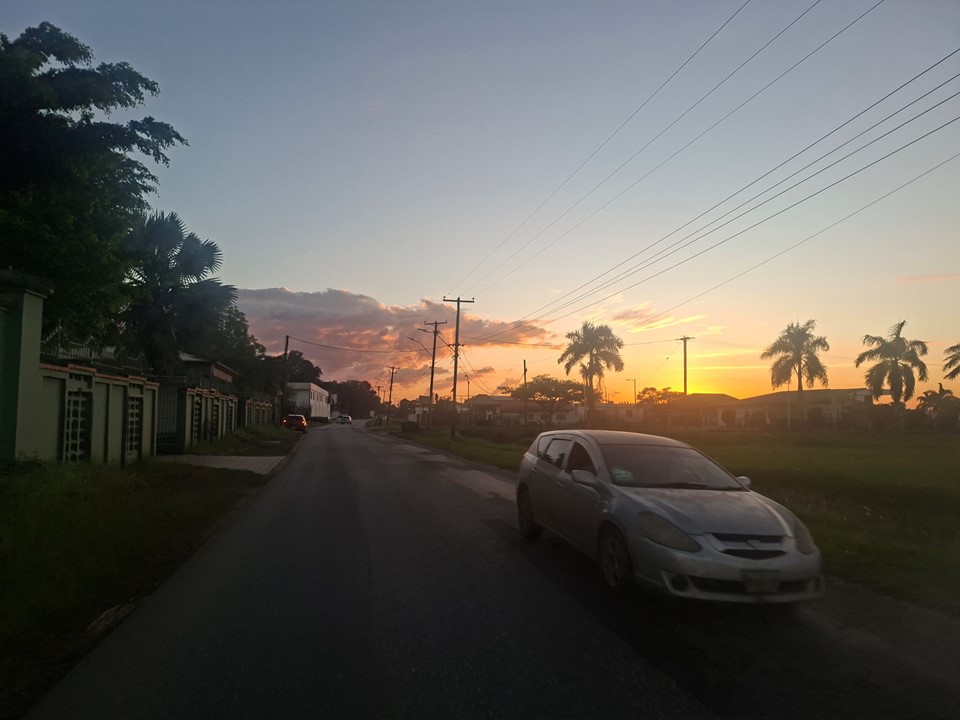
The drive was slow, with various people being dropped along the way. I was getting worried as the drive kept dropping others off ahead of me. He then began to start shouting at me for wasting his time, and demanding more money from me. I told him that I didn’t have more money. I was worried he would drop me in a dodgy area of a foreign country as punishment, but ultimately he did drop me at my accommodation. He then demanded more cash, and I showed him that all I had was $20 and a 50 Argentinian Peso note, which I offered him. He swore at me, threw the pesos back at me and drove off. Luckily I only had my backpack, I suspect I would have been down some luggage otherwise. Off to a good start…
Getting into my accommodation also proved tricky. There was no one there, and it was dark, so I had to find key boxes using my phone as a torch. The instructions online were very unclear, but I eventually figured it out. The accommodation was very nice, and you can drink tap water in Suriname, which always helps.
Paramaribo doesn’t have the best safety record, and by this time, it had been dark for a while. I knew walking around at night would be dangerous, and the last food I had eaten was my snacks back in Belem Airport – since I knew that Suriname does not allow people to bring food into the country. No stress, I’ll be fine.
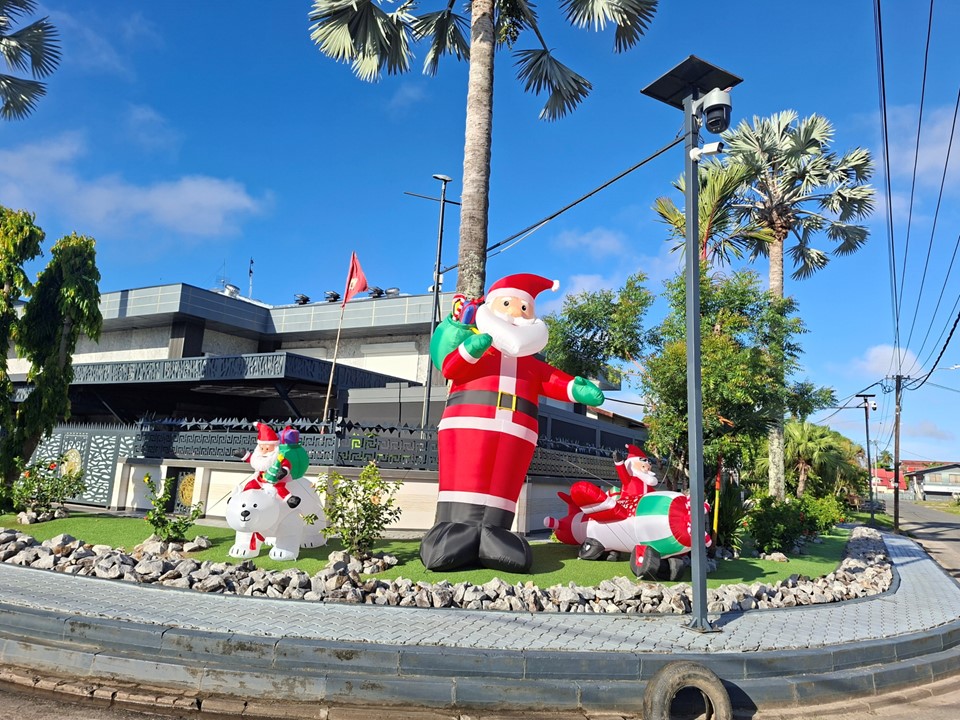
In the morning I decided to take a walk and look for some food. It was a Sunday, and the city was very quiet. Most shops were closed. I found the first open one, picked out some items and went to pay. “Sorry, we don’t accept foreign bank cards or foreign currency”.
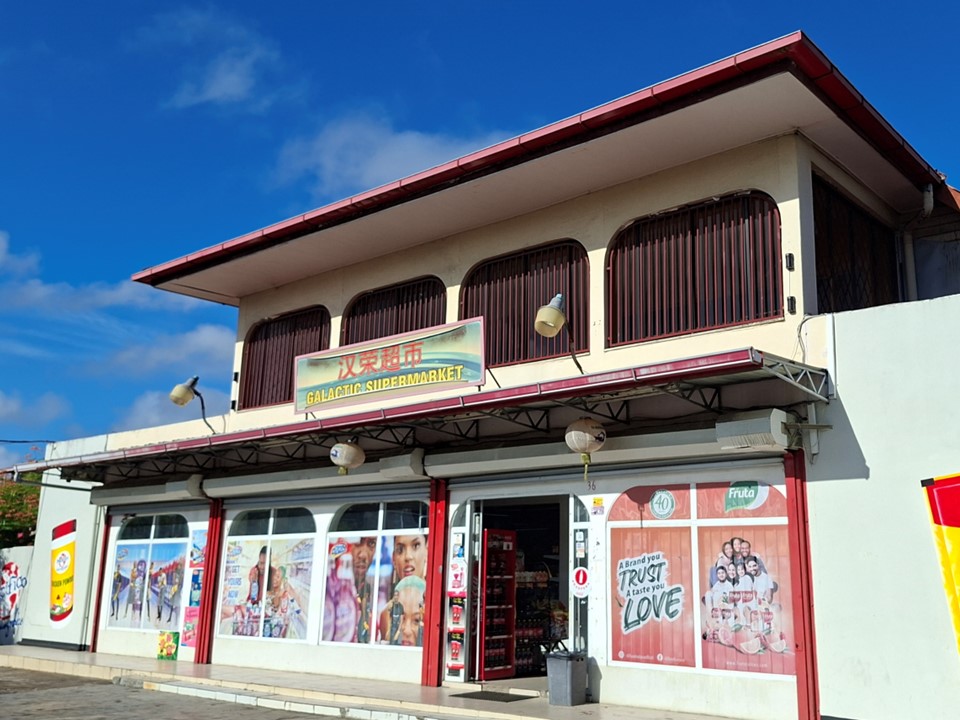
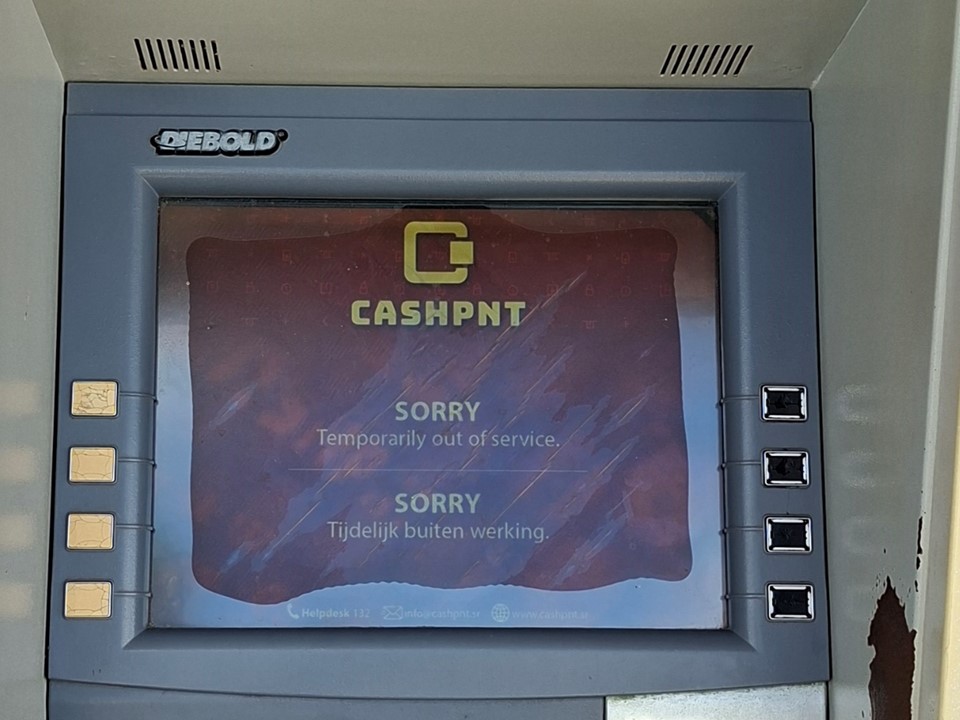
I went to a second shop, same story, Third, same story. I looked on Google Maps for ATMs, the first two I tried were out of order, the third didn’t accept foreign cards. I had USD cash, but money changers weren’t open on Sundays. I messaged the owner of the place I was staying, and she sent a friend to pick me up and take me to an ATM that did allow foreign cards. I was incredibly grateful.
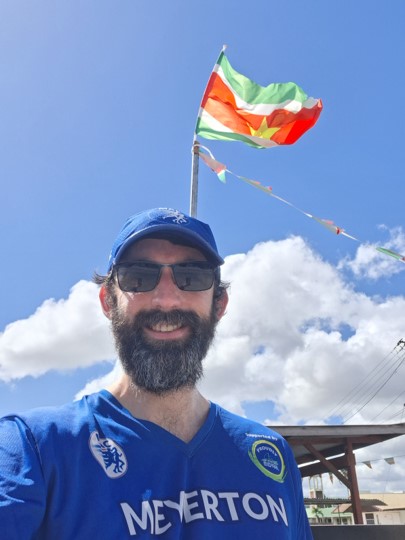
I walked around the town a bit, it really wasn’t what I was expecting. But having finally eaten something, I was feeling a lot better.
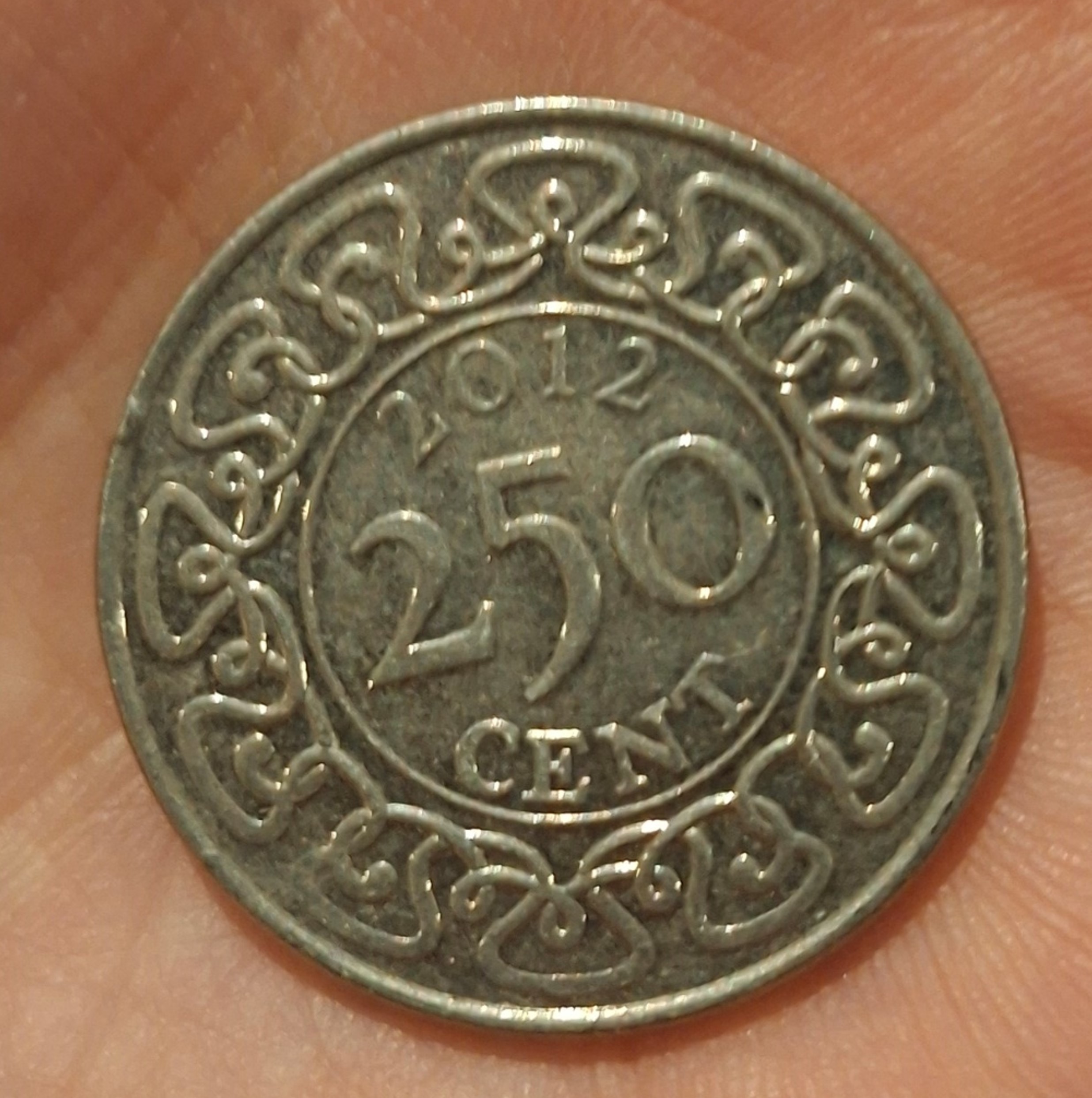
One interesting point about Suriname – they have a $2.50 coin, but because their laws only allow coins for cents, it is called a 250 cent coin.
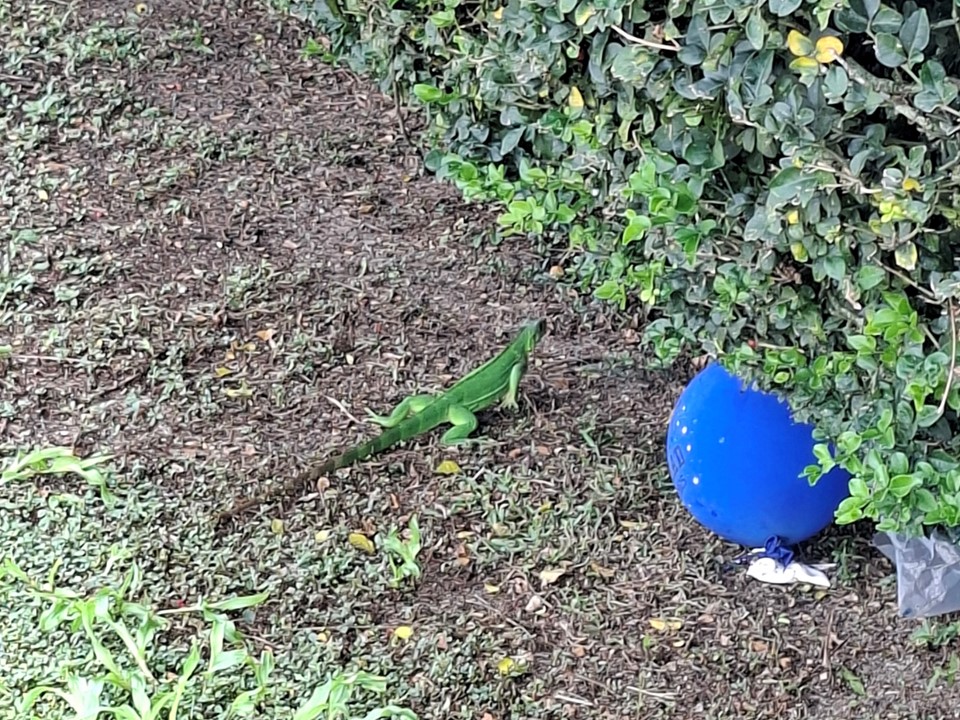
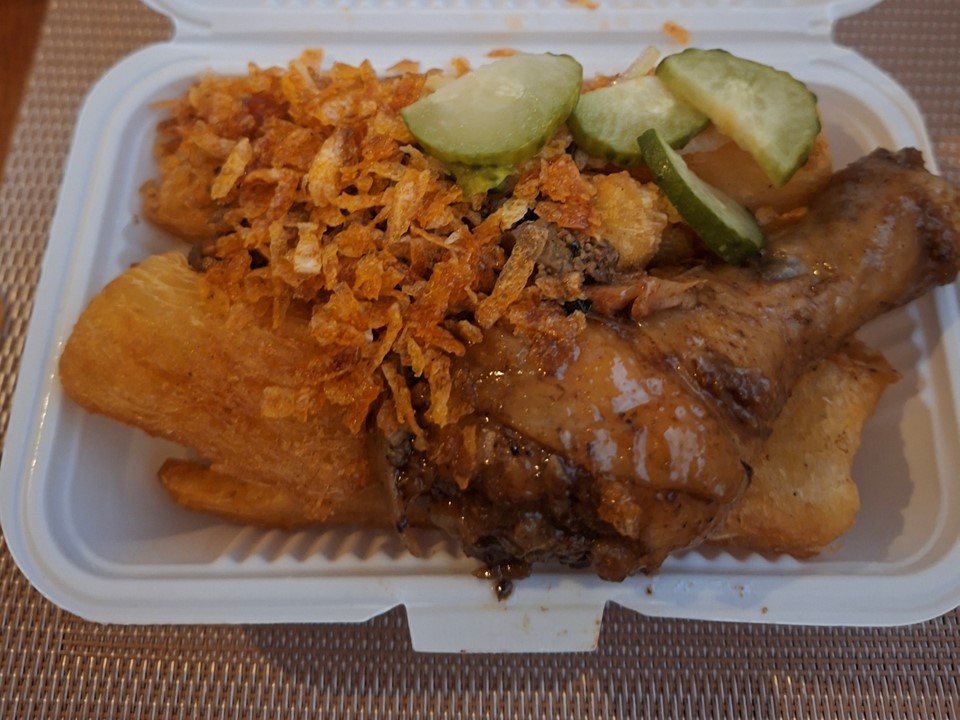
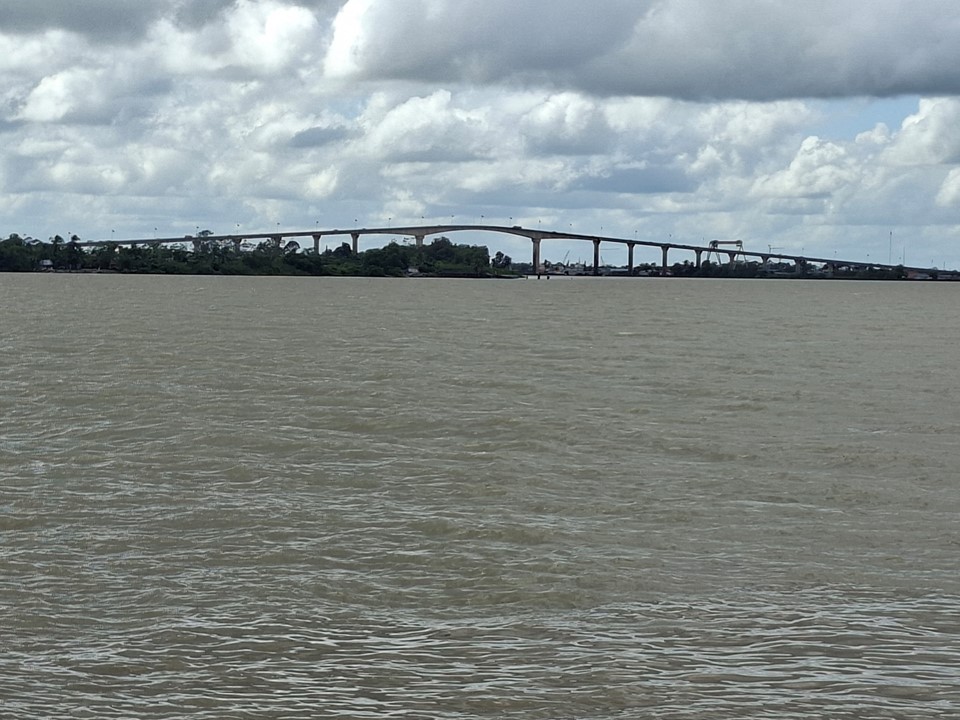
I decided to try some local food, swordfish was an option – which I tried a sample of, but strongly disliked, so I went with chicken in the end. I was a lot more upbeat with some food in me. On the drive the previous day, I had seen an incredible bridge over the Suriname River, and decided it would be fun to go for a long afternoon run to cross it.
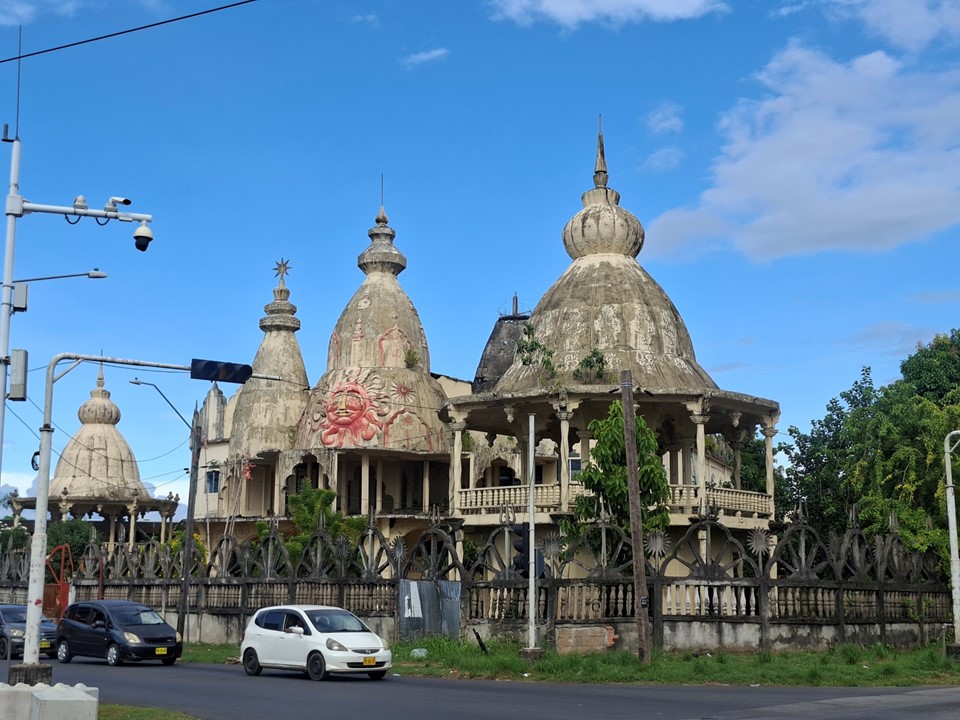
The history of Suriname is very complex, with various different places of worship throughout the city. I learned a lot running through the city – which was the quietest I would see it in my three days in the country, being a Sunday.
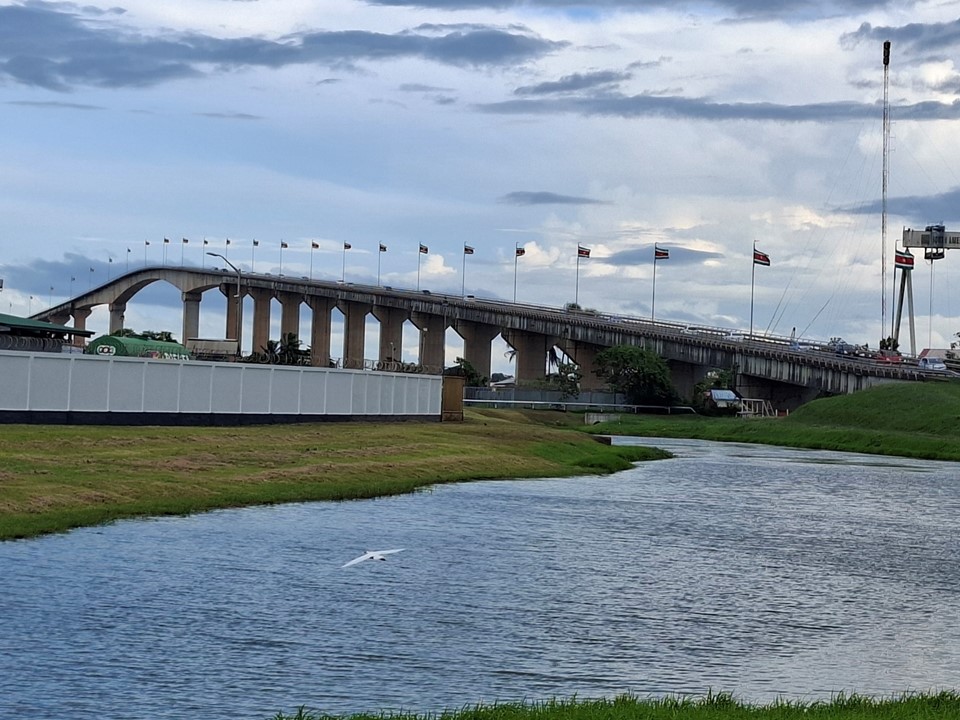
I eventually reached the bridge, which is 1.5km long, and 53m high.
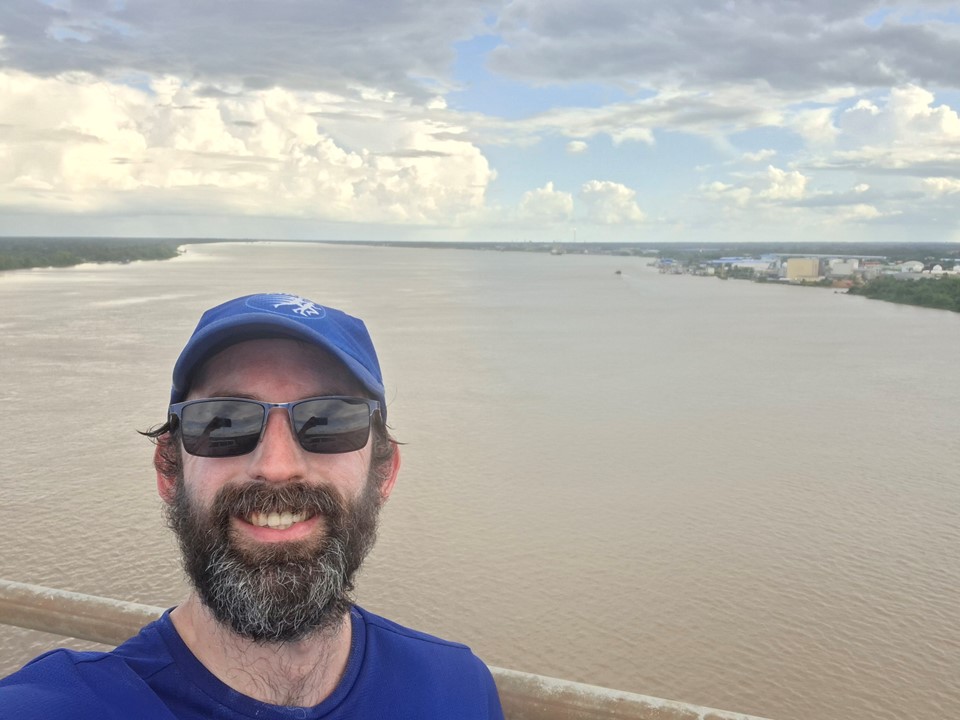
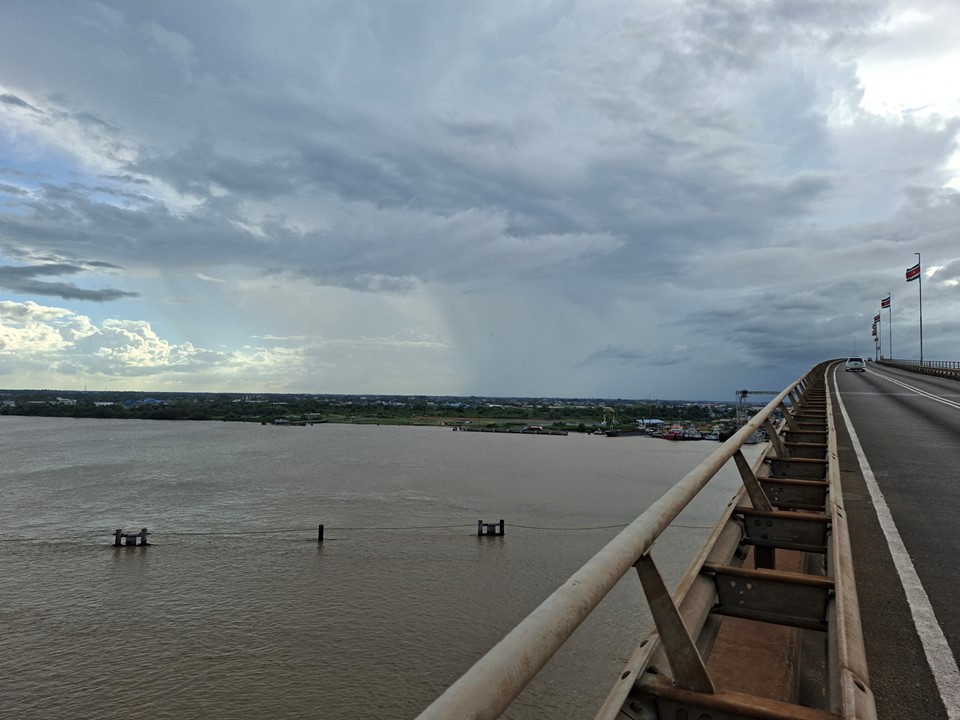
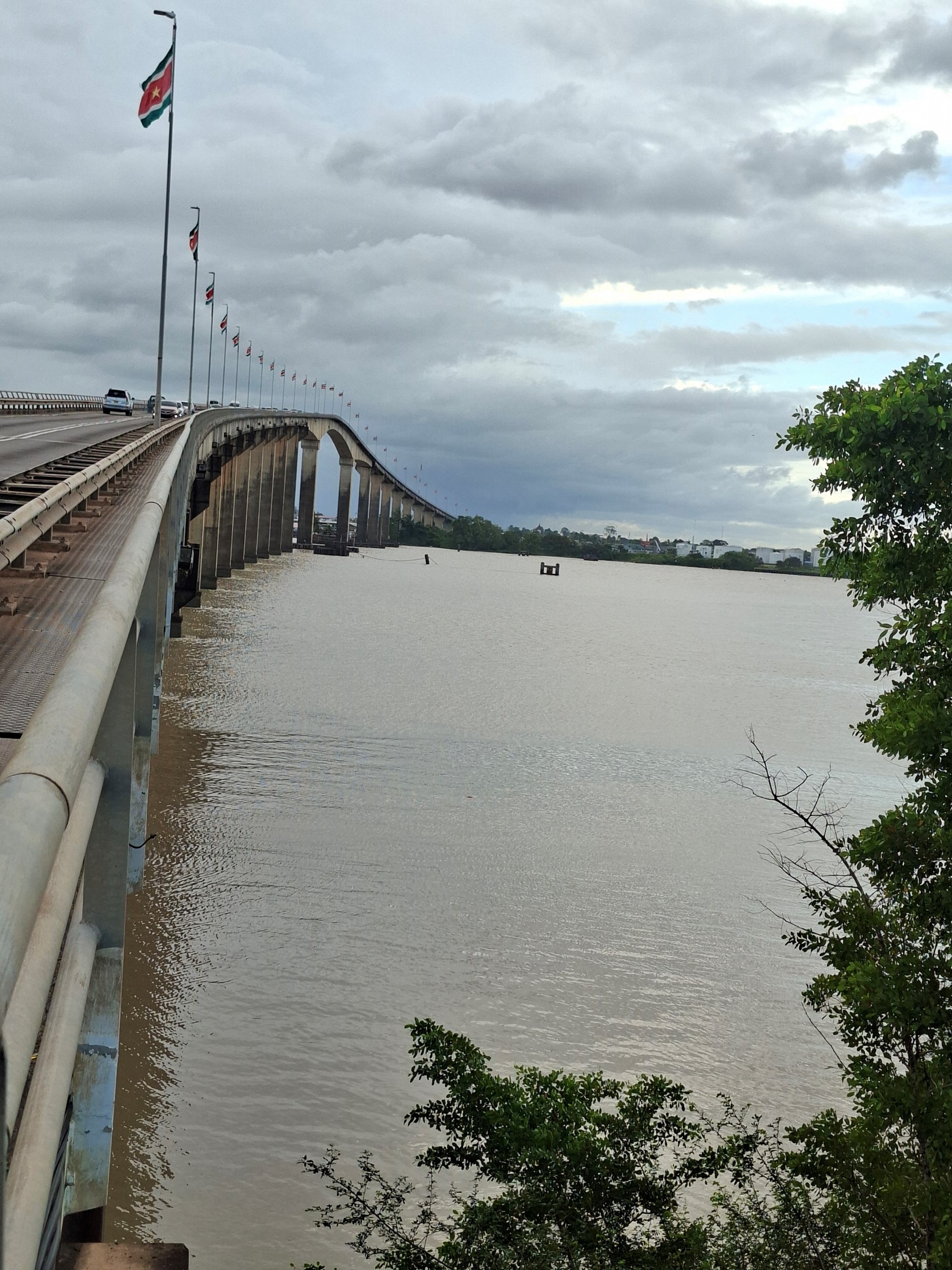
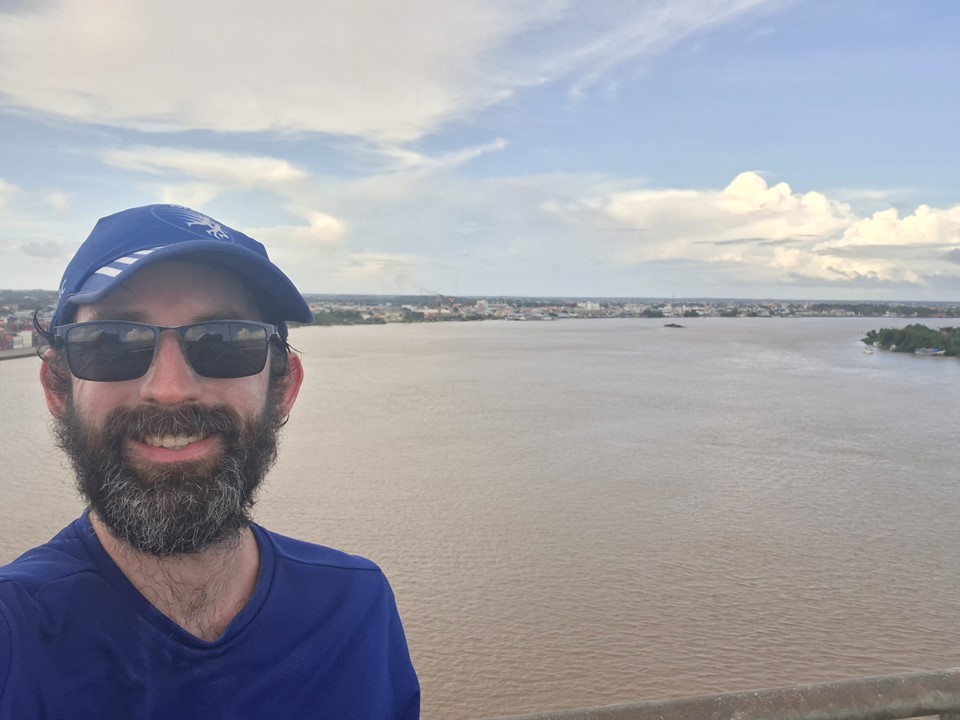
The weather had been hot, but I was happy I had done this.
As I was running back, I stopped to buy a coke. I walked out the store, downed half the bottle, and then started running again. Suddenly a man grabbed my right wrist with both his hands. I’m not sure who this was or what he was trying to do – he might have been an aggressive beggar, maybe he thought I stole the coke and was running away, or maybe he was trying to rob me. I quickly assessed the situation – he had a cigarette in his mouth, but it wasn’t alight. I could see he didn’t have notable muscle mass, and he didn’t smell of alcohol. My reflex reaction was to take the coke in my left hand and swing it towards him – he instinctively caught it with one hand, leaving him with just one hand on my wrist, I let go of the coke, pulled my wrist free and began to run. He chased me, but even 9km into my run, I could easily outrun him – especially now that the adrenaline was pumping. As I ran past some locals, I shouted “that guy’s chasing me”. I don’t know what happened next, but when I looked back a minute later, he was no longer there.
My goal had been a 15km run, but I got back to my accommodation at 14.4km and had no interest in being outside a minute longer than I had to be. I went into my room, locked the door and tried to process what had just happened. I’m writing this half a year later, and I can still picture the man, the place it happened, and the sequence of events, and I still have no clue what he was trying to do. If he was trying to rob me, how would that have even worked? But if he wasn’t trying to rob me, what was he trying to do? He didn’t smell of cannabis or alcohol, he didn’t have bloodshot eyes. I really don’t understand what happened.
Anyway – my first 24 hours in Suriname had included being questioned by passport control, a taxi driver trying to scam me, going almost 24 hours without anything to eat, and an attempted robbery. It was clear this country didn’t want me here. So I spent my second day in my room. I left to buy lunch, but otherwise I stayed in my room. I managed to write part 4 of my Antarctica trip, so at least I was productive. I knew this part of the trip could go like this, visiting a country that rarely gets tourists is always a risk.
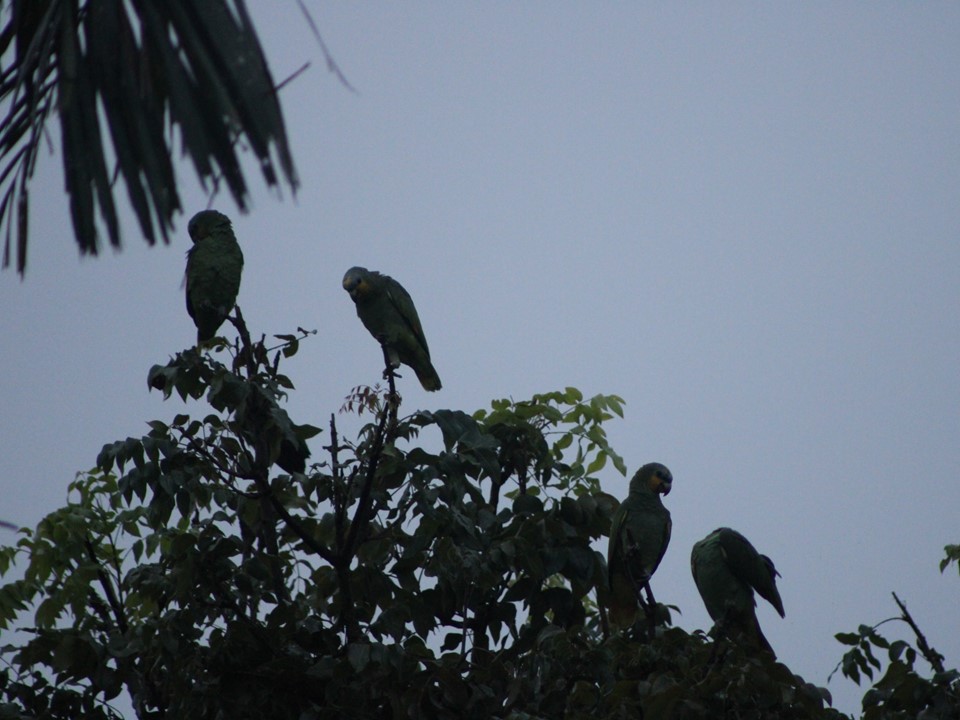
As it was starting to get dark, I heard a loud noise outside, so I walked out to see the tree outside my room was full of Amazon parrots. I asked the person who maintains the property about it, and he looked confused and replied “they’re there every day”. With the low light, I struggled to get a good shot of them.
That evening, the owner of the place I was staying at messaged me to ask me if I’d like a local to show me around the city on my last day. I decided to give Paramaribo one last chance – after all, I was yet to see my sloth.
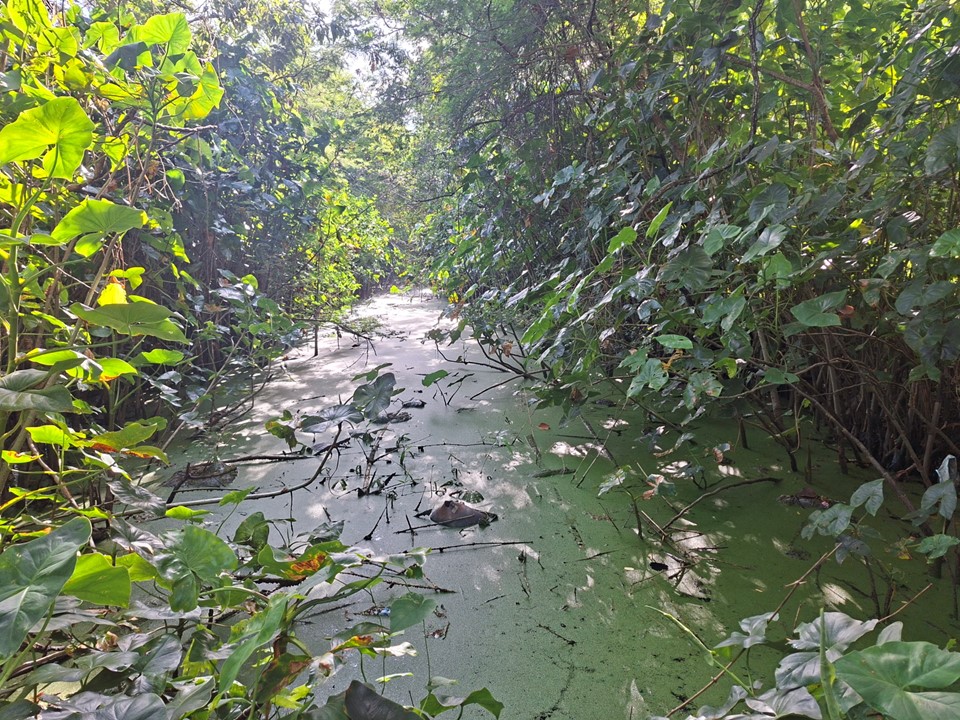
The following morning, the lady proceeded to drop me off at Cultuurtuin – a small jungle park in the city – and told me she wouldn’t be available for the next four hours. She assured me this part of the city was safe, and drove off.
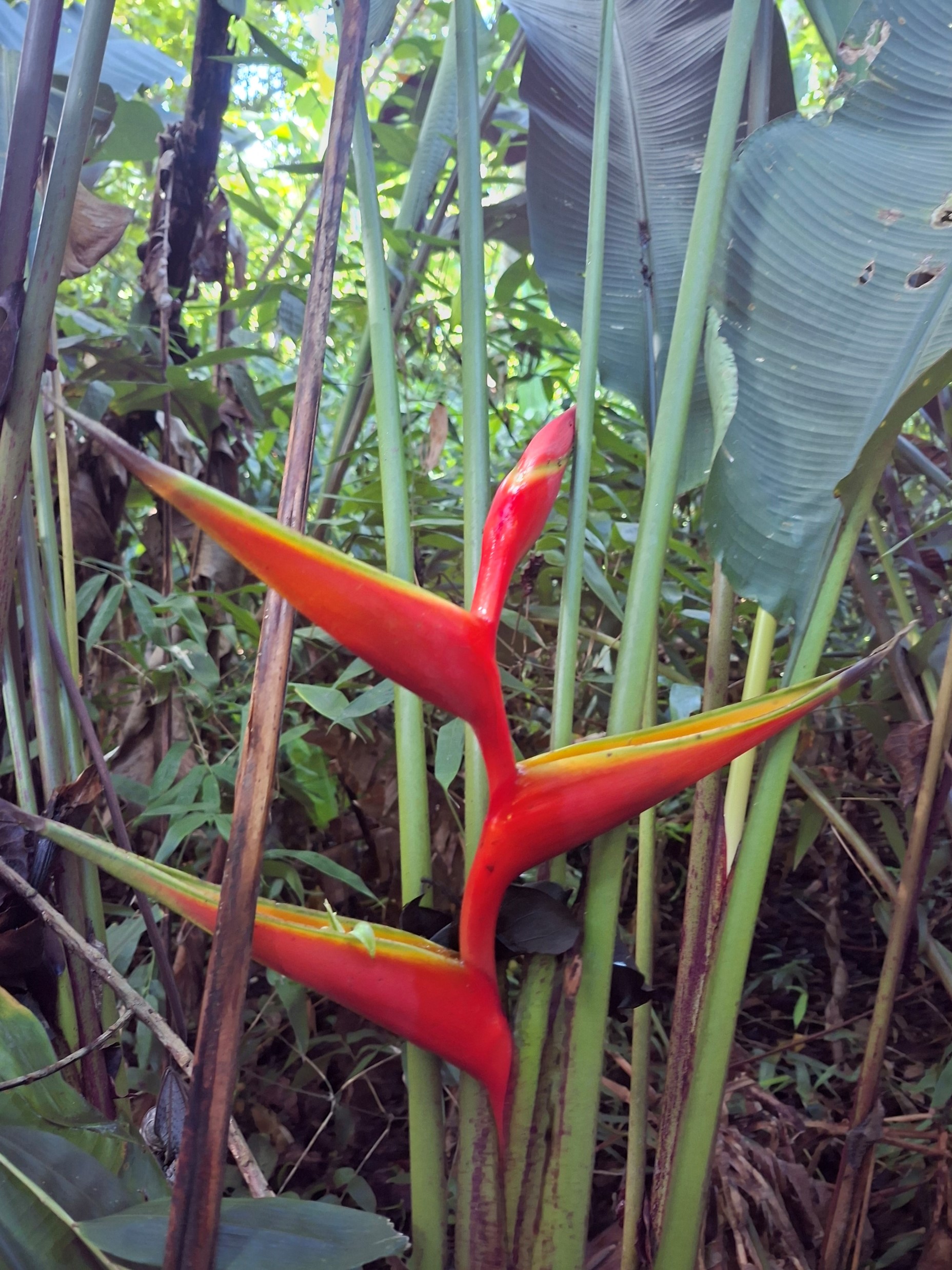
I only saw one other person in the park, who made some rather crude gestures, not entirely sure what he was after, but he soon left me alone. The vegetation was beautiful, but I didn’t see any wildlife.
This park is next to the zoo. I had read that the zoo sometimes has sloths in the trees, so I decided to go in.
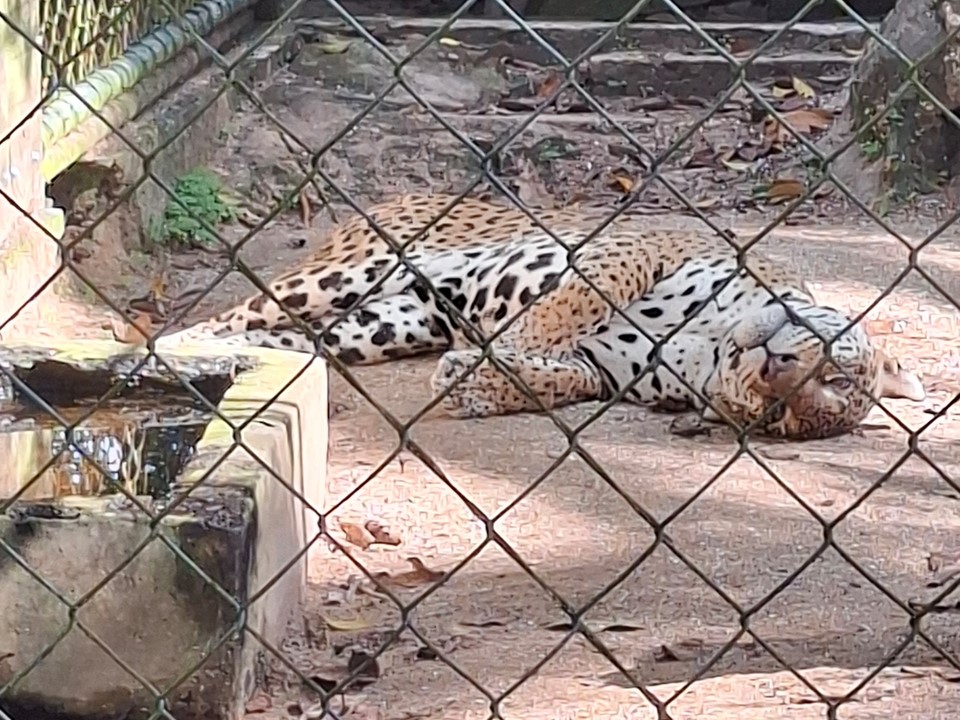
I hate zoos at the best of times, but seeing two different cages with jaguars in them is just depressing. What atrocities in life have these animals committed to be locked in prison like this? The jaguar was looking right at me and I said “you are so beautiful, you don’t deserve this” – and it started purring. It proceeded to lie down and continued to watch me.
The zoo itself is pretty terrible, without much of note, aside from the jaguars.
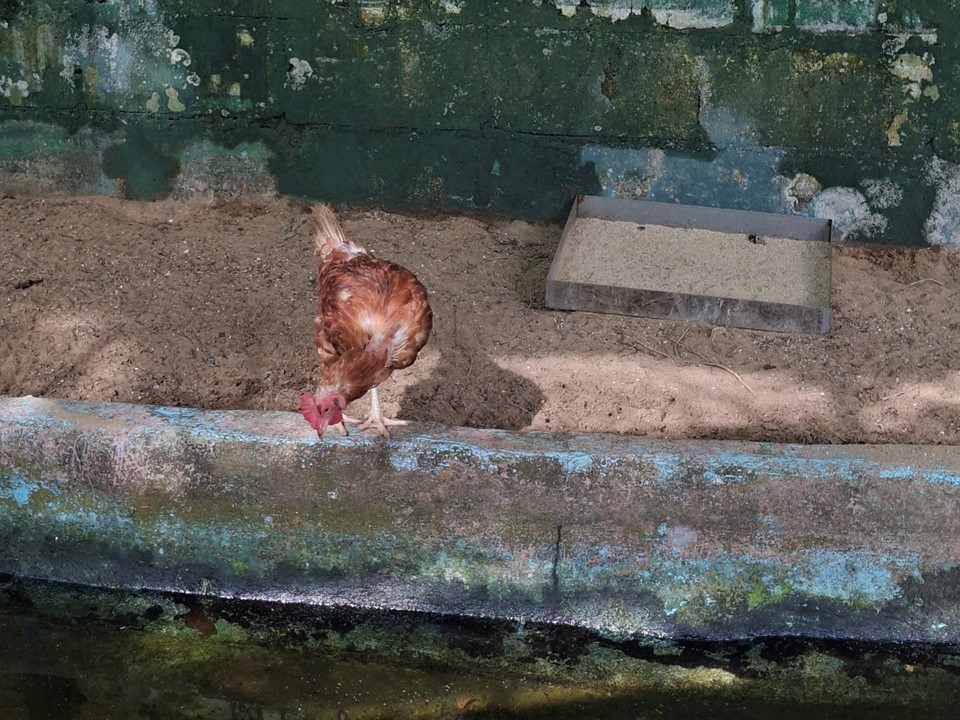
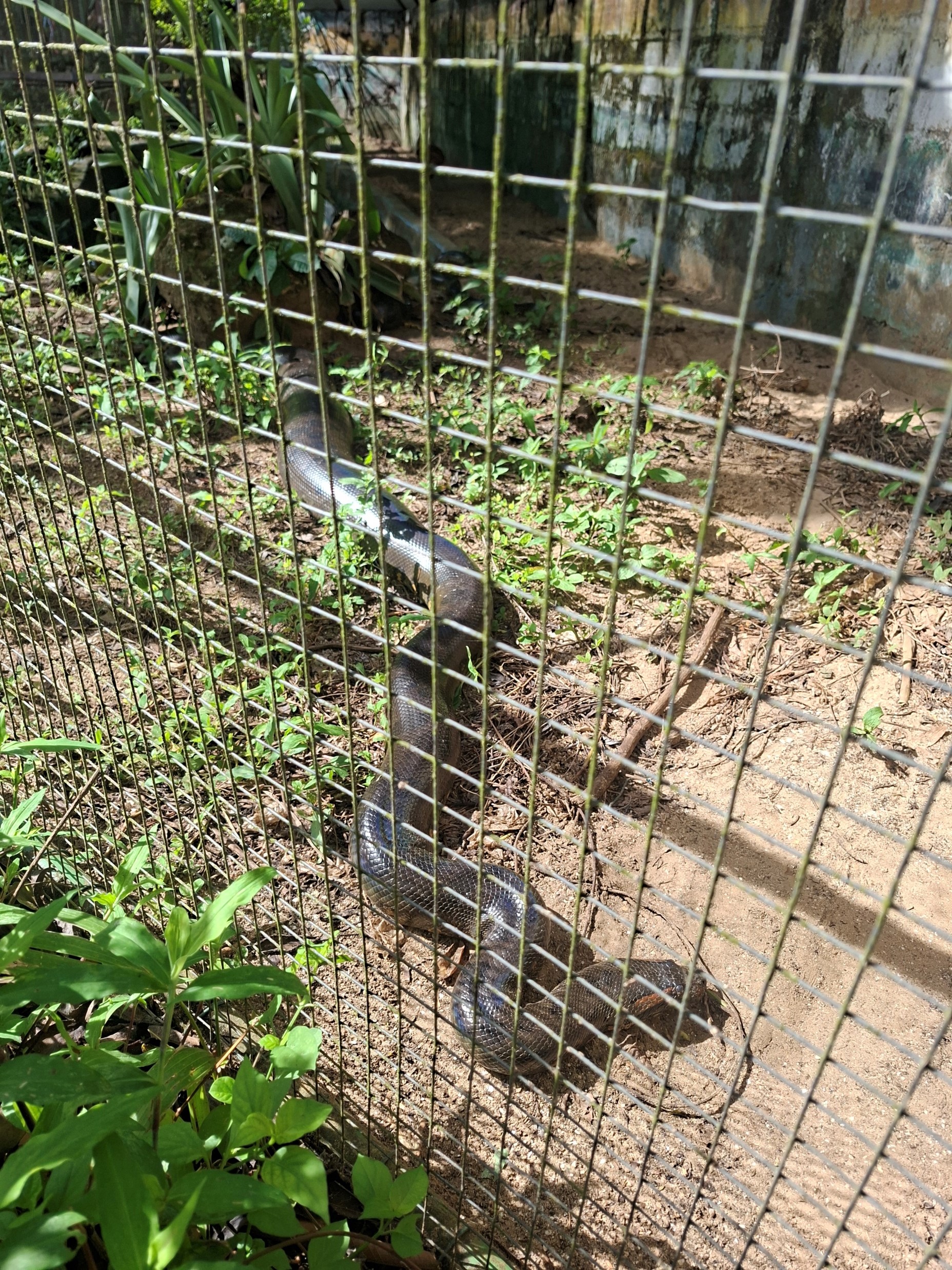
I was confused why there was a cage with a chicken in it, till I realised it also had an anaconda in it.
They had a good collection of birds at the zoo.
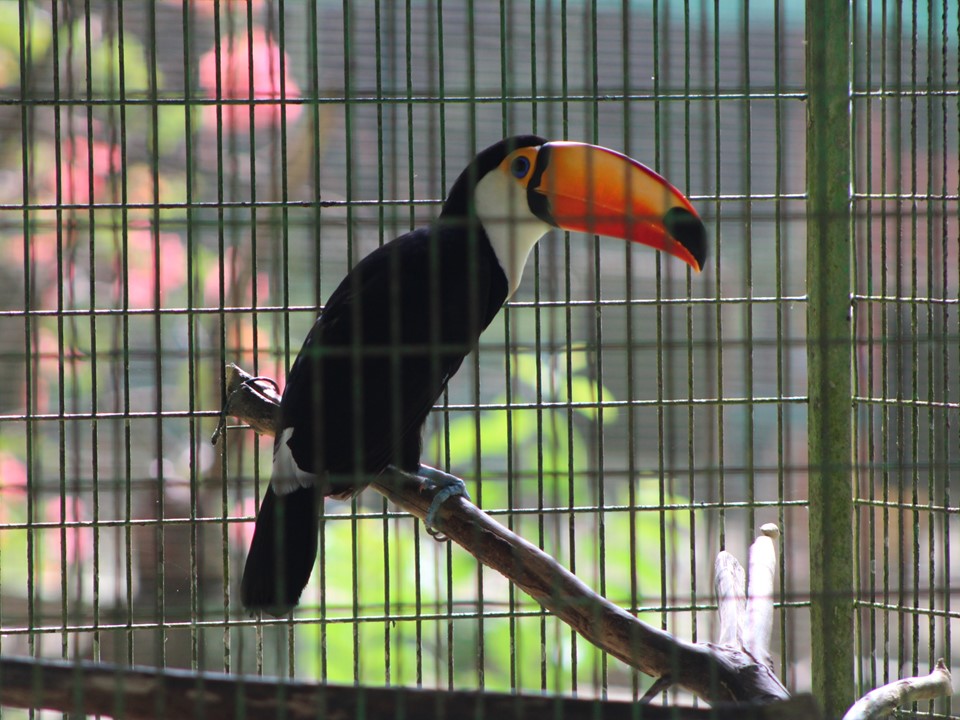
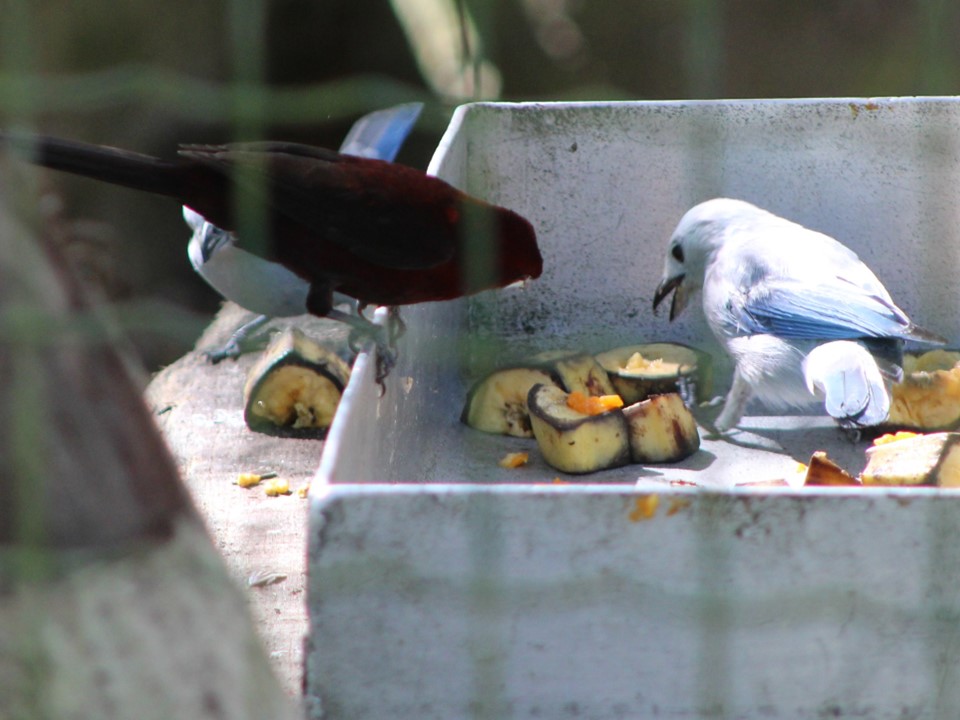
For some reason, parrots always seem to like me. I had nothing else to do, and I was in no rush to leave, so I sat and whistled to them. They seemed to enjoy it, and actually started following me when I started walking away. They even posed for photos.
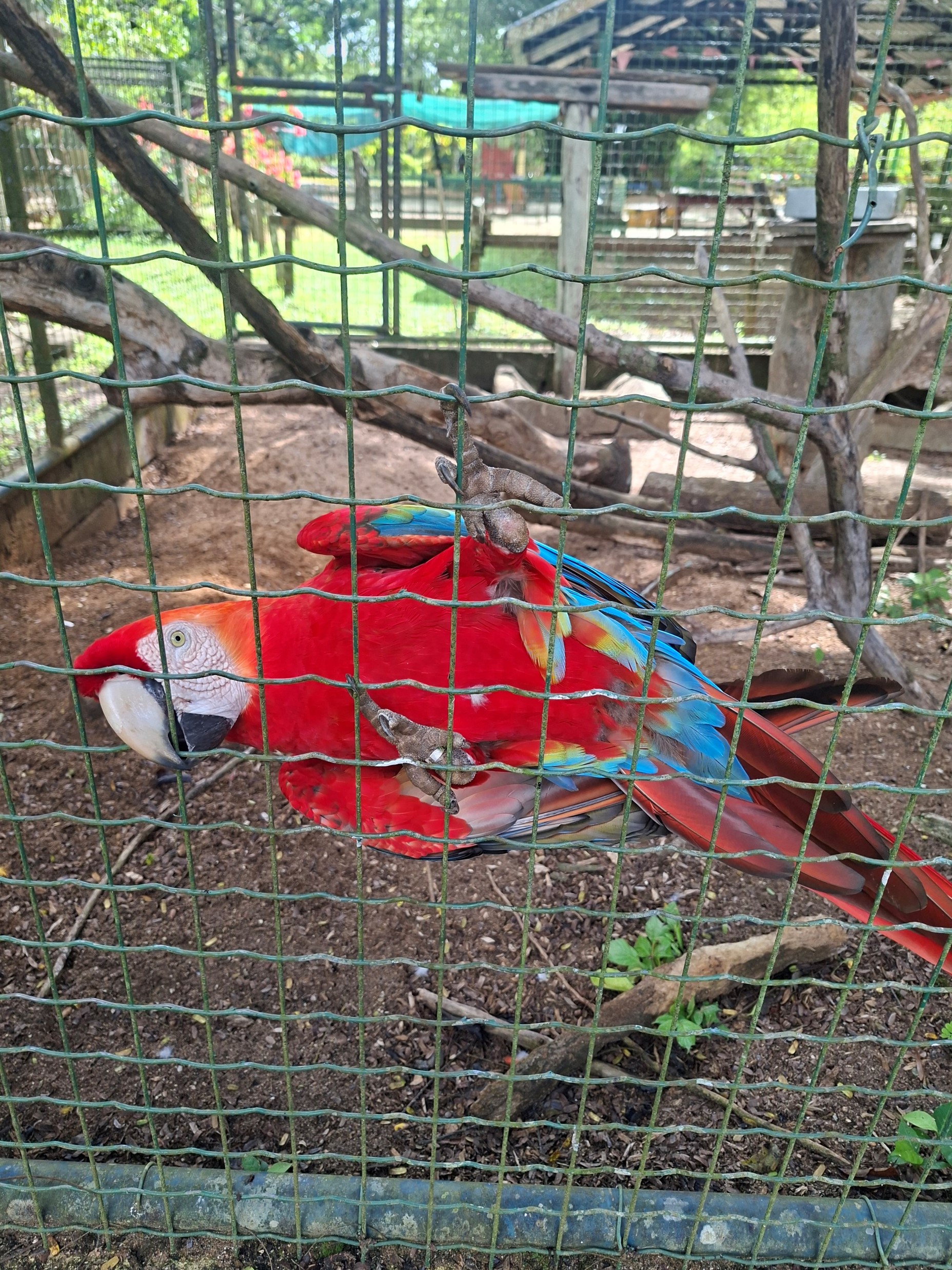
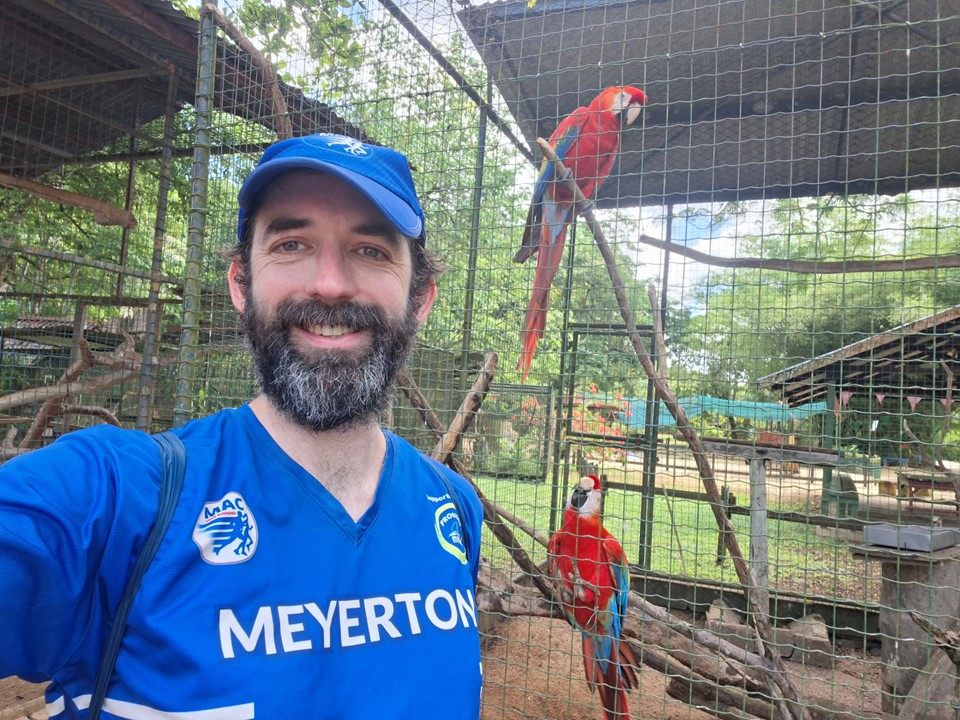
I walked away to see if there was anything else worth seeing in the zoo, and upon learning that there wasn’t, I returned to the birds to say goodbye. Then I noticed something odd – there was a wild macaw sitting on top of the cage.
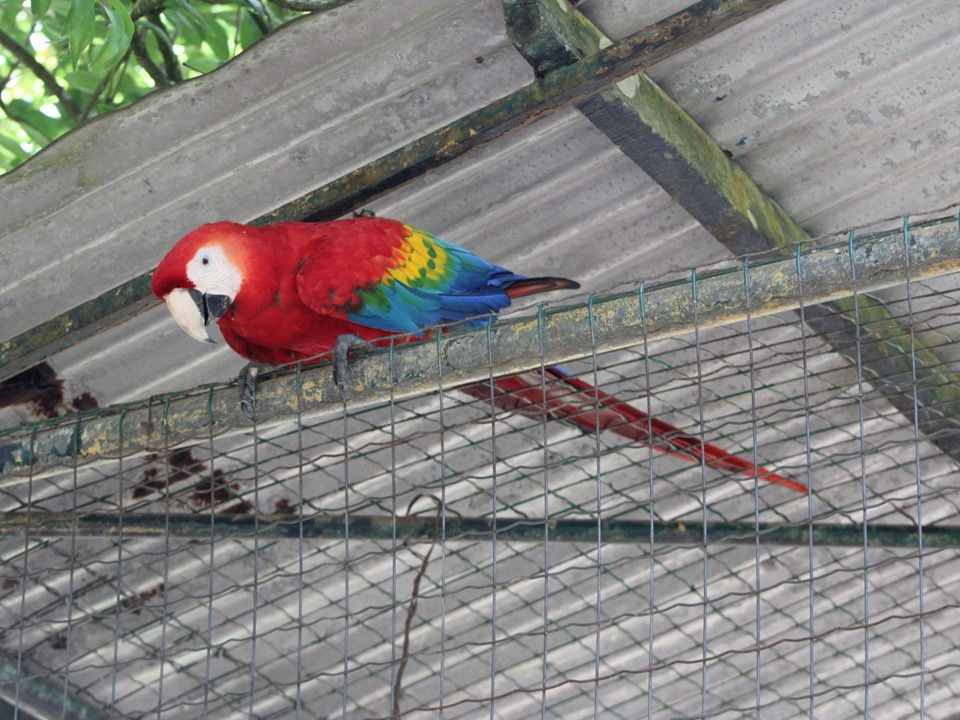
I would ultimately spend another 20 minutes or so watching it, whistling and just enjoying this majestic wild bird that was literally 3m away from me.
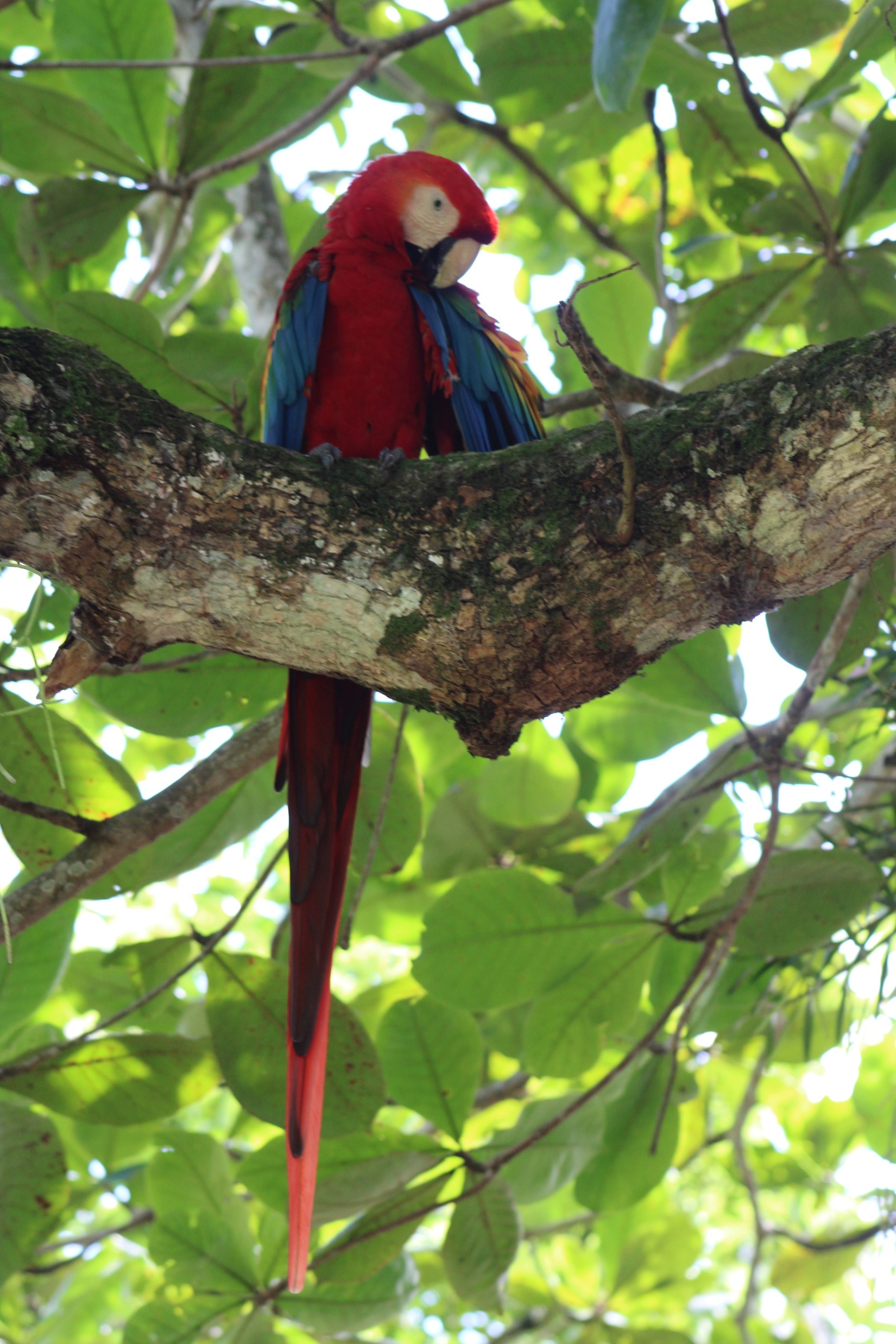
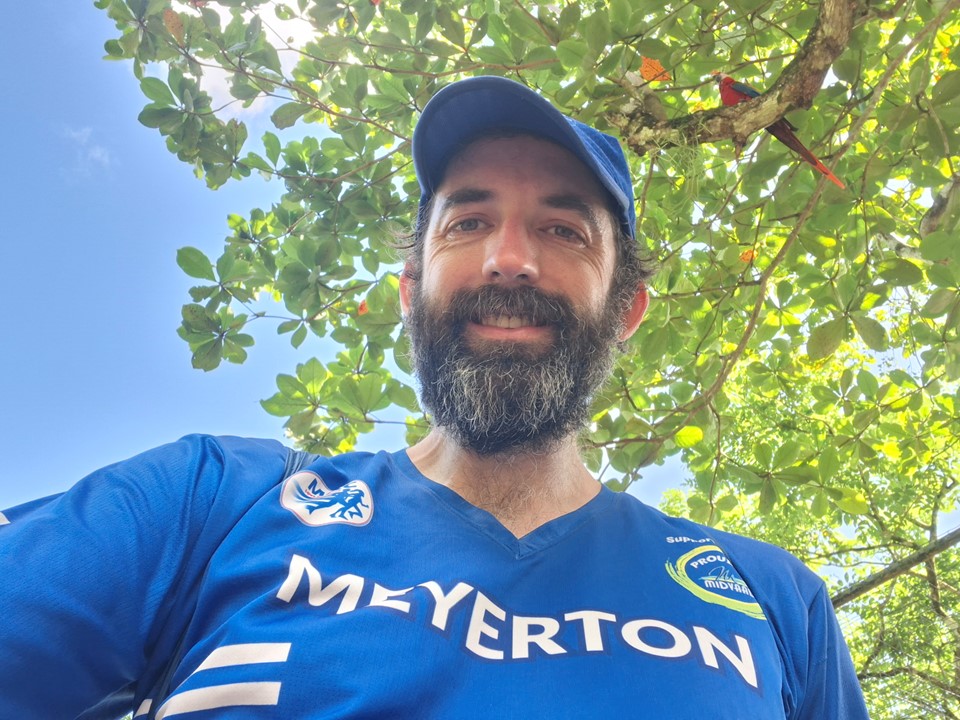
I hate zoos, but by far the best part of my time in Suriname was watching a scarlet macaw sitting in a tree.
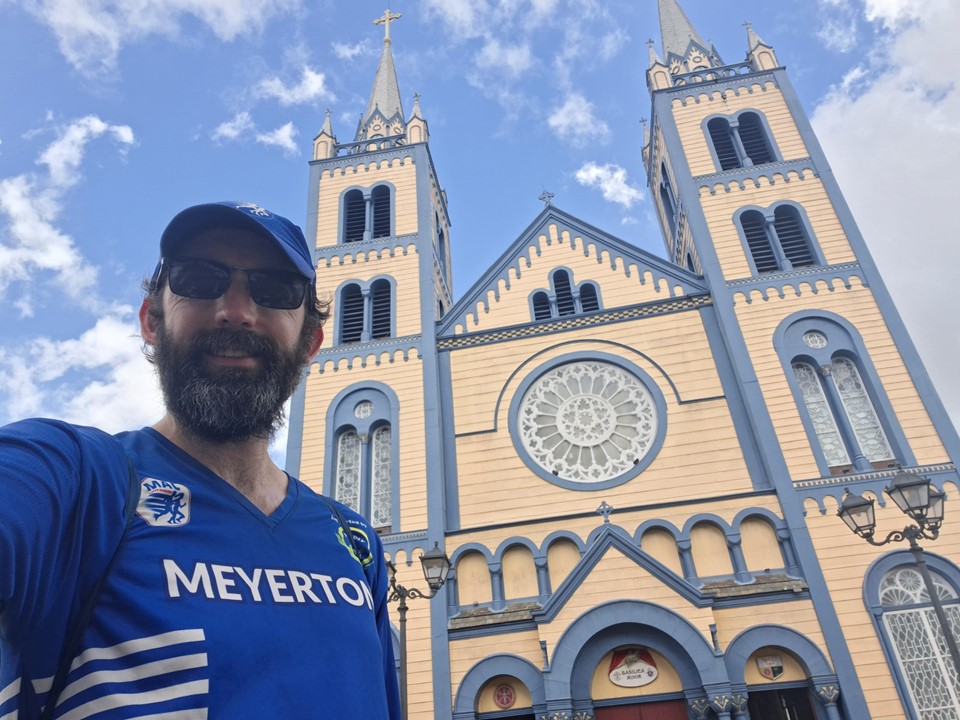
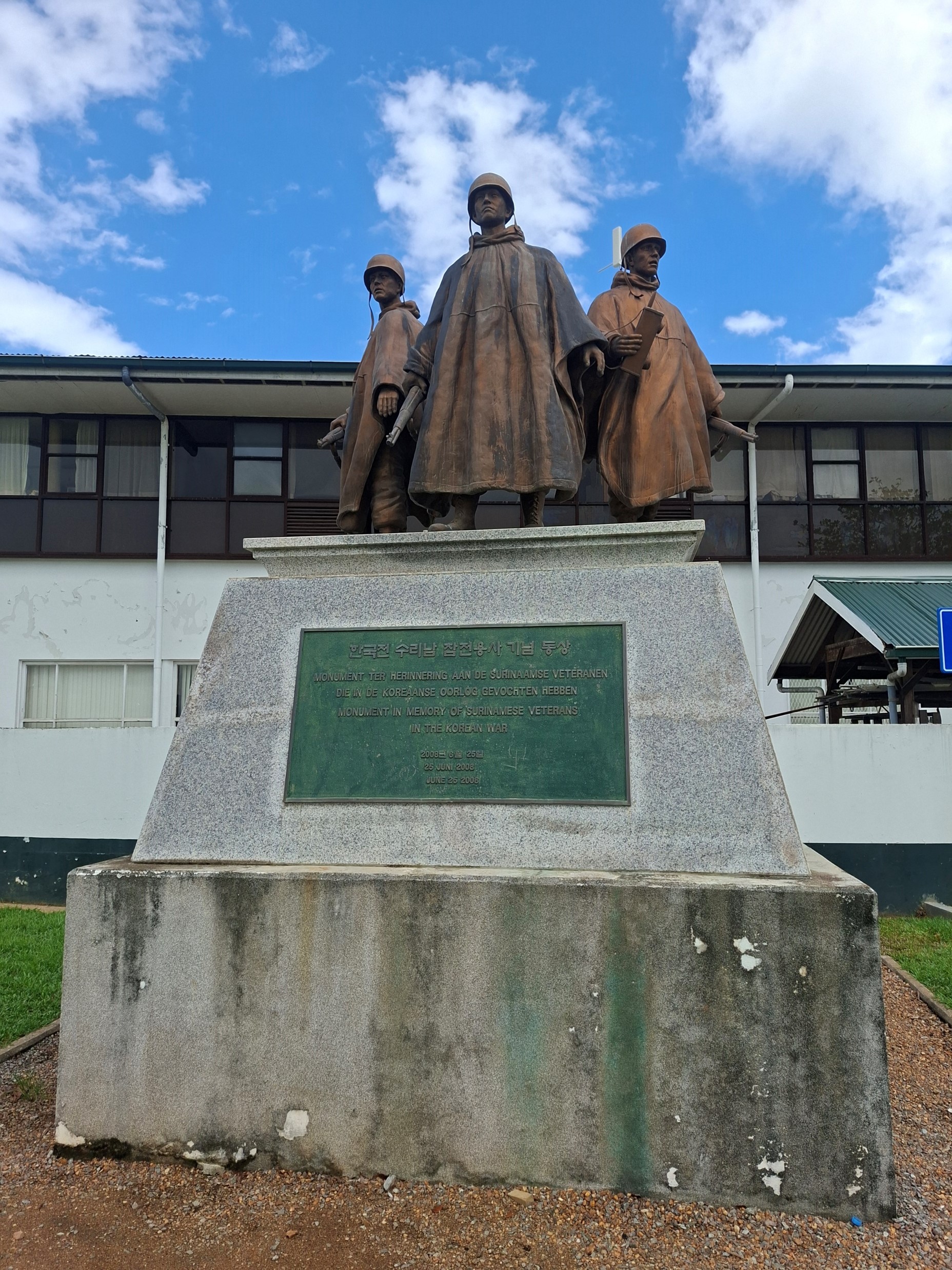
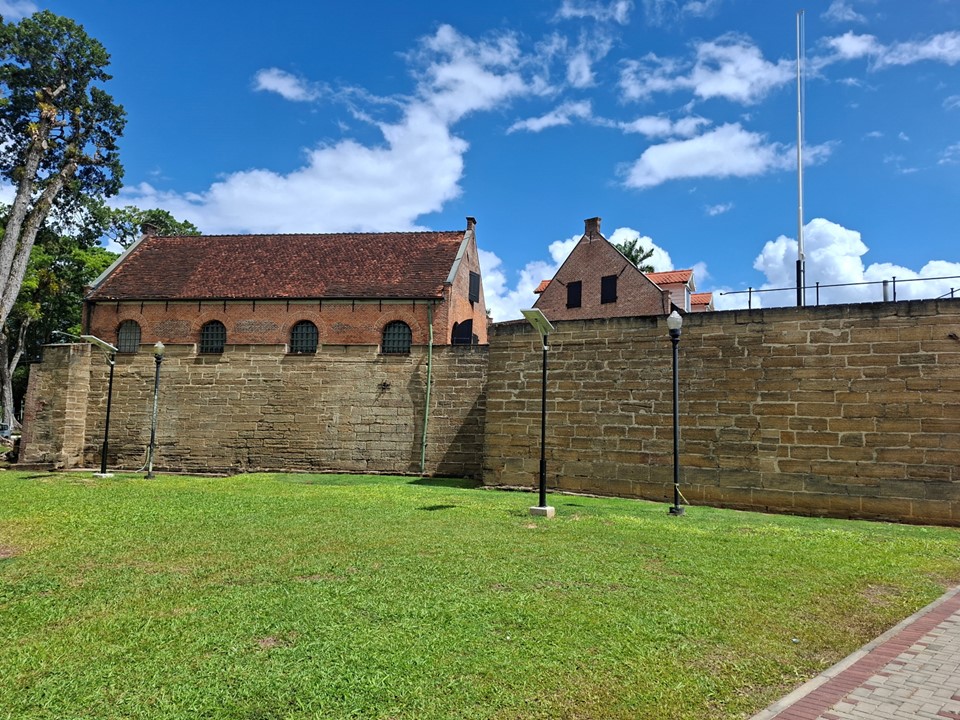
From there I made my way to the historical centre of Paramaribo, one of the three UNESCO World Heritage Sites in the country.
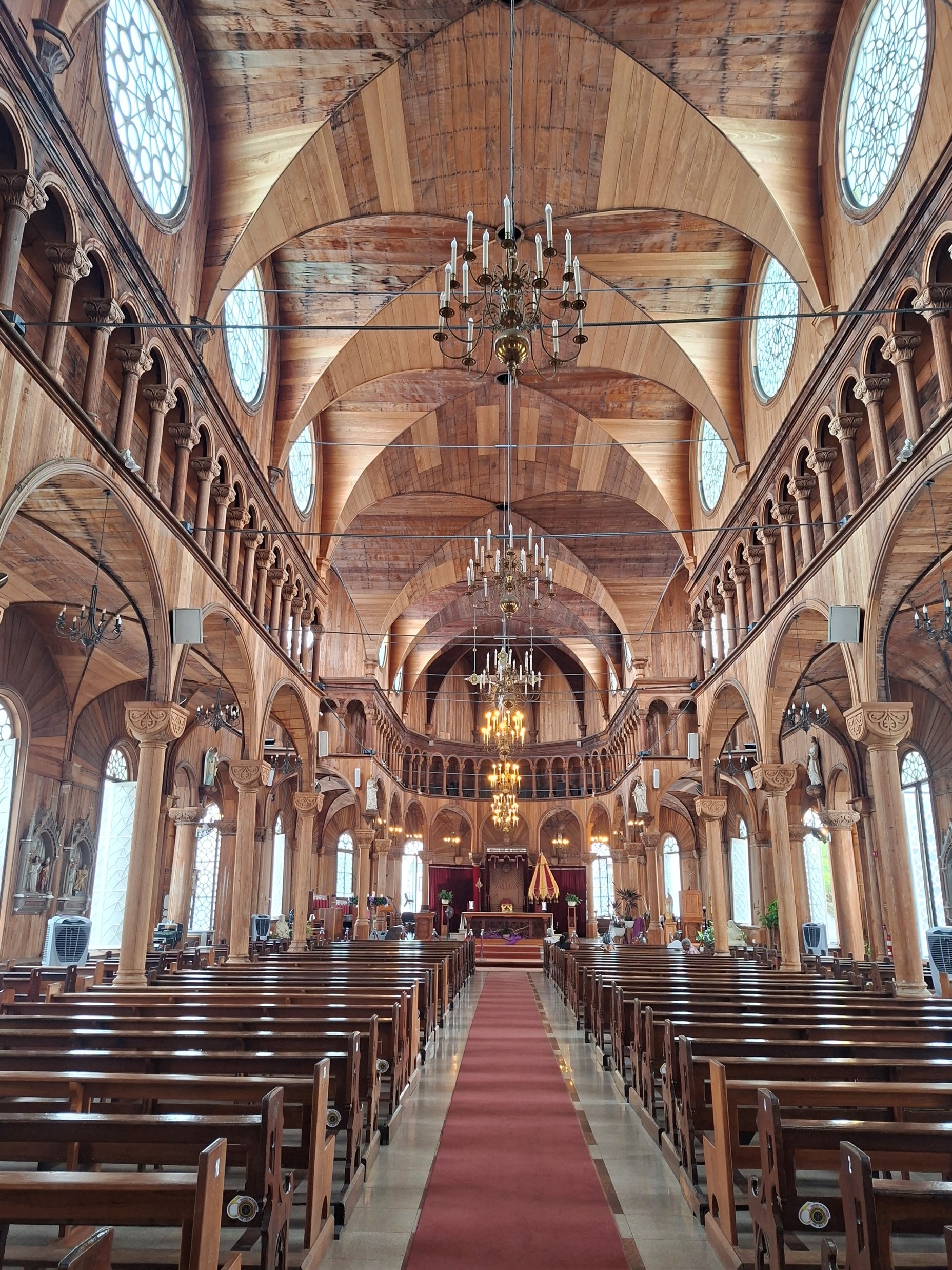
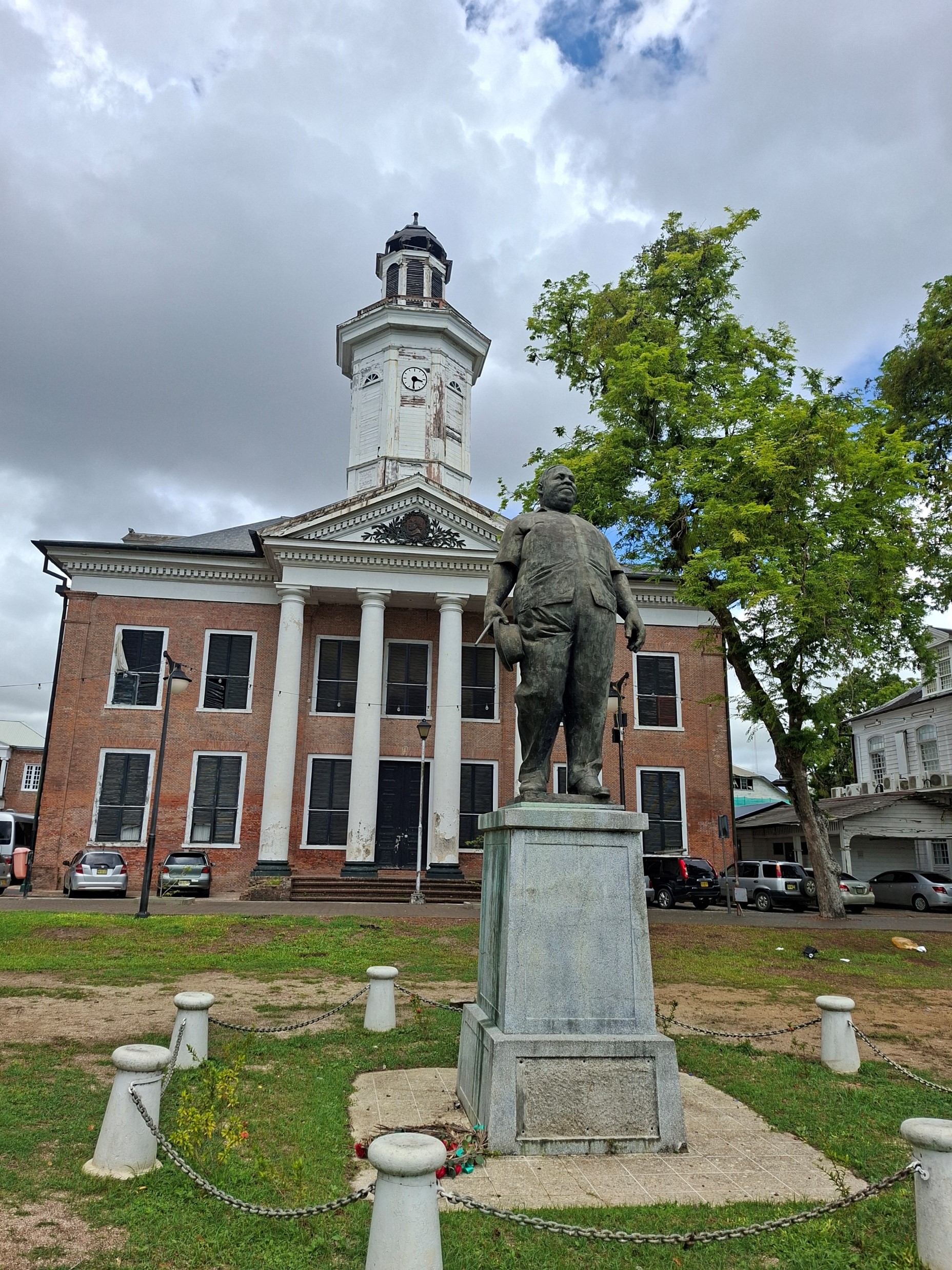
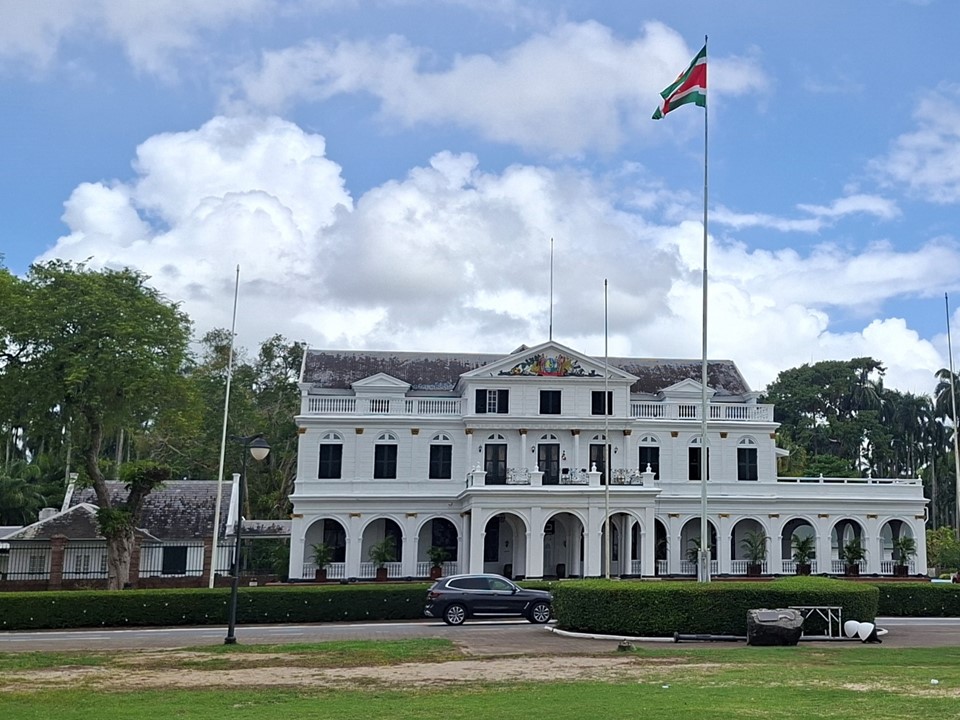
The architecture was very different to that of other countries on the continent, for obvious reasons.
I found a nice spot on the river to try some local food. I asked what they recommend, and they told me bruine bonen met rijst, pom with chicken and some locally made ginger juice. I asked if they take foreign cards, and they said they did – I said I should pay before they start preparing it, just in case, and that’s when I once again found myself unable to pay due to my card being declined. I had some cash left over, but not enough for everything. I told them to cancel what I couldn’t pay for.
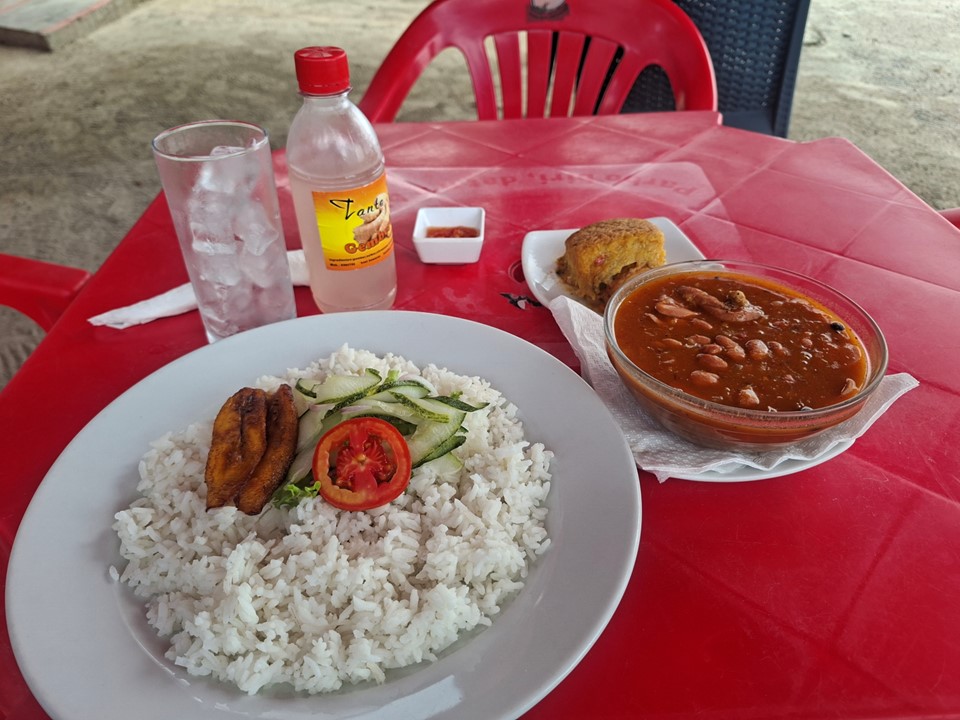
20 minutes later, the lady walked out with a large tray of food and said that I had to try all the local food before I leave, so they would give me the rest without charge. I felt bad about not paying for all the food, but I wasn’t carrying my USD with me due to safety concerns – which I think were justified after how my first day went – so I wasn’t able to do anything about that. I really appreciated the gesture – what a difference from my first day!
From there I walked back to where I was staying, since the lady who brought me there wasn’t responding to my whatsapps.
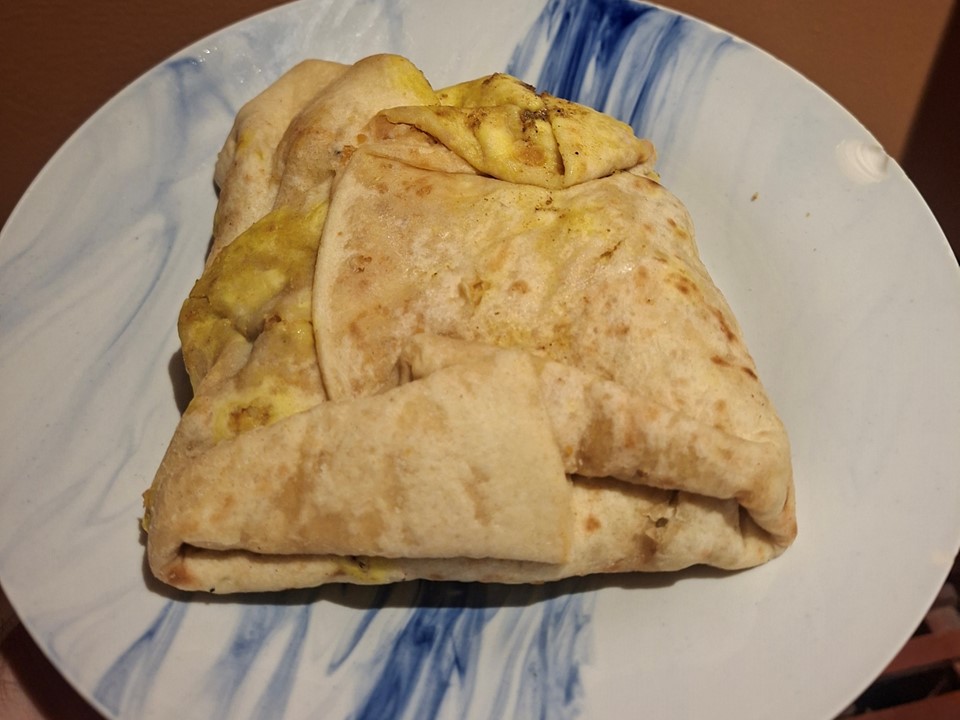
Later she messaged me to apologise, her meeting ran longer than expected. She then took me to her favourite roti shop for a final meal before my flight back early the following morning. She asked me how my walk went, and I said I didn’t find sloths. She laughed, she had seen two that day. In hindsight, I wonder if I was unlucky, or just don’t know what to look for – seeing as they are animals that camouflage really well.
I left Suriname early the following morning with mixed feelings. The first 24 hours in the country had been almost entirely bad. The last 24 hours had been entirely good. A taxi driver had tried to scam me, while a restaurant had given me food I was unable to pay for to ensure I properly experienced their country. I hadn’t see my sloth, but I had a wild macaw a mere three metres away. It just goes to show how much of a difference the people you meet along the way make to ones experience of a country.
I’m not going to lie, Suriname isn’t a country I’d go back to, and isn’t one I’d recommend visiting unless one is already passing through. But at the same time, I don’t regret going. When you go beyond your comfort zone, you learn things you never knew you never knew – and that’s the beauty of travel.


Zoos are indeed sad places, well they can be. But generally it’s because of humans that these animals are “saved”, and put into zoos. The alternative is obviously them being destroyed. I rarely go, but on the other hand if you don’t go and pay the money to visit, how can they continue? And then the animals have even less. Tough situation.