A wise man once said “the reason most people never reach their goals is that they don’t define them” – as to who that wise man was, I’ve seen this attributed to far too many people to be sure who first said in. Nonetheless, the sentiment is one I strongly agree with.
Some goals are easy, some are hard, but there’s one goal I’ve had since I was very young, that I have researched extensively, and consistently realised was unrealistic. This goal was to set foot in the frozen continent, and to put my hand into it’s icy ocean.
The first question you usually get asked when you say you want to visit Antarctica is “why?” – and it’s a fair question. There is no accurate list of everyone who has set foot on the landmass, but estimates are usually between 2-5 million people – so a fair number of people have done it in the past. Any number of mountain related goals I have completed have been completed by far less people.
Why do people want to travel and see parts of the world they have never seen before? Well, I guess in ancient times it is important for someone in the community to explore the land around the village and see what food and possible dangers may be lurking out there. Similarly, plenty of said explorers would find the dangers and never return as a result. I would guess it is the same reason that some people, such as myself, are drawn to the summits of mountains – a high vantage point has plenty of advantages, and that ancient part of the brain is still very much alive and kicking.
I had a few goals in mind with Antarctica. These included hiking to the south pole, climbing the continent’s highest mountain, Vinson Massif, as well as its highest volcano, Mount Sidley, and some other exploration – but these goals would require flying far inland with considerable supplies, and would require considerable time and resources. I had done my homework on this, and the reality was that this dream was unrealistic, simply never going to happen. So I wrote it off and tried to forget about it.
Years went by, and on occasion someone would reference Antarctica, and I’d redo my research on this to see if anything had changed, but alas, it had not. I had heard of tourist ships visiting the islands near Antarctica, but I wanted to stand on the continent itself, the islands would never be good enough on their own.
I heard people taking about this, and saying “does taking a ship and landing on the edge even count?” – I don’t exactly follow this logic. Does one not consider a continent valid unless one got there themselves – because if that’s the case, I can’t claim any of the continents as I was “just a passenger” on the aircraft that flew there. Or do they mean that the edge of the continent doesn’t count – in which case, I guess no one has “really” been to the Vatican or Monaco, as you’re barely out of Italy or France.
One day Facebook randomly suggested a group about visiting Antarctica. I ignored it the first time, and after seeing it a few times, I joined and read about specials on last minute tickets. Sometimes people would pick up a last minute cancellation while in Ushuaia, and would get the ticket at a massive discount. I thought – let me head to Ushuaia and see if I get lucky with this.
I mentioned my plan to Sarah, with whom I had previously traveled in South America, and she put me in touch with someone she met in Ushuaia when she was there. I dropped the lady a message, and she said that they have one ticket left on the ship MV Ushuaia leaving just after I arrive in Ushuaia, she has put a 24h hold on it if I want it, but if I don’t decide in that time, it could go to someone else.
Suddenly I was confronted with a reality: if I say yes, in four weeks time, I’ll be on a ship to Antarctica. Hundreds of thoughts ran through my head: am I sure this isn’t a scam? Do I really want to do this that much? What am I expecting? Will I arrive and think “oh, that’s it?” etc. So I did some research, verified the ownership of the ship, contacted the owners who confirmed the hold had been put under my name, got my brother to double-check my research to see if I’m missing anything. All seemed legit, the only question that still mattered was “do I really want to do this?”
Due to timezone differences, I could wait till the morning to give a final answer. Surprisingly, I didn’t have difficulty falling asleep that night, but I woke up early and knew what I had to do. I emailed Florencia at The Polar Travel Company and confirmed that I’d take it. She sent me some docs to sign and some formalities, and that was it.
Just a note on The Polar Travel Company, they have not sponsored me in any way. It is customary not to mention companies one uses for services like this on one’s blog – but this blog was never about trying to get advertising, and I’m happy to give a free shout-out to a company like them who did a great job.
Anyway – back to where my previous blog post left off: me sitting in Ushuaia. The day had arrived, it was 3 November and it was sleeting outside. The weather had been terrible for a few days, but I knew at 3pm I would be heading to the docks to board a ship.
I did some admin that morning, backed up some photos, responded to some emails, but my mind was far away. It’s hard to focus on anything else when you’re about to leave on a journey like this. Not just would it be once-in-a-lifetime, it would be a trip I will likely talk about for the rest of my life, no doubt to the annoyance of those around me!
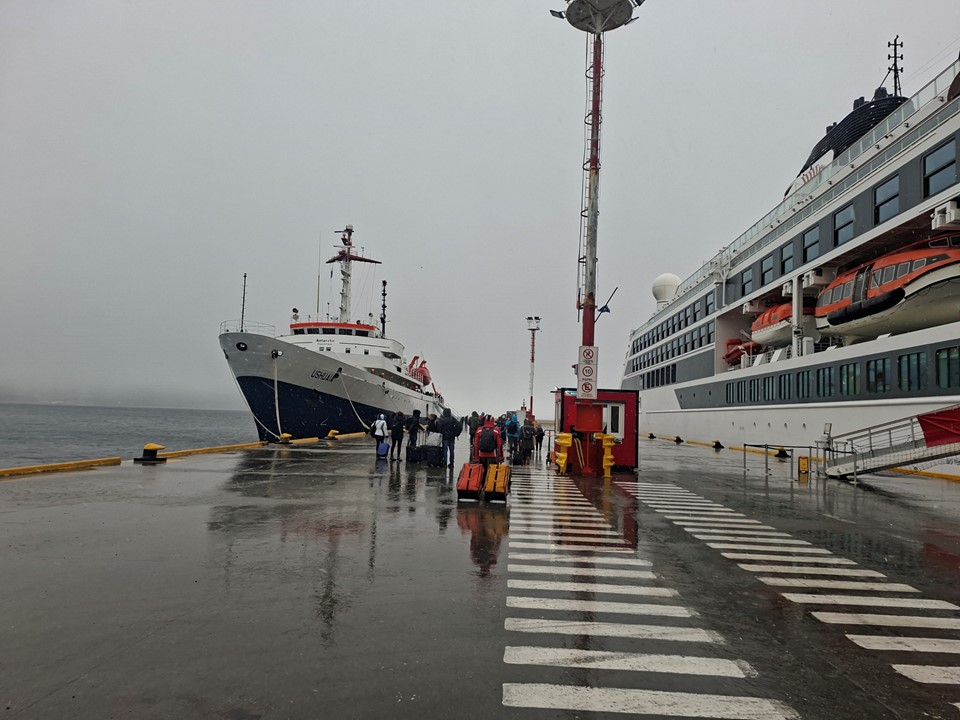
I eventually arrived at a crowded dock. There were a lot of people in the room, all anxious to get going. There were not enough chairs for everyone, so I stood. I clearly had less gear with me than most – I had thought I may have too much in my 75 litre backpack, but clearly not.
I soon met a German named Marco, he had two large pink suitcases – mostly camera gear. He joked that if they said he had too much baggage, I could say one of his suitcases was mine. We got chatting, and clearly had a fair amount in common. People had asked if I was worried about going on a trip like this alone – but when you book a spot on a 90 passenger ship without stabilisers to cross the roughest ocean passage on the planet – you will generally get people with a similar mindset to my own, so I wasn’t worried.
We eventually boarded. It was snowing, and I wasn’t wearing my waterproof pants, so I was cold and wet by the time I got on the ship, but luckily it was heated inside. The bartender, Fabian, checked me in. They take your passport – officially for safekeeping, but more likely as collateral to ensure you settle your bill before disembarking. This was in the T&C before signing up, so I knew it was coming.
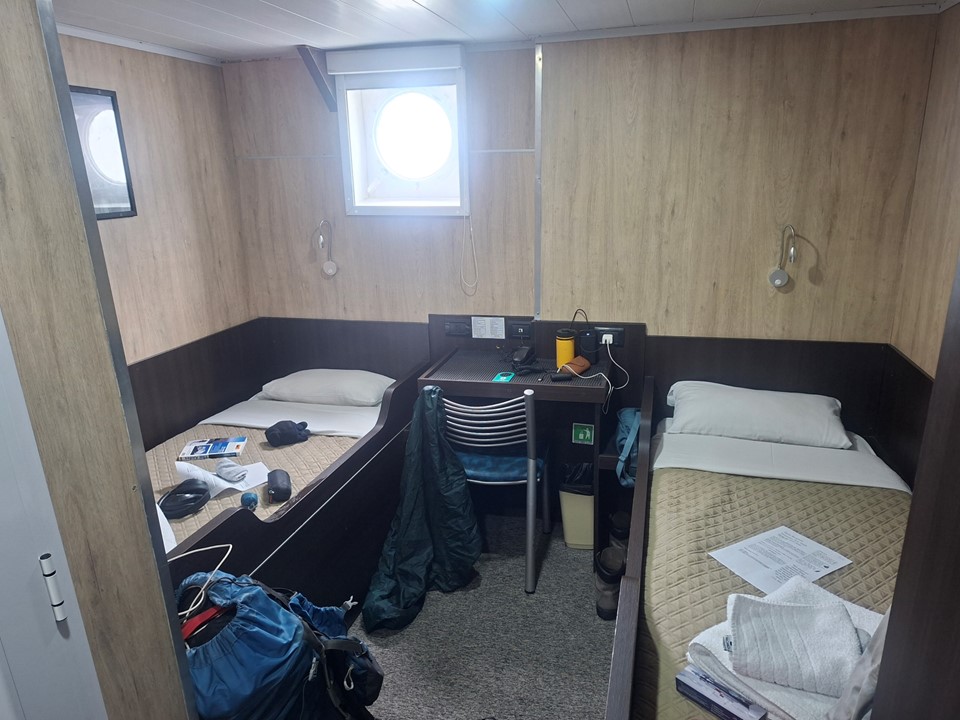
I got to my room that I would be sharing with Manuel – a Filipino chartered accountant one year older than myself. We got on immediately. The room was actually larger than I had expected, although the raised section at the edge of the bed would come into contact with my leg far more times than I care to admit in those first few days!
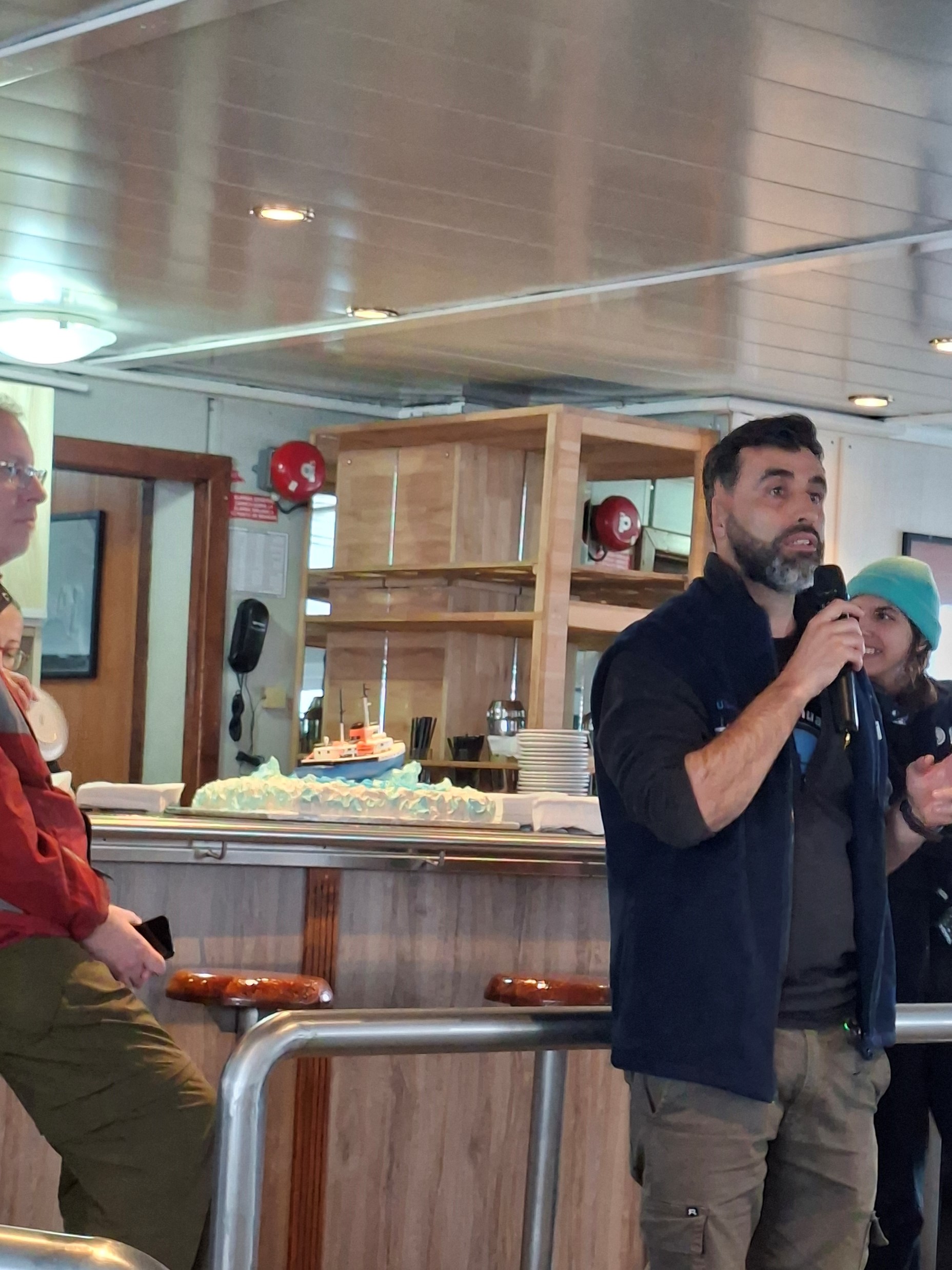
There was a welcome ceremony with cake and champagne/orange juice, where we were introduced to the team, told how everything works, and then did a lifeboat drill. At the end of this, we were informed that there is a substantial storm on the Drake Passage right now, and we would not be able to commence our journey till 6am the following morning.
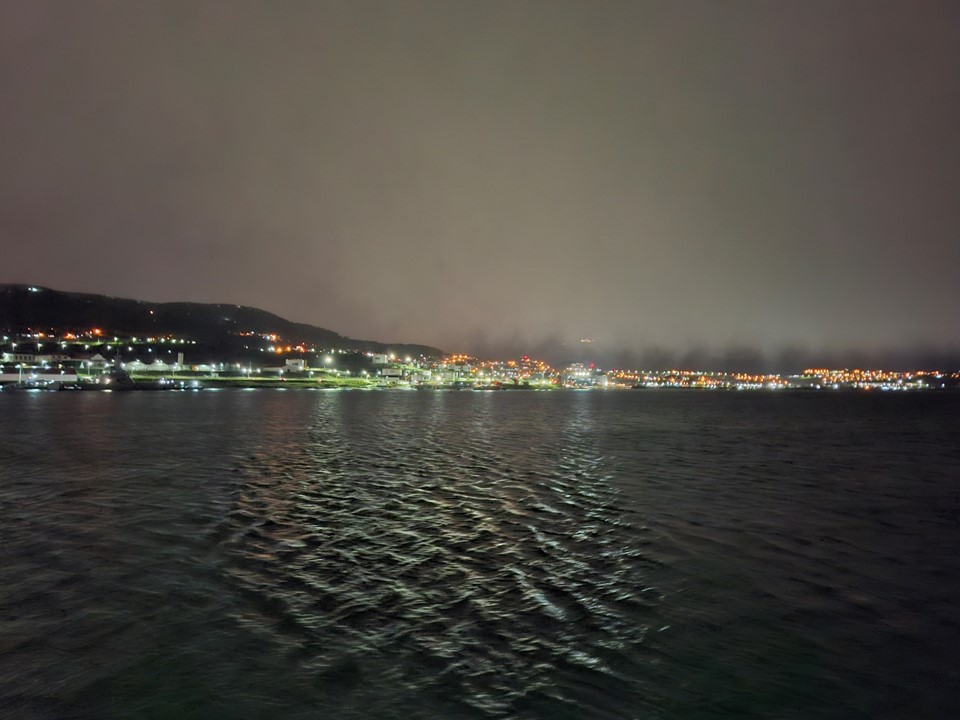
Ushuaia by night was beautiful, and during this time of calm.
By the end of this first day, I would have met the three people I would spend most of my time on the ship with. I sat next to Jess (Australian) at the welcome speech, Rivu (Indian born, living in USA) was Marco’s roommate, and Conall (Irish) joined the same table as me at dinner. I noted that the four of us represented five of the continents – while we had set off for the sixth and were heading to the seventh. It is great when things work out this way! Conall and Rivu had been to six continents, so Antarctica would be their seventh. Jess and I were both on four.

When I woke up on the second morning, we were already moving. Every day there would be a schedule on the walls. I missed the morning lecture as I was outside watching the birds.
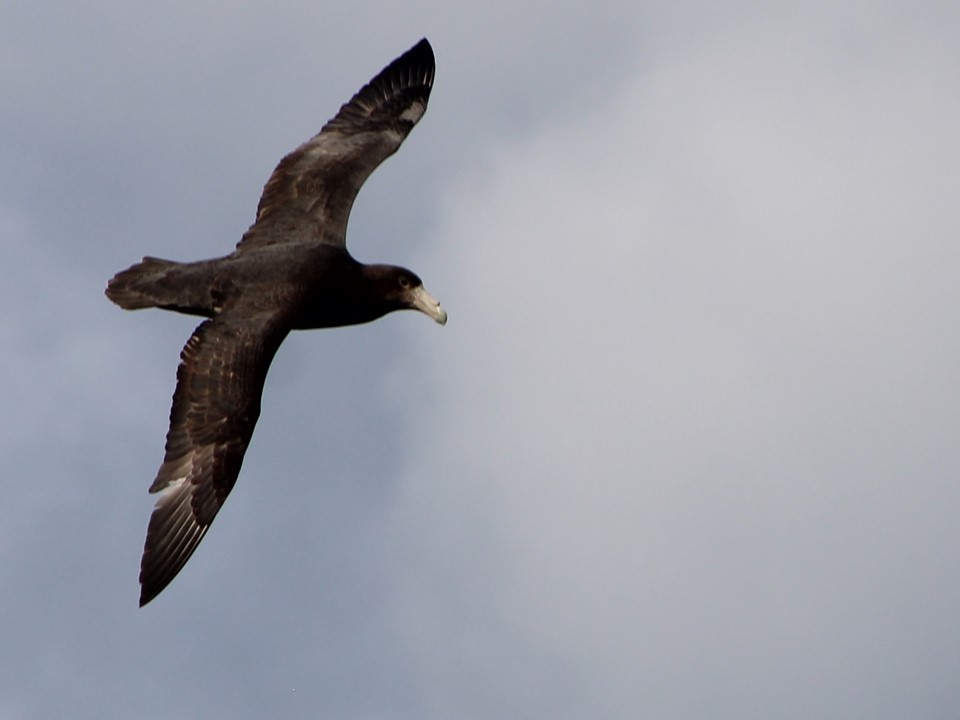
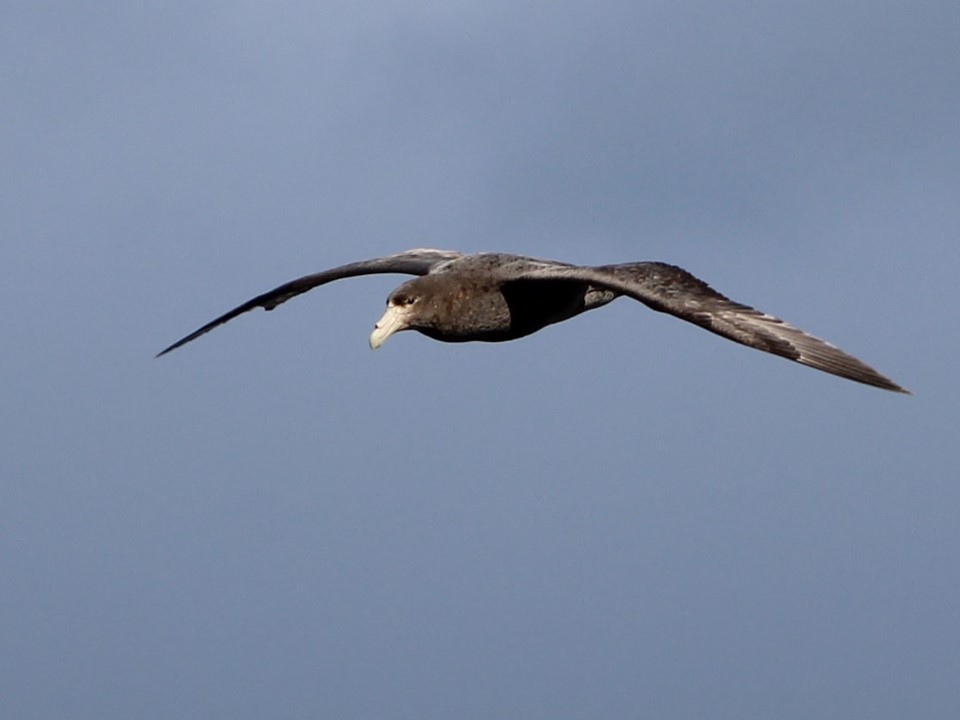
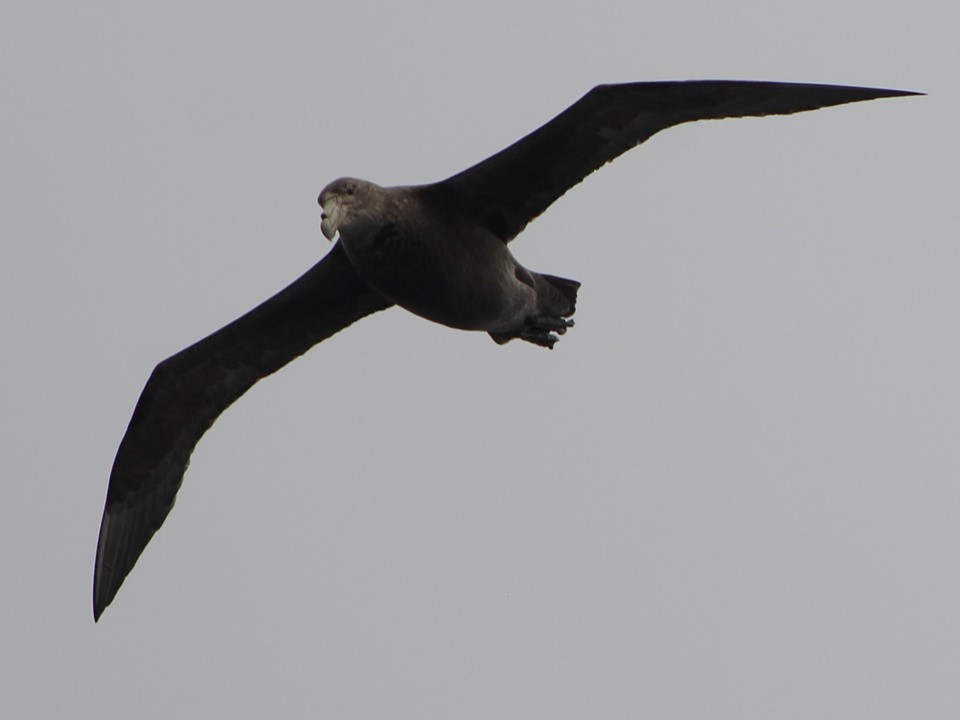
I believe the above photos are southern giant petrels – but I stand to correction.


The above would be black-browed albatross. The albatross was a bird I really wanted to see – so I was happy with this. I had hoped to see a wandering albatross, with the largest wingspan of any flying bird – although I didn’t see one on this occasion.

There were some penguins in the distance, although they were barely visible.
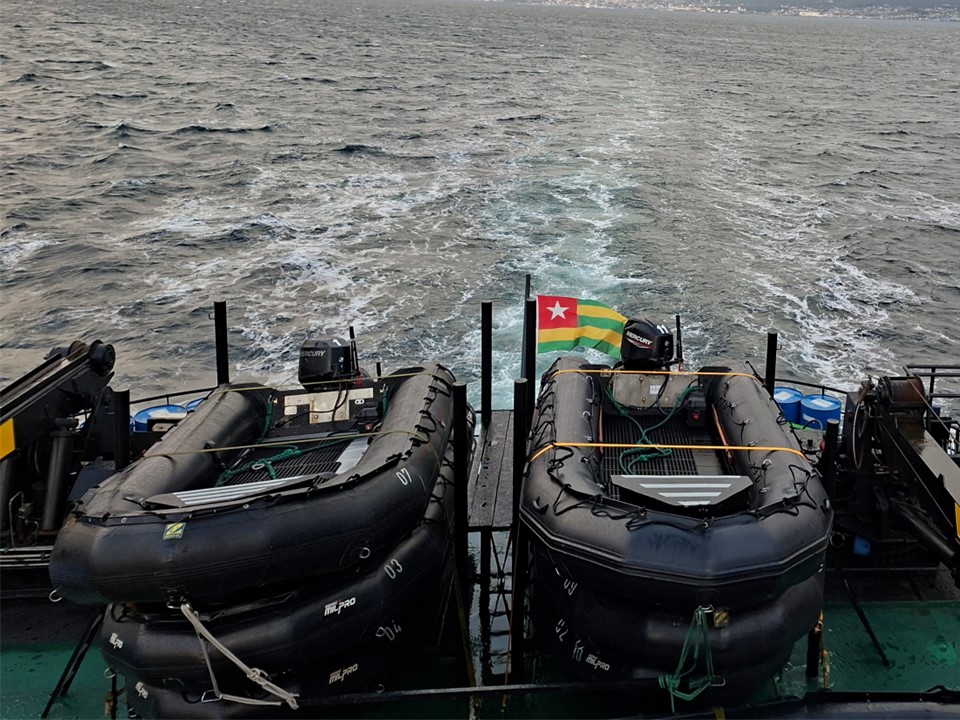
Conall noted that the ship was flying the Togo flag. Later we would see Lome (the capital of Togo) listed on the back of the ship above the license. Apparently this was due to the lower maintenance requirements if it is registered there – admittedly not the answer you want to hear about a ship that will take you through the roughest ocean passage! Luckily we only learned this well after we were past that.
Those boats in the photo above are called Zodiacs, and are used for landings and Zodiac cruises.
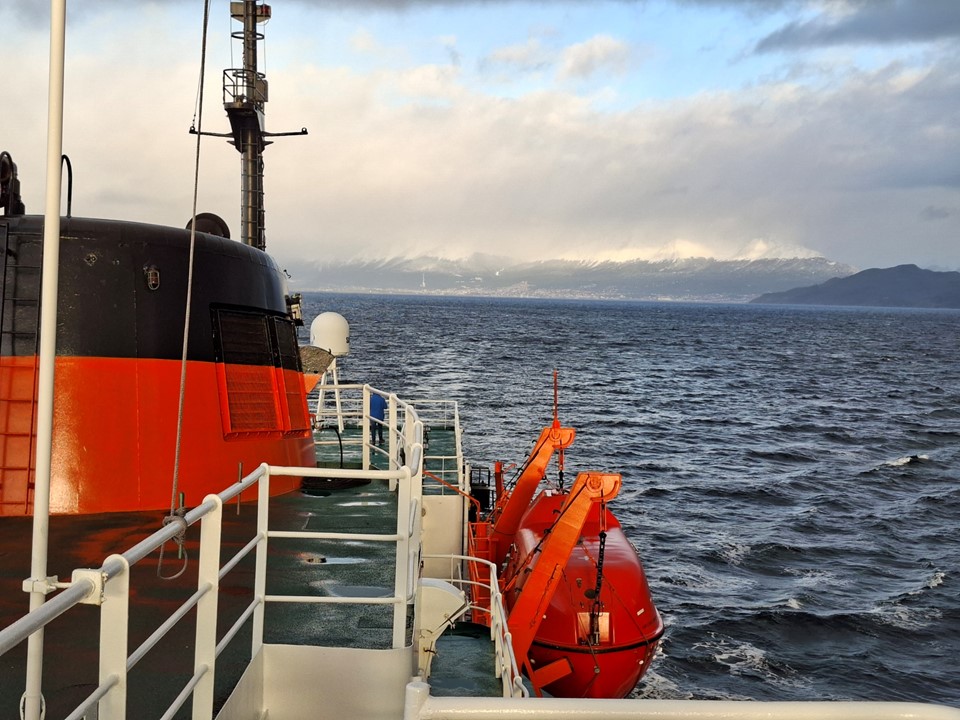
In the photo above, you can see one of the red lifeboats. Each has a capacity of around 60 people, so two are sufficient to evacuate the entirety of passengers and crew. You may also note that it is designed to be able to roll over, which is not very encouraging!
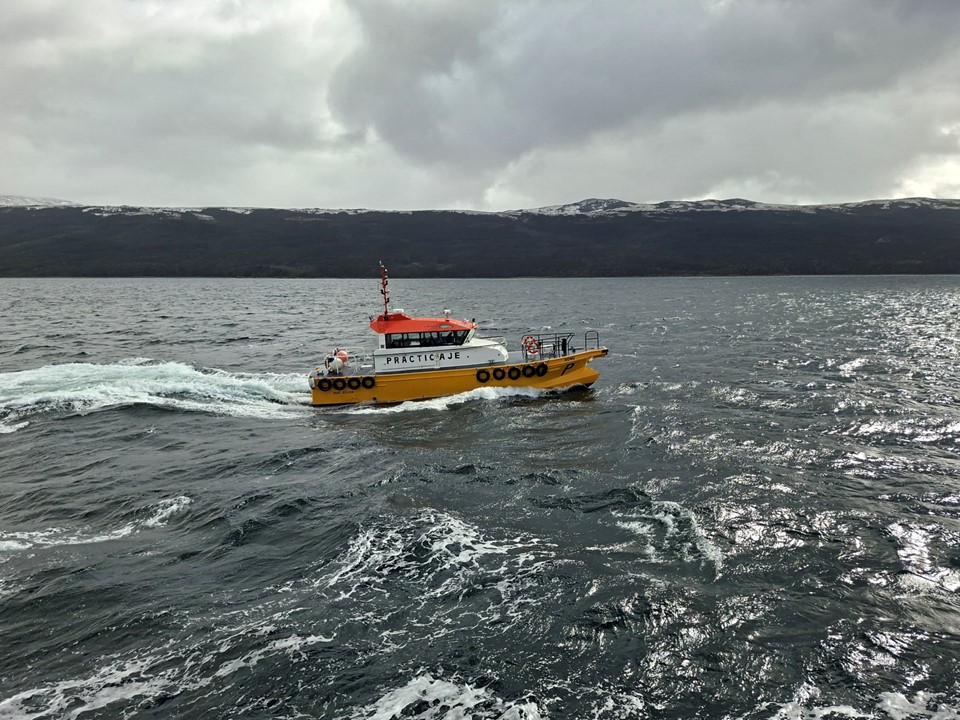
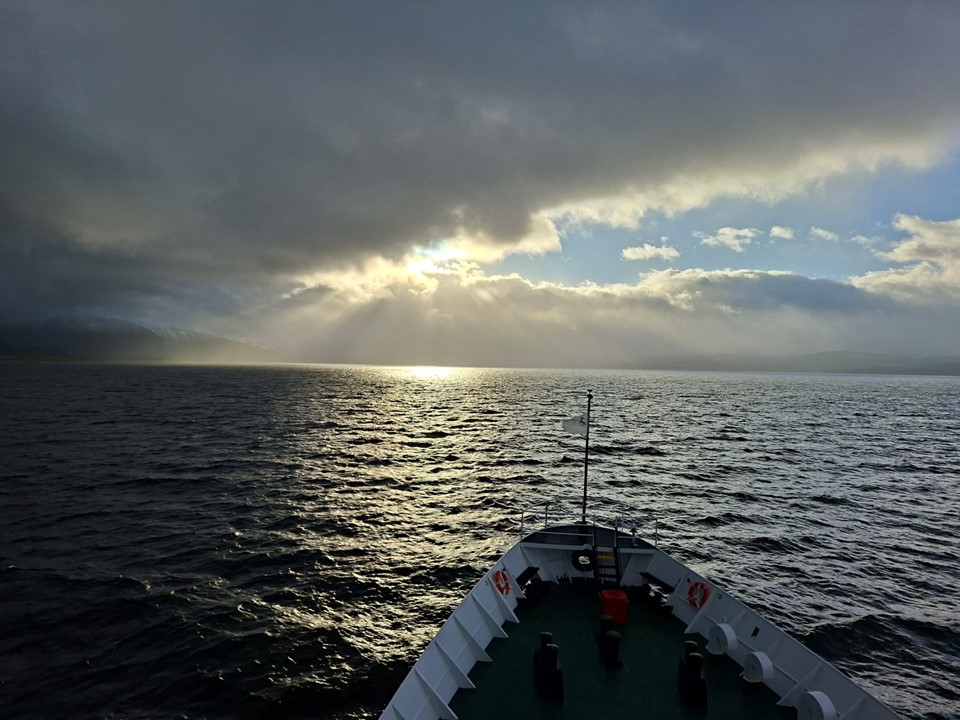
Soon a small boat took the pilot back to Ushuaia. This is part of a law that an Argentine pilot is required to captain the ship while in the Beagle Channel. As soon as the end of the channel is reached, they return to Ushuaia. This meant we were about to start the “fun” part – the Drake Passage. Being at the convergence of the South Atlantic, South Pacific and Southern Ocean – these are said to be the roughest waters on the planet. They say it comes in two flavours: if you’re lucky, the Drake Lake, or in our case, the Drake Shake.
What follows is a period of time with no photos. Why? Because the simple act of sitting up in my bed rendered me so nauseous that even trying to head to the bathroom was incredibly difficult. We would later be told this was only a 6/10 – the waves would have been roughly double the size the previous day. It would be ok if it was consistent, but each wave was wildly different to the last.
I had been taking my motion sickness medication from well before the crossing, but I’m not sure if it made any difference. I had done well not to throw up, but I had also eaten nothing since we started the crossing. I sat up in bed, took some water, and swallowed the pill – I did not feel well. A minute later, I somehow managed to race to the bathroom and lose my ability to say I crossed the Drake without throwing up.
The following morning, my roommate kindly brought me two croissants and a banana for breakfast – the first food I had eaten in a while. I managed to eat it slowly and this time was fine.
With great difficulty, I made it to the mandatory briefing on Antarctic landings, and received my life jacket and boots.
The following morning, it was immediately obvious that we were no longer in open waters. Conall suggested we go and watch to see if we can get the sight of first land.
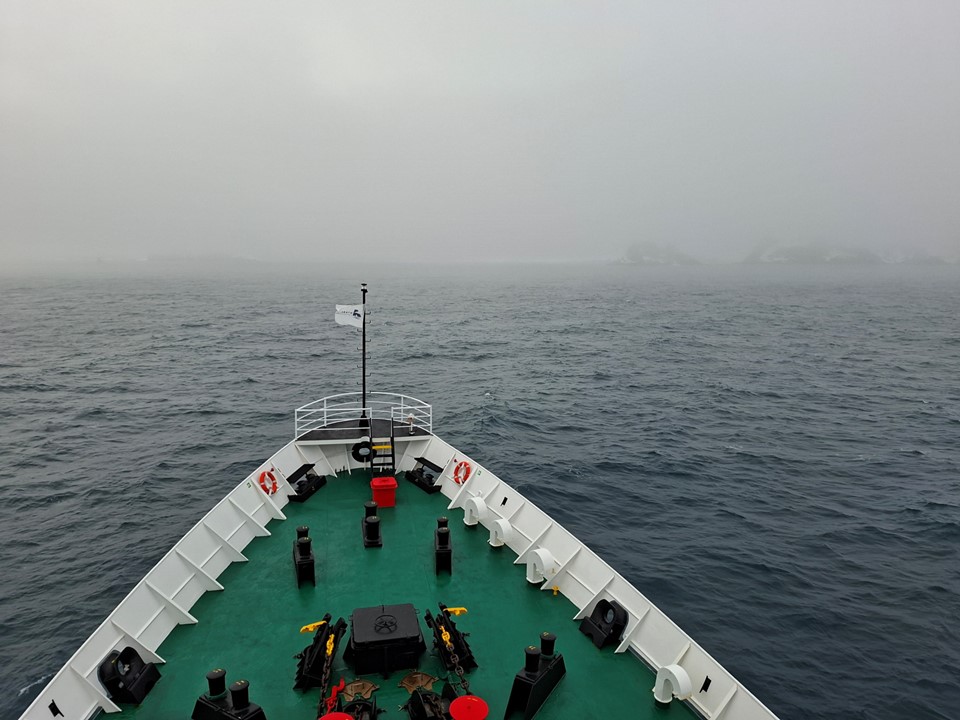
Suddenly, through the mist, some icy rock appeared. Naturally, I said “land ho” – to the amusement of no one.
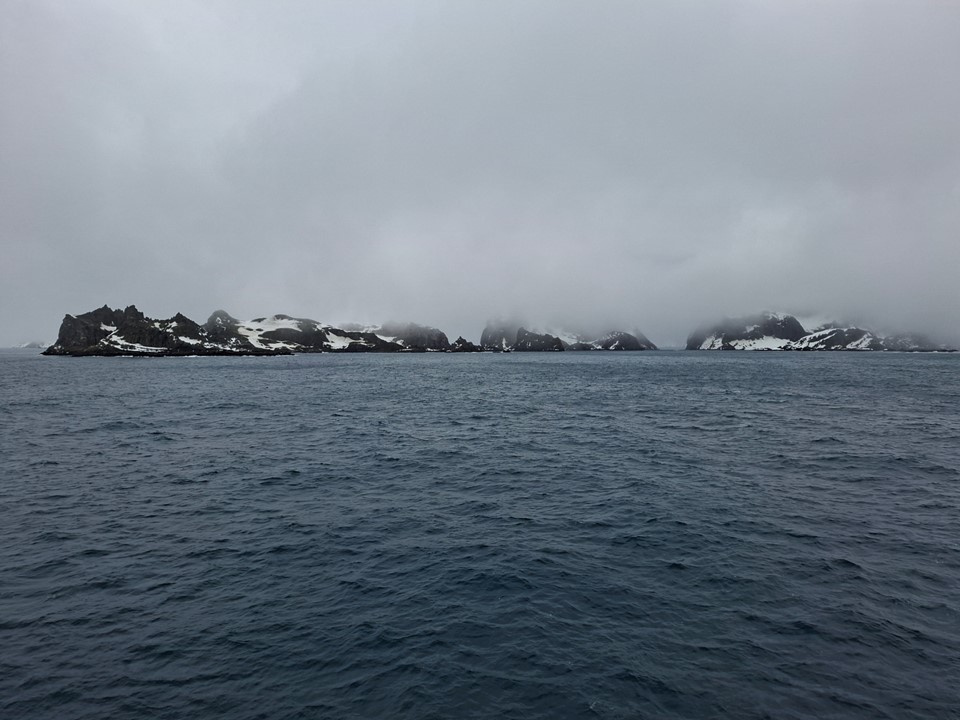
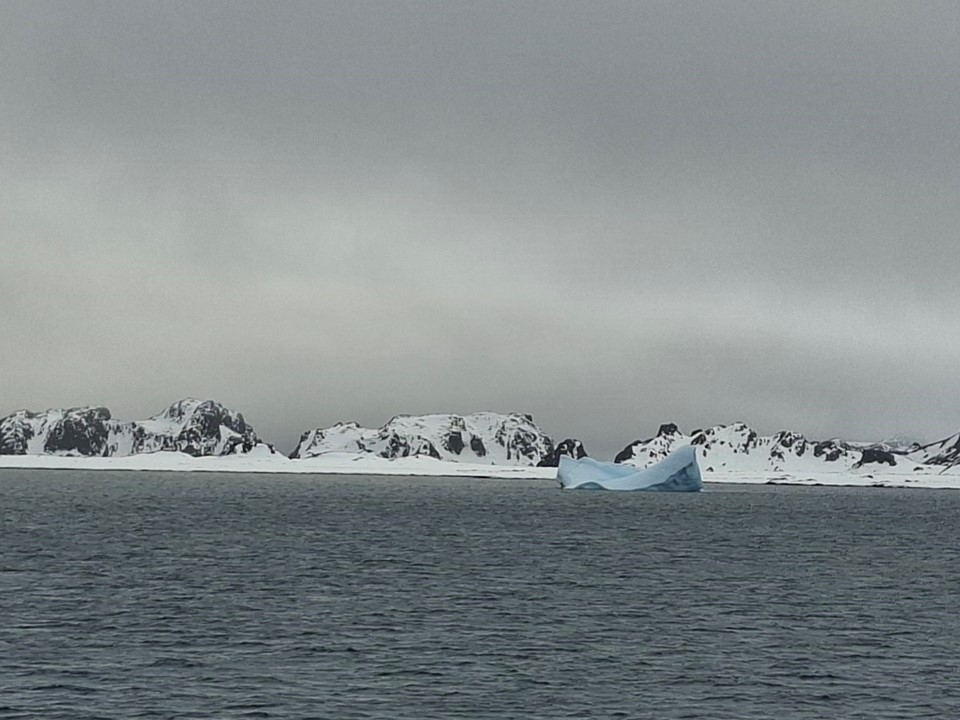
There it was: the South Shetland Islands. Does this count as seeing Antarctica? Well, does seeing Ireland count as seeing Europe? It really depends on how one defines this. Either way – it was the first time we had seen land, and everyone was excited.
After breakfast we would be preparing for our first landing – Half Moon Island.

While we ate breakfast, we moved through the clouds to a clear area. Outside my room I could see snow, ice and rock. It was a different world out there…


 Ghaznavid Hiking