Ama Dablam Basecamp is a beautiful place to rest and recover. As a result, plenty of hikers not attempting the mountain come and visit each day. However, some of them fail to recognise that walking up to someone’s tent and taking a photo inside without asking first is incredibly rude. Others come want to come and chat to people in basecamp – which is fine, but some of them are clearly sick and really should keep their distance. That being said, I think its more likely that random visitors to basecamp got the flu from me than the other way around!
I kept my tent door open as much as possible so I could enjoy the view, but in the instance of some more obnoxious visitors to basecamp, I was forced to close it. And yes, that instance of someone walking up to my tent and taking a photo inside did actually happen, as well as others standing outside and staring in.

I spent my three days in basecamp lying in bed staring at Khumbi Yul Lha and listening to an audiobook. I had finished Stephen King’s book The Stand a few days earlier and was now on Seven Pillars of Wisdom by TE Lawrence.
During this time I would get up and get some tea or water from the food tent, or when the lighting was good, get out my big heavy DSLR to get some photos of the mountains in the region. There are twelve different mountains (7% prominence definition) above 6000m visible from basecamp, although not as impressive as the 30+ visible from camp one. Khumbi Yul Lha (a 5000er that is sacred to the locals) grew on me during this period – as I write this, there is an A2 canvas print of it taken from basecamp on my wall at home.
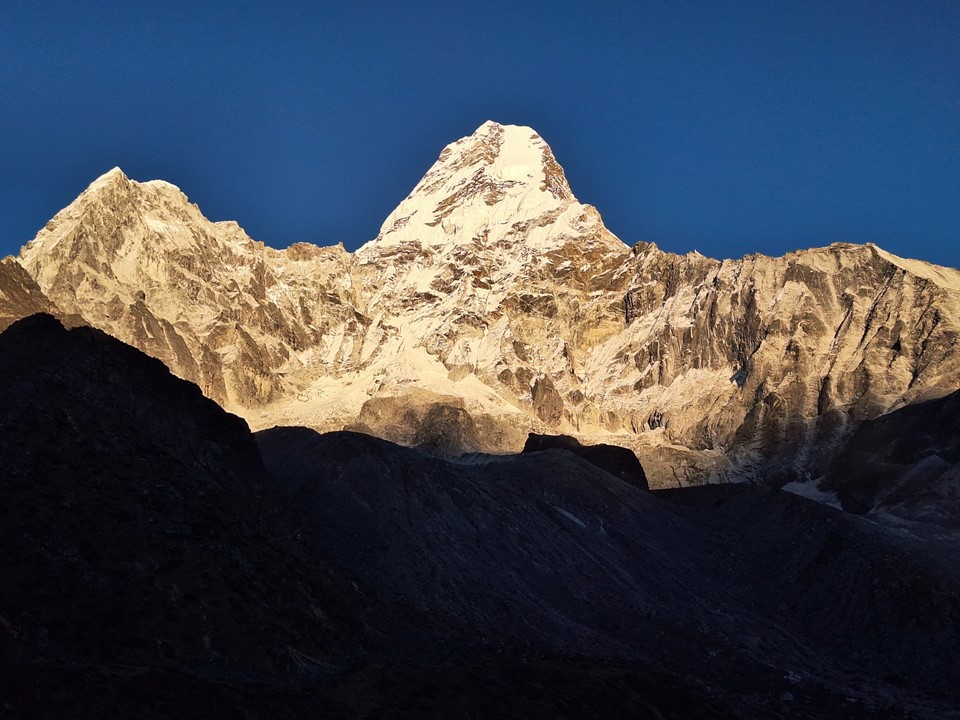
But alas, one can’t wait in basecamp forever, and soon we were at the weather window. This was the last chance I would have on the mountain, there wasn’t another window expected before my flight home, and if I haven’t recovered adequately by now, I probably won’t be ready before I head home.
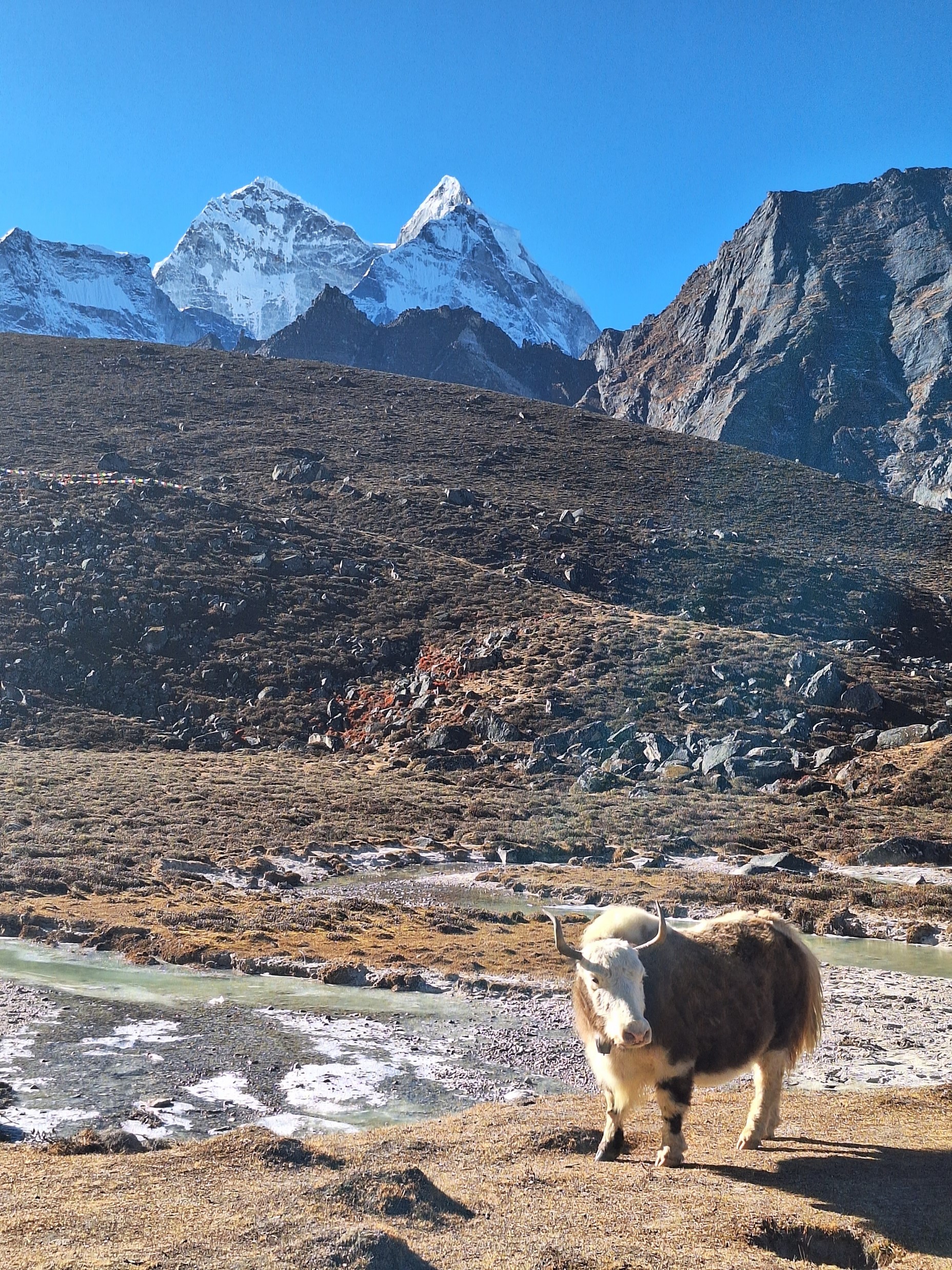
Pasang was back at home in Khumjung, and Chuldim would be my guide for this final attempt. Both are great guides, and I would recommend either of them for anything from an easy trek to EBC to an expedition on a technical mountain, but I quickly became aware that Chuldim had more experience on more technically difficult mountains, and had views more similar to my own ones regarding safety in the big mountains. While his first three ascents on Everest were via the standard Nepal route, his five subsequent ascents have all been from the north as he considers the Khumbu Icefall as too dangerous. A sentiment I have long held. If I ever attempt Everest, I doubt I will attempt it from Nepal for this reason.

Before we set off, I had to run back to my tent to get something and realised I was feeling weaker than I expected. This was worrying. I was still coughing up green phlegm, so I was aware that the odds of getting up were practically nil, but I was going to at least see how I felt up there.

As we climbed the first ridge, it was notable how empty basecamp had become. Few attempt the mountain so late in the season, which was in no small part why I picked late November. In the photo above, you can see our cluster of tents on the left – most of the tents had been taken down as I was the only tourist left in the group.
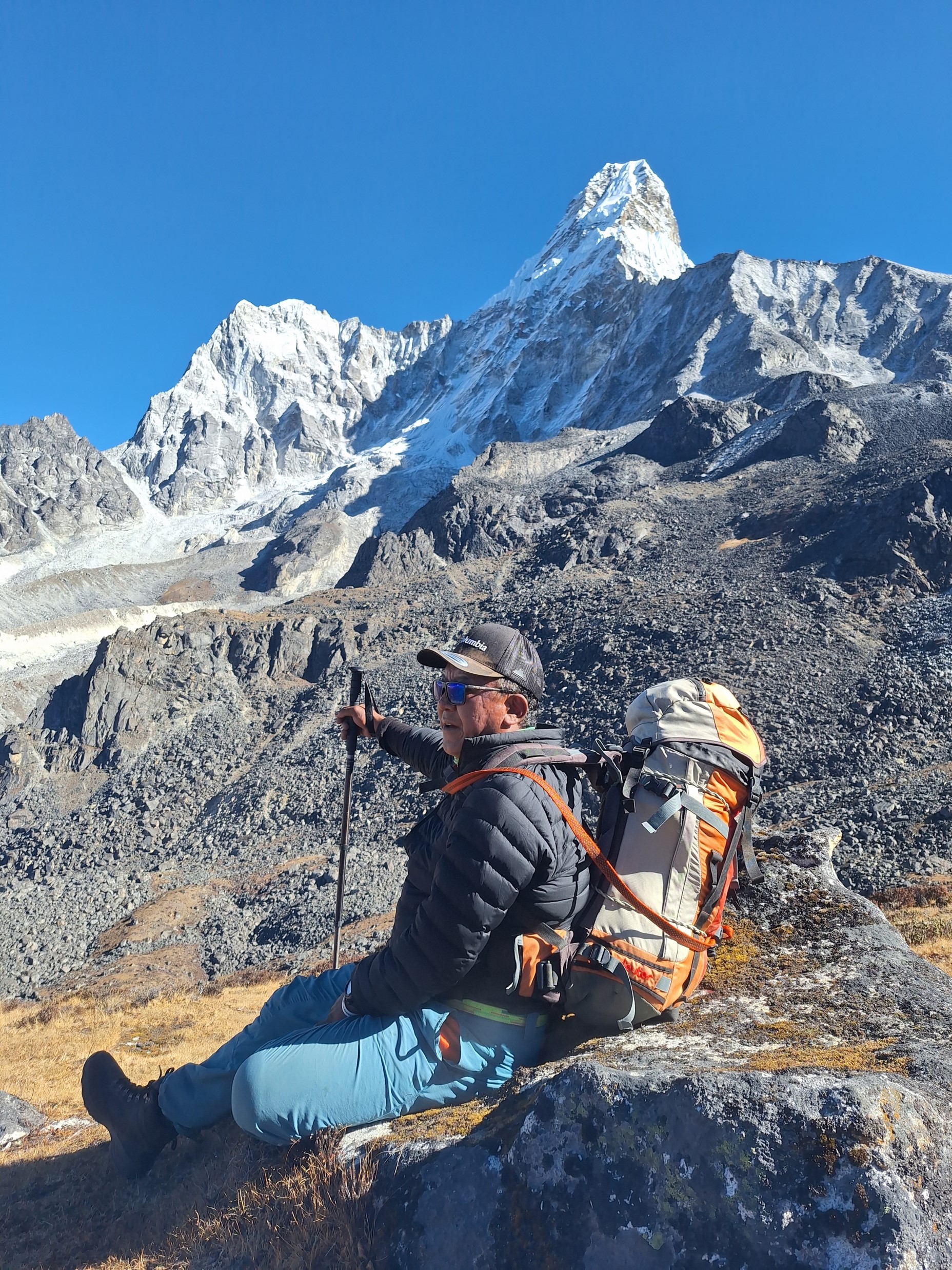
We made reasonably good progress up the first section, although I didn’t feel as strong as I had on the previous try. It was a beautiful day, and I was happy to take it easy and enjoy the views.
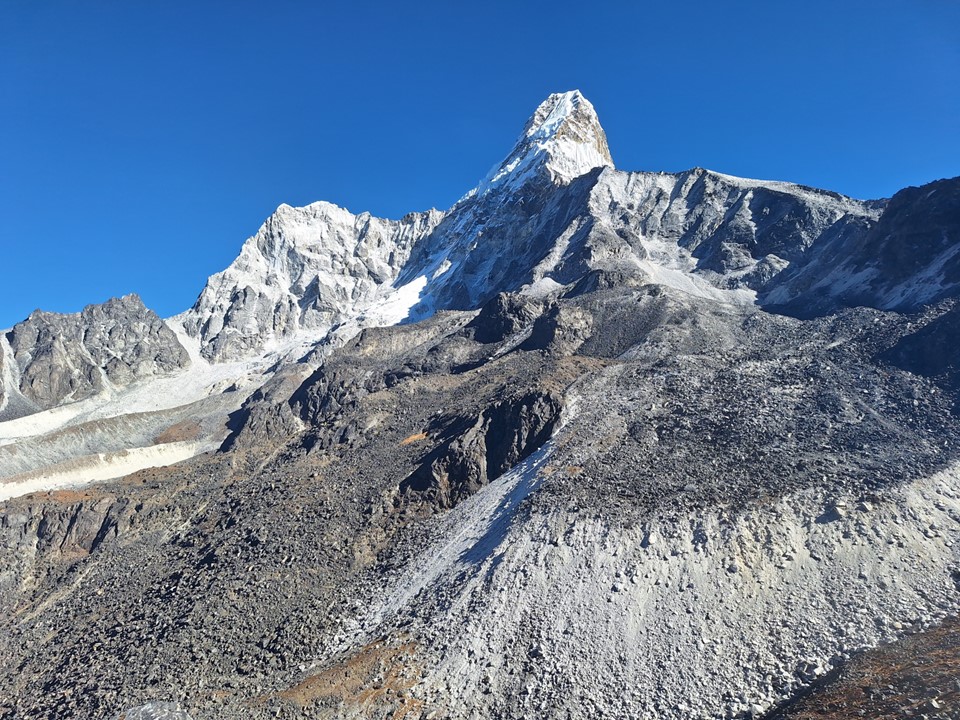

I had paced the lower section a bit better this time, and didn’t need nearly as many breaks on the section below the main ridge.
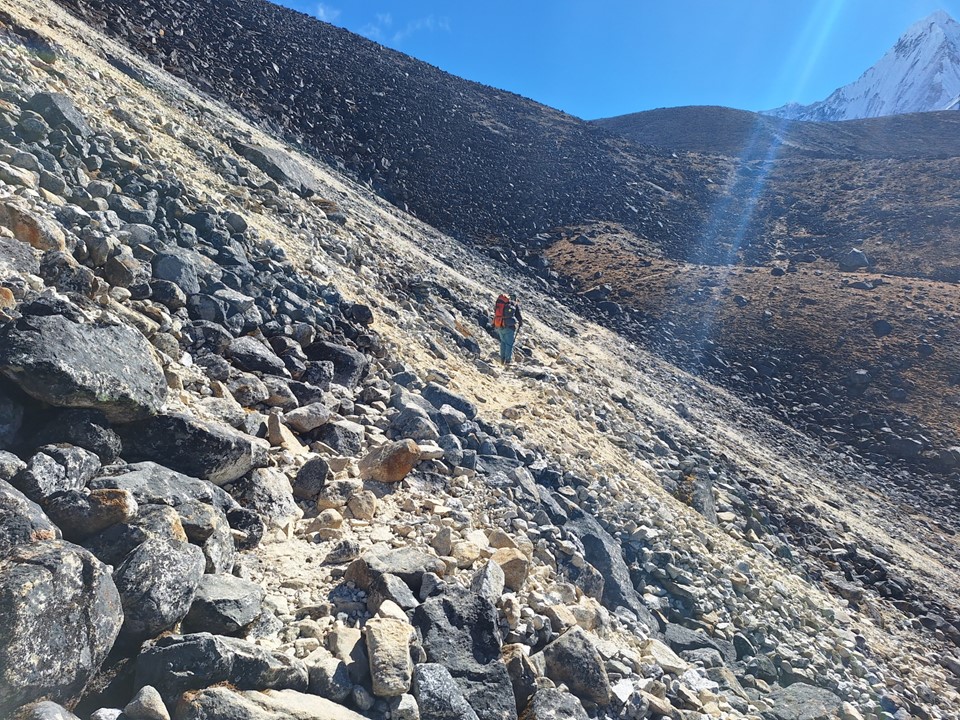
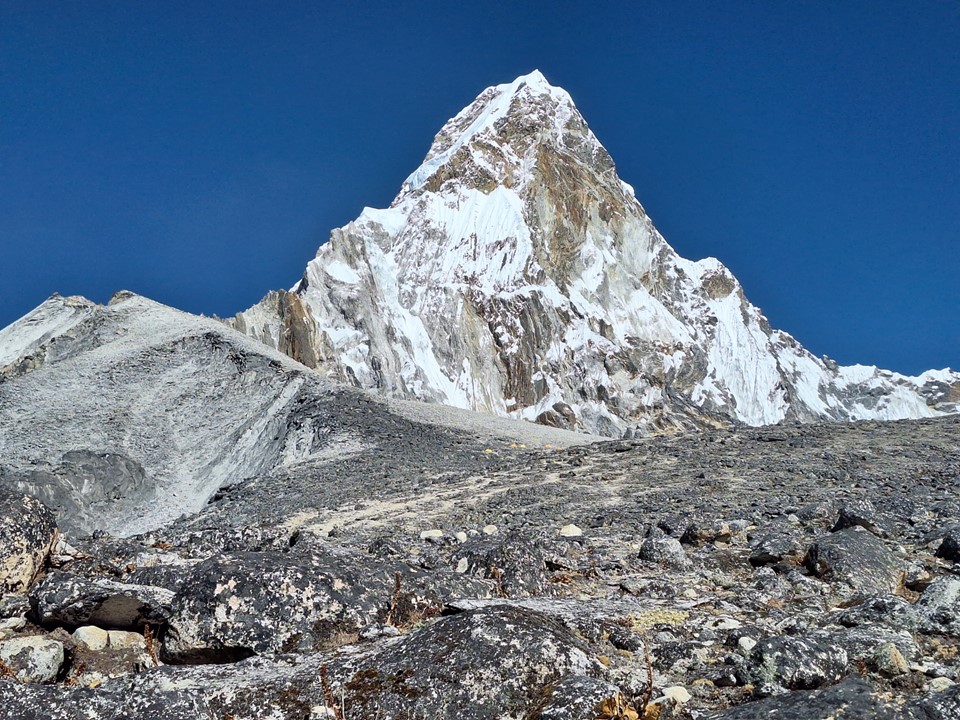
As we got higher, I was really not feeling well. Chuldim eventually told me to sit down, gave me an apple and told me I wasn’t allowed to stand till it was finished. If one is in a life-threatening situation on a big mountain, this is the attitude your guide needs to have. He reminds me a bit of Dickson from Zara Tours in Tanzania (my guide on Kilimanjaro and Meru) – great guy to sit and chat with when things are going well, but when things get serious, he gets very firm and doesn’t accept any nonsense. I wasn’t in a life threatening situation by any means, but he was right that I hadn’t eaten enough. As I’ve become stronger in the mountains, I’ve needed less food during the day and have managed to get into a bad habit of not eating enough on my harder hikes.
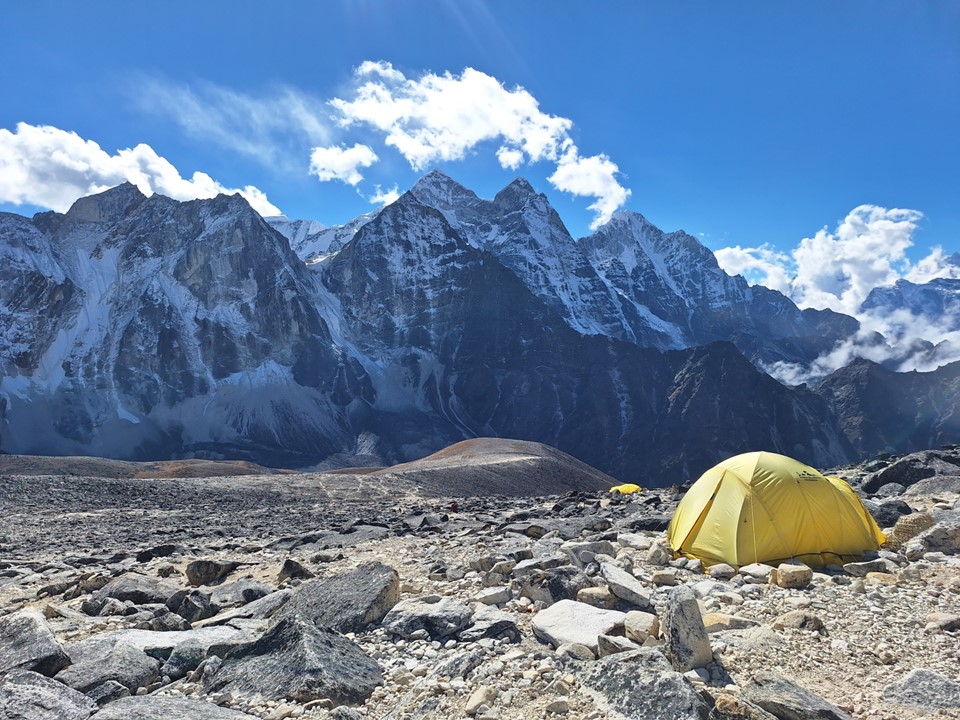
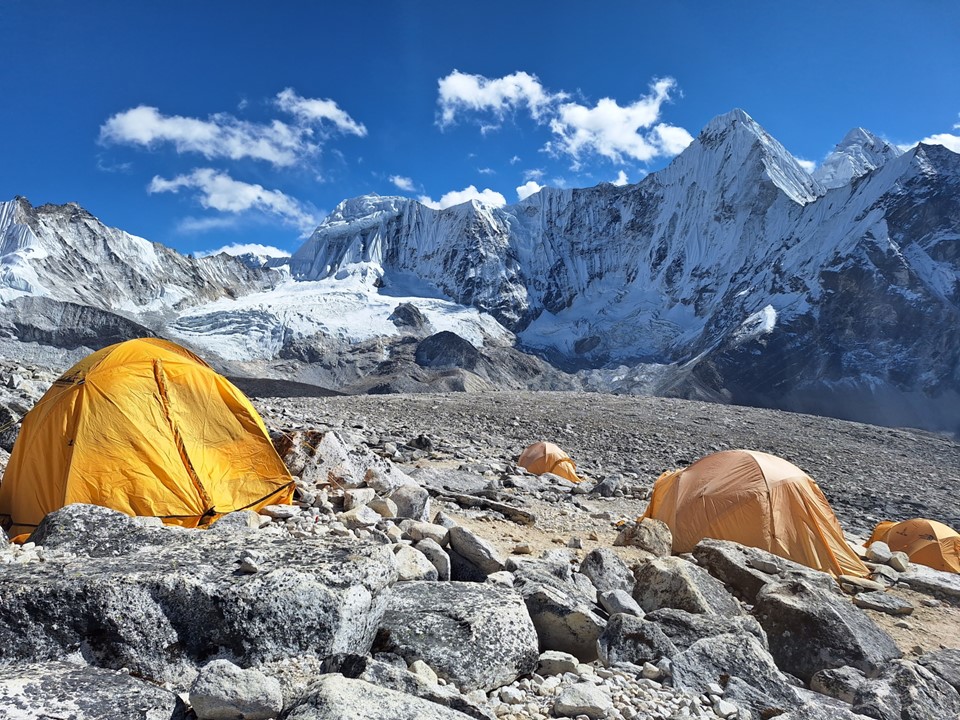
We took a good long break at Advanced Basecamp. I had some more to eat, and took some photos. I am absolutely blown away by the scenes at ABC. Pasang had mentioned that he has started advertising tours where he takes people to spend a night at ABC as part of the EBC route. ABC on Ama Dablam is far more spectacular than EBC – so this could potentially ruin their expectations for higher up, but if anyone is looking to do EBC and has the time for this detour, ask your guide if they can include a night at ABC on Ama Dablam – it is well worth the effort.

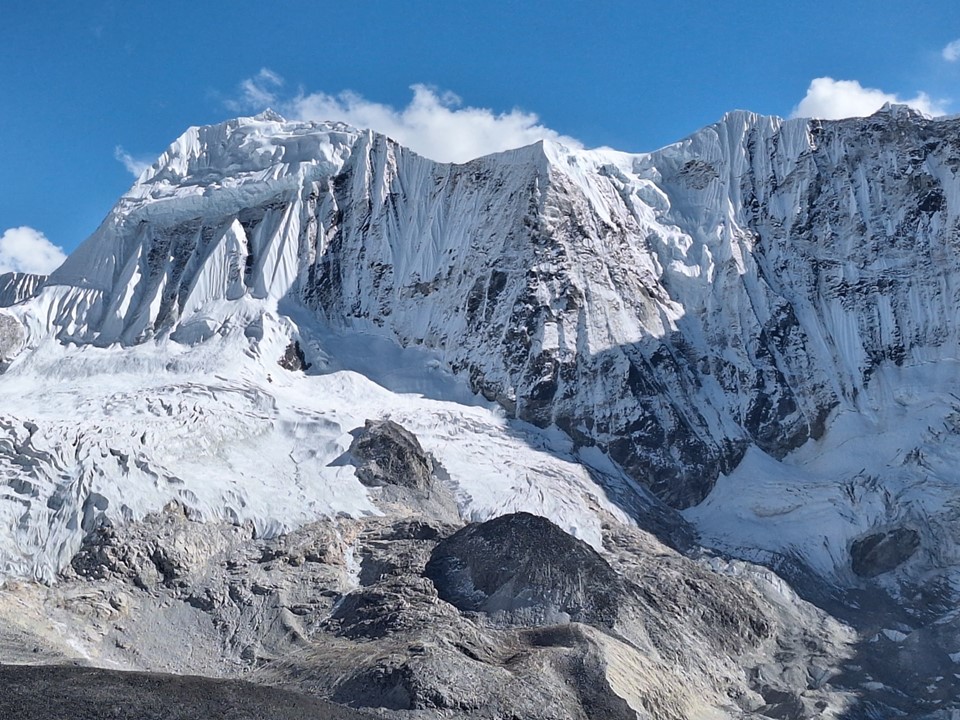

Chuldim made a point of staying close to me through the boulder field. I had navigated it on my own without issue the last time, but he wasn’t taking any chances.
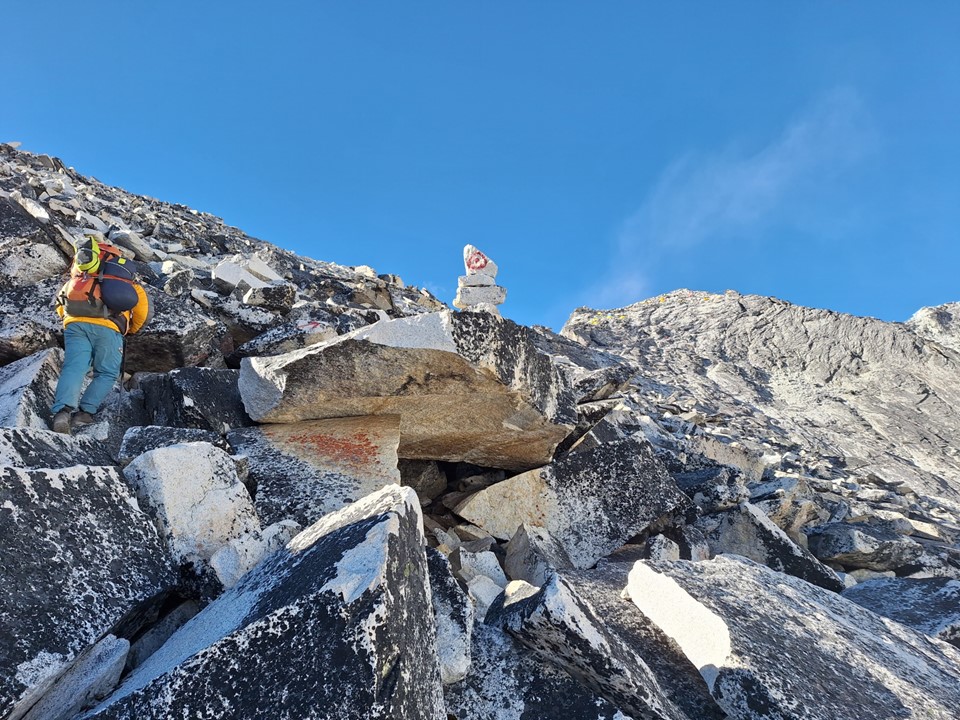
In the photo above, you can see the overhang I hit my head on previously. It gives a bit of context of how bad my state of mind was on that first try – this is pretty hard to miss, as my head found the hard way (pun intended).
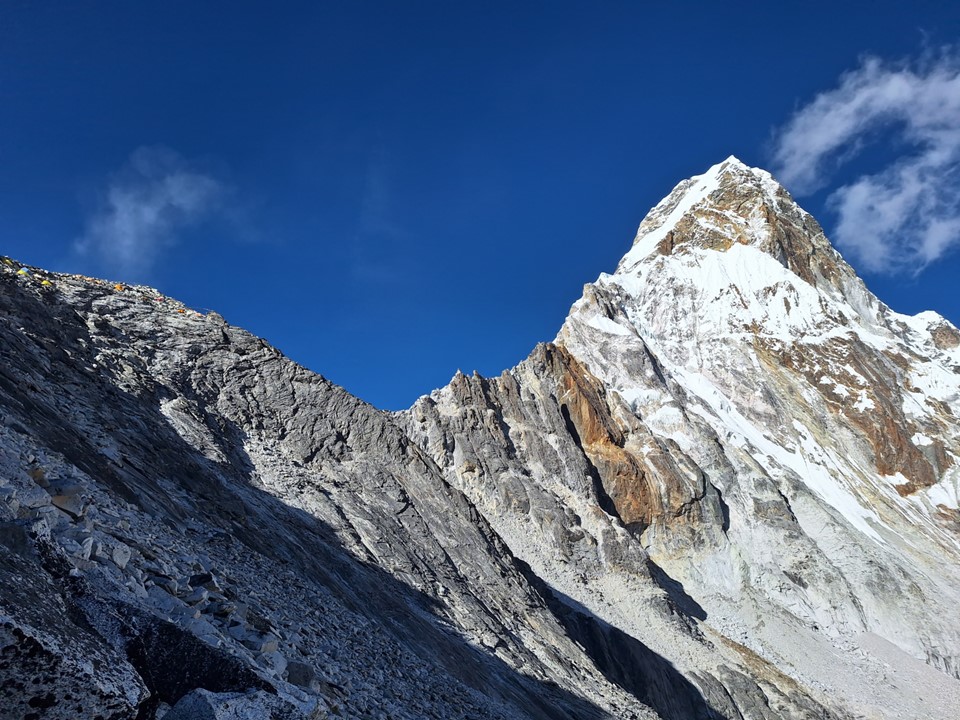
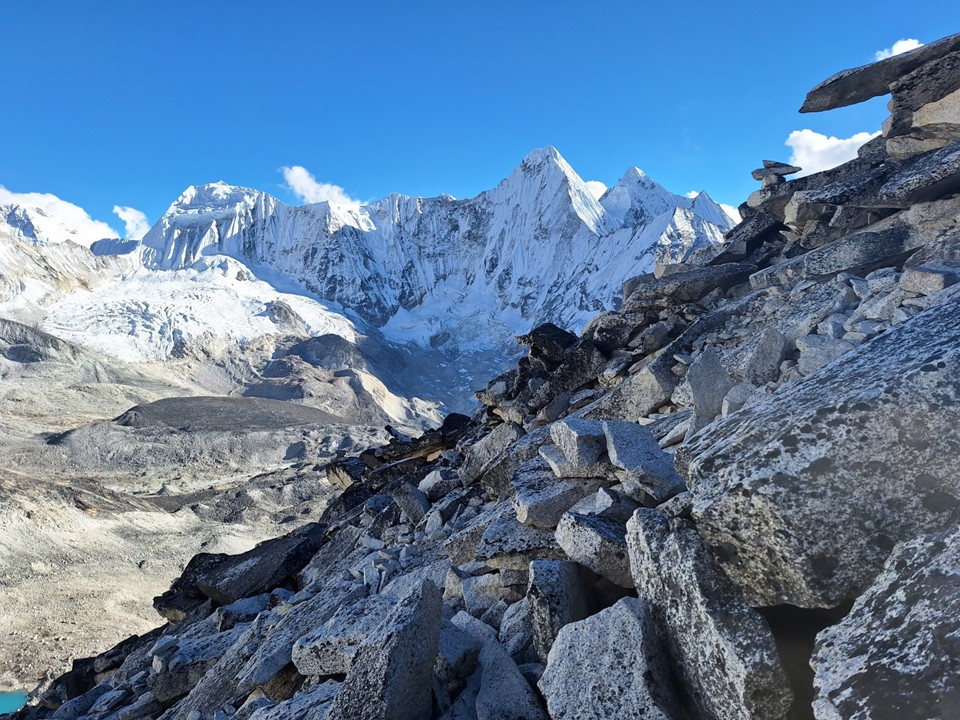
We got to the fixed ropes, and this time I had my harness and ascender with me (they were in the bag Basanta carried up last time). By this point I was well aware that I wasn’t going to be trying for the summit, and decided to jumar up the fixed ropes so I could get to camp one faster.
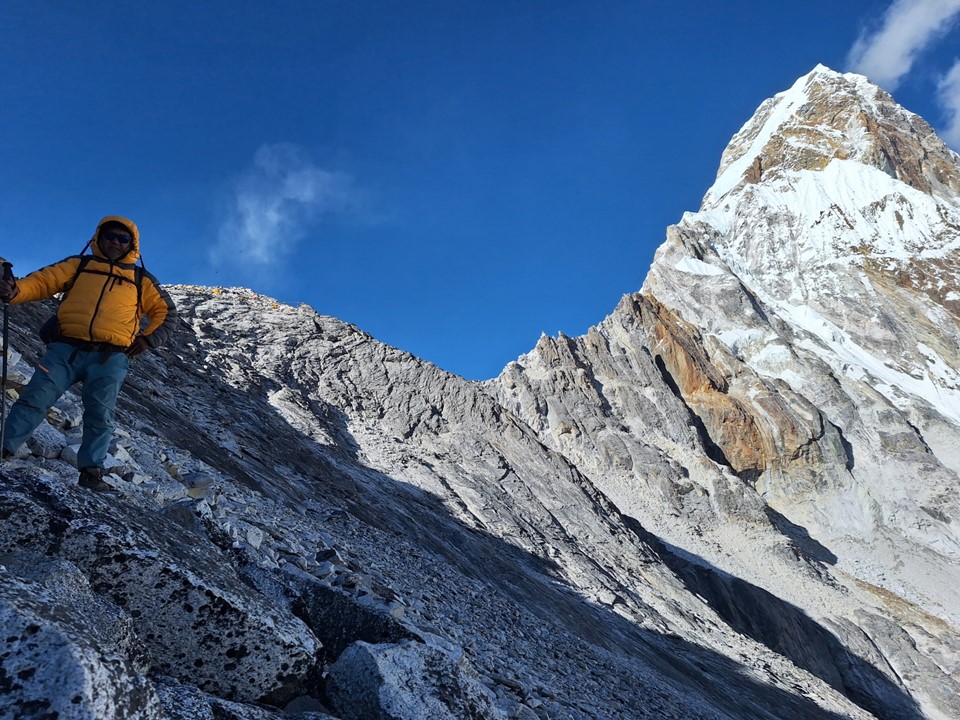
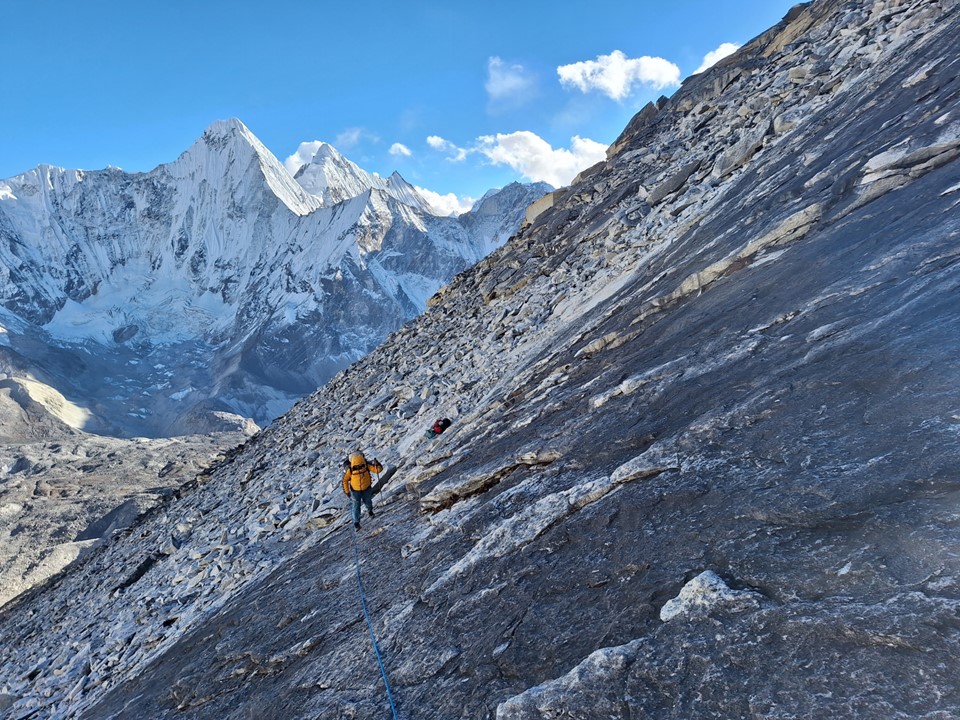
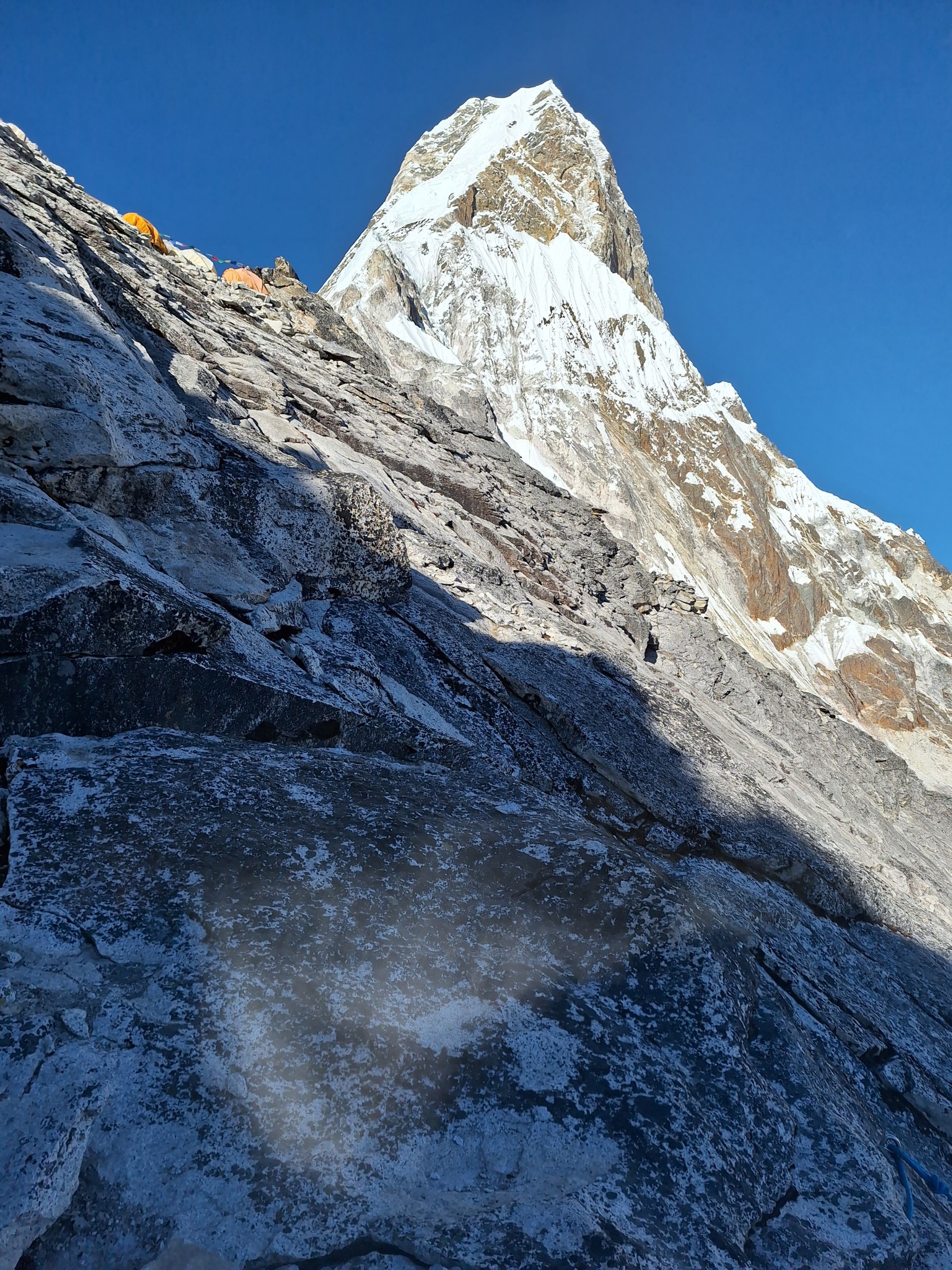
We reached camp one earlier this time than we had the previous time. I asked Chuldim what he thought, and he agreed that I was too sick to attempt the top. He would go up to 6000m to retrieve the gear that Pasang and I had stashed and I’d wait in camp one.
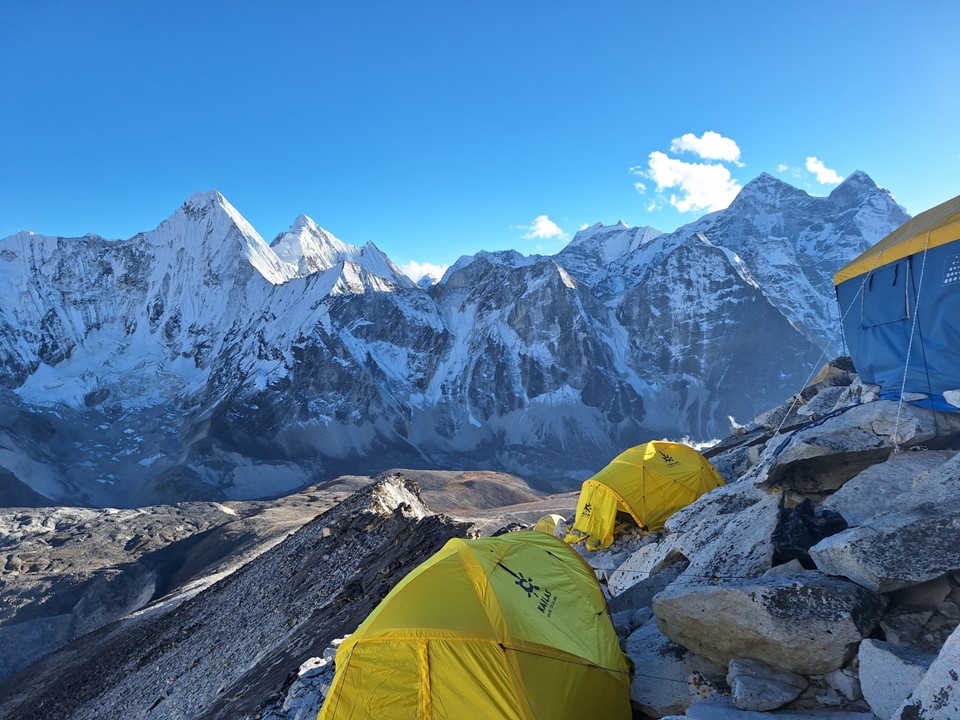
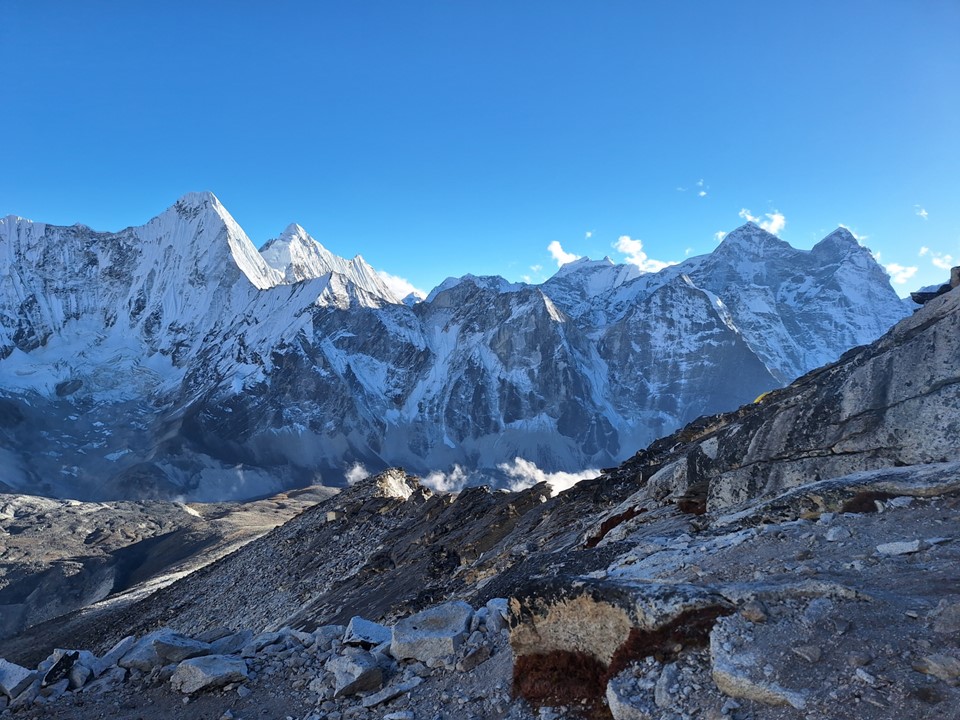
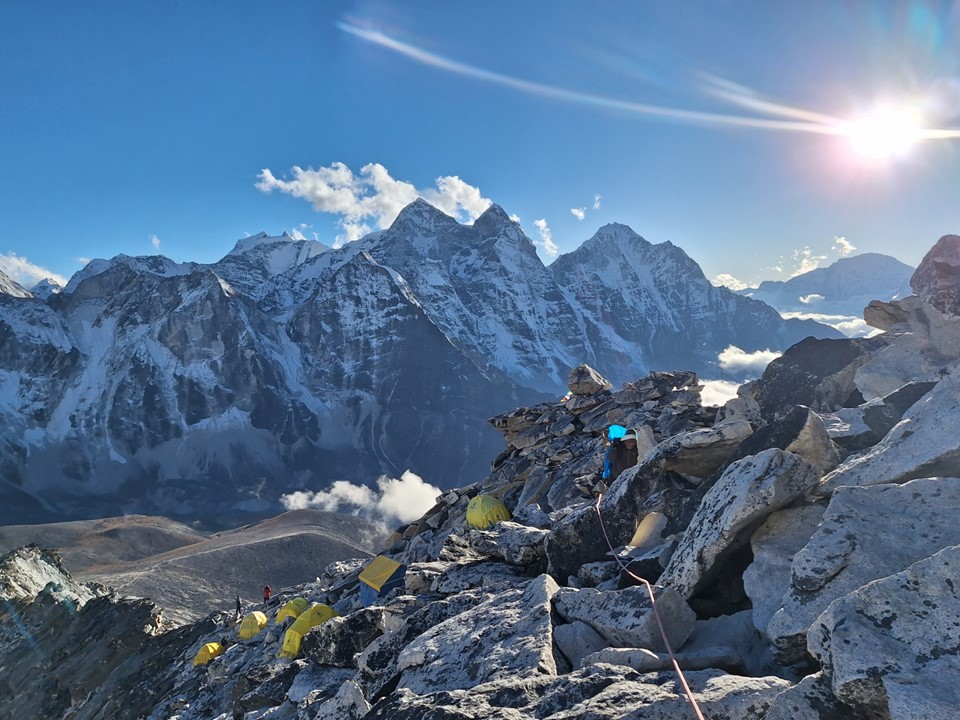
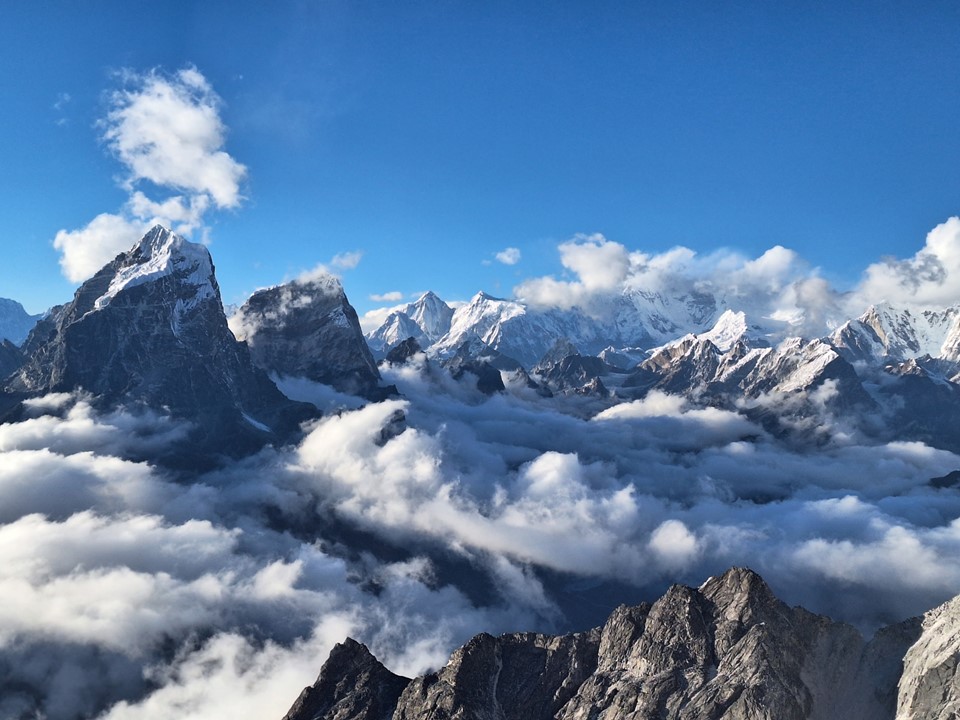
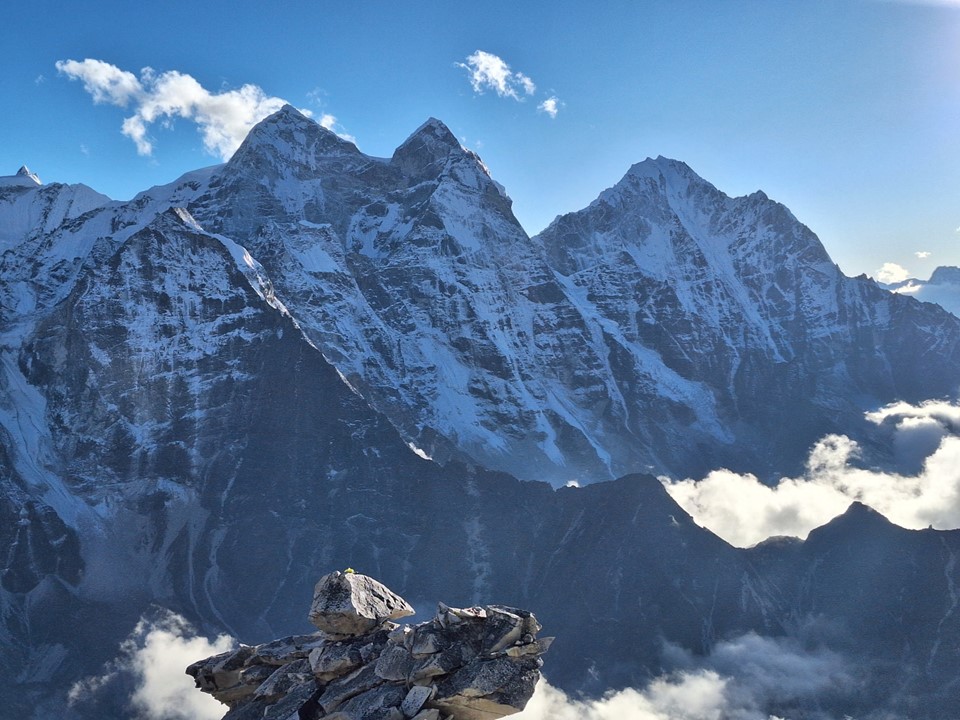
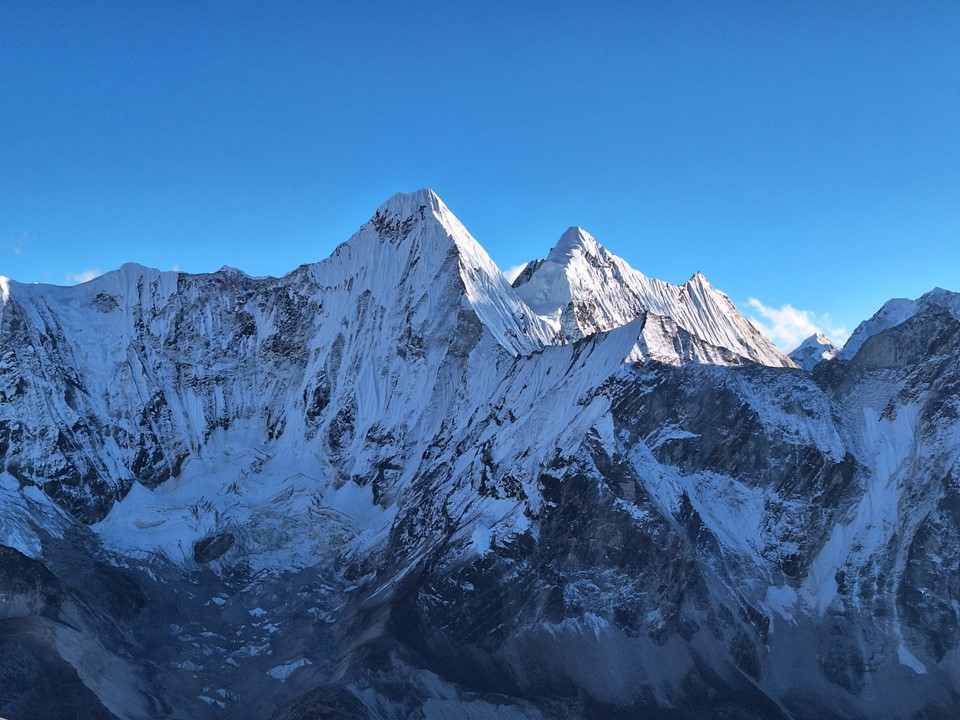
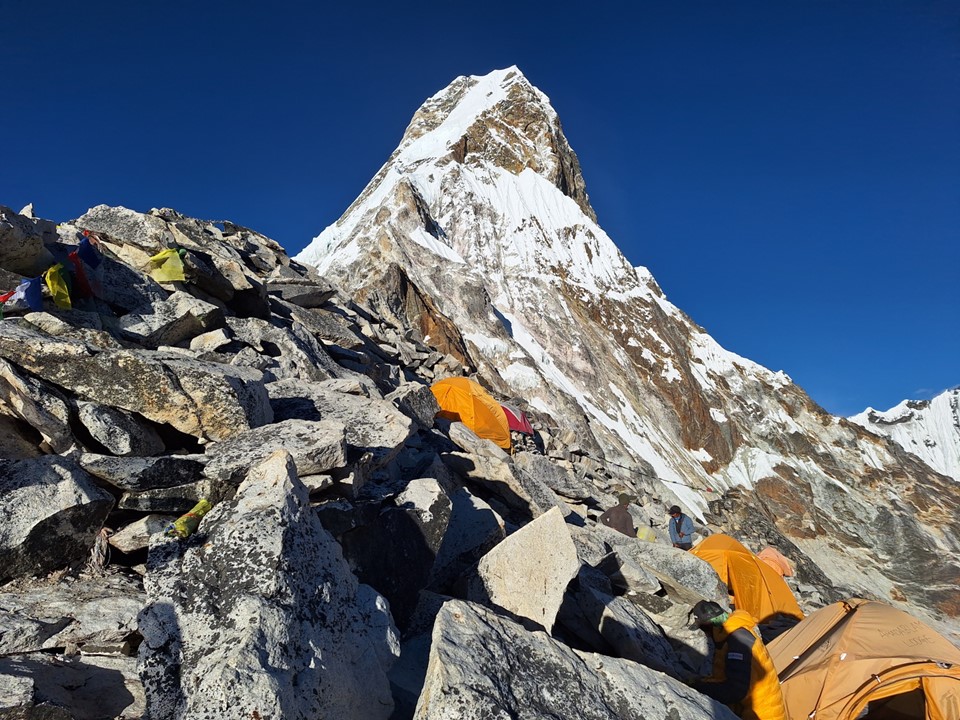
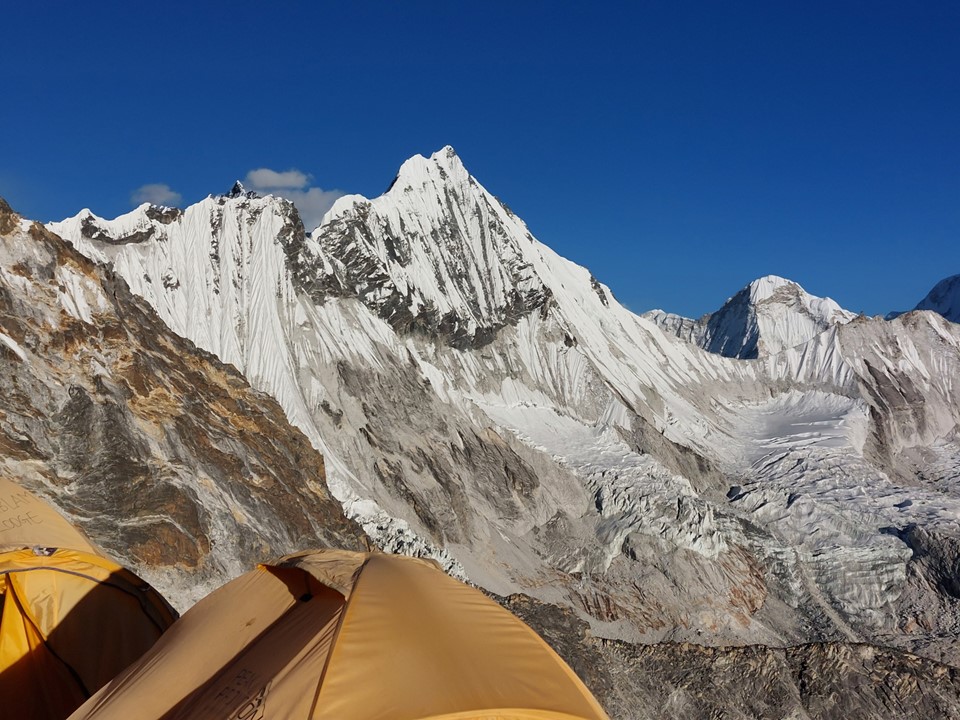
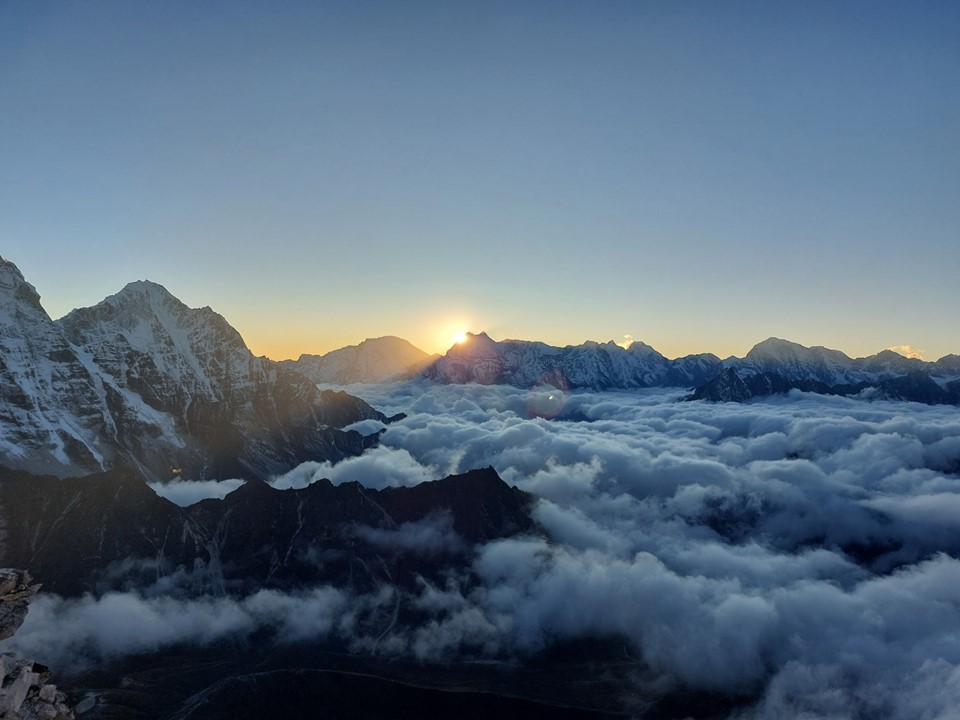
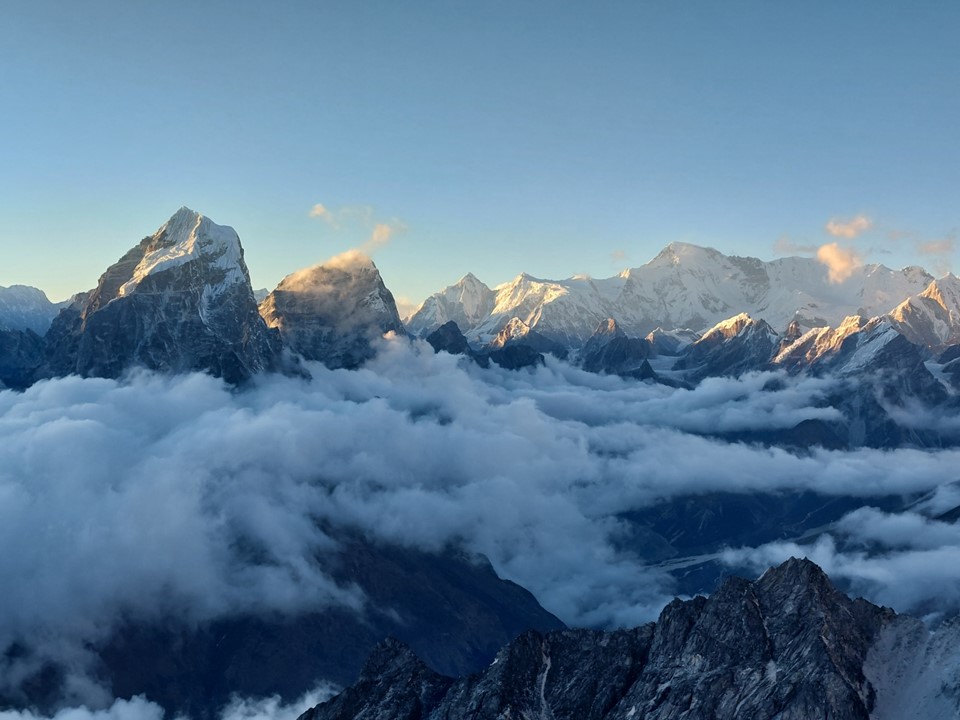
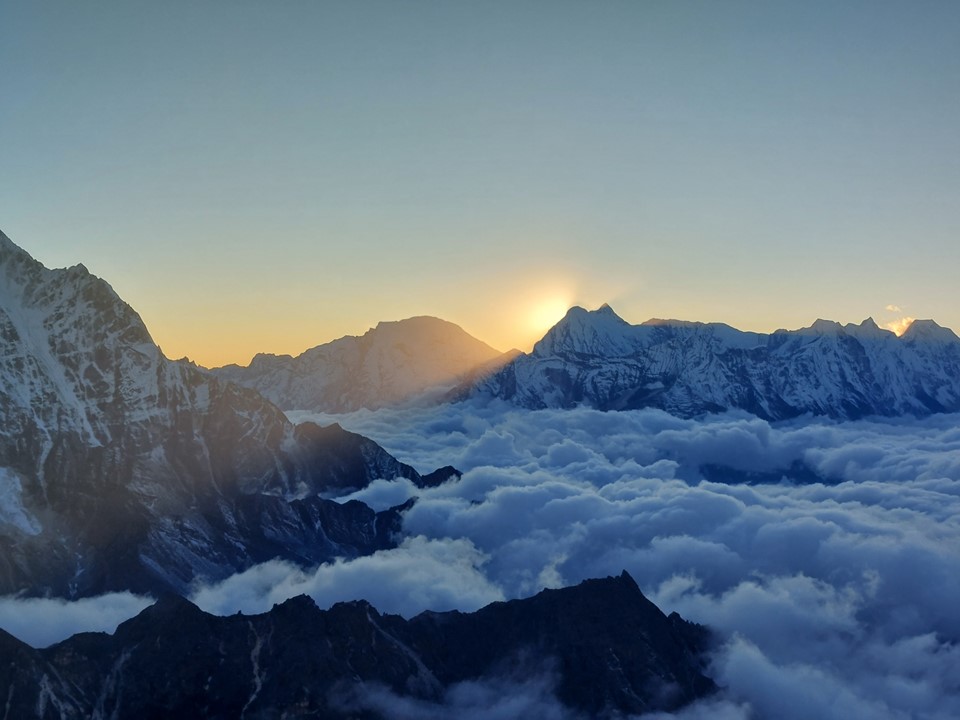
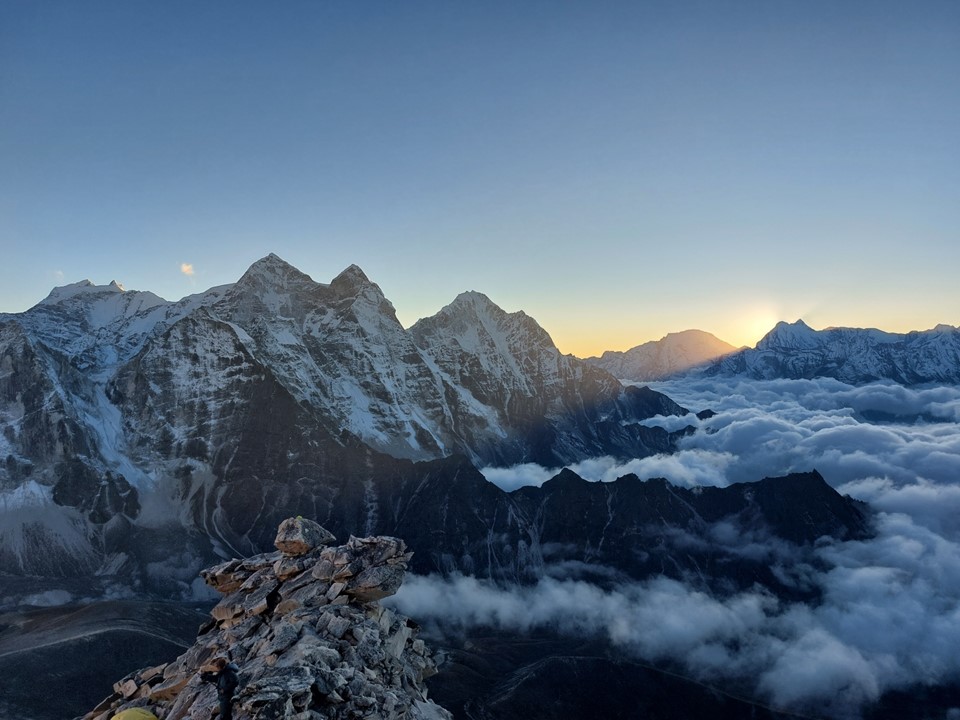
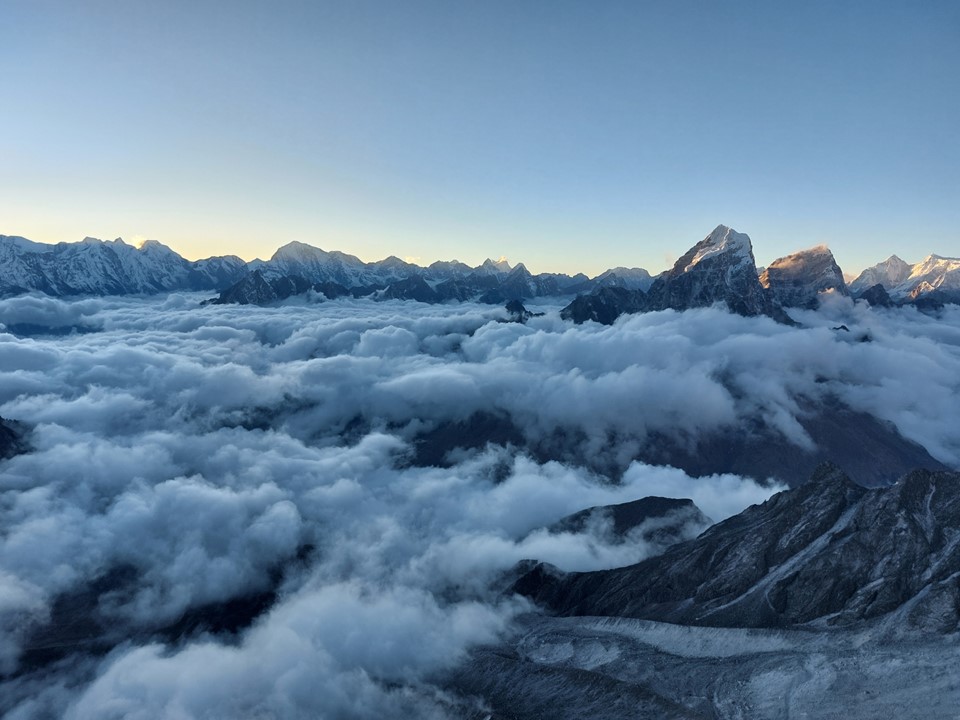
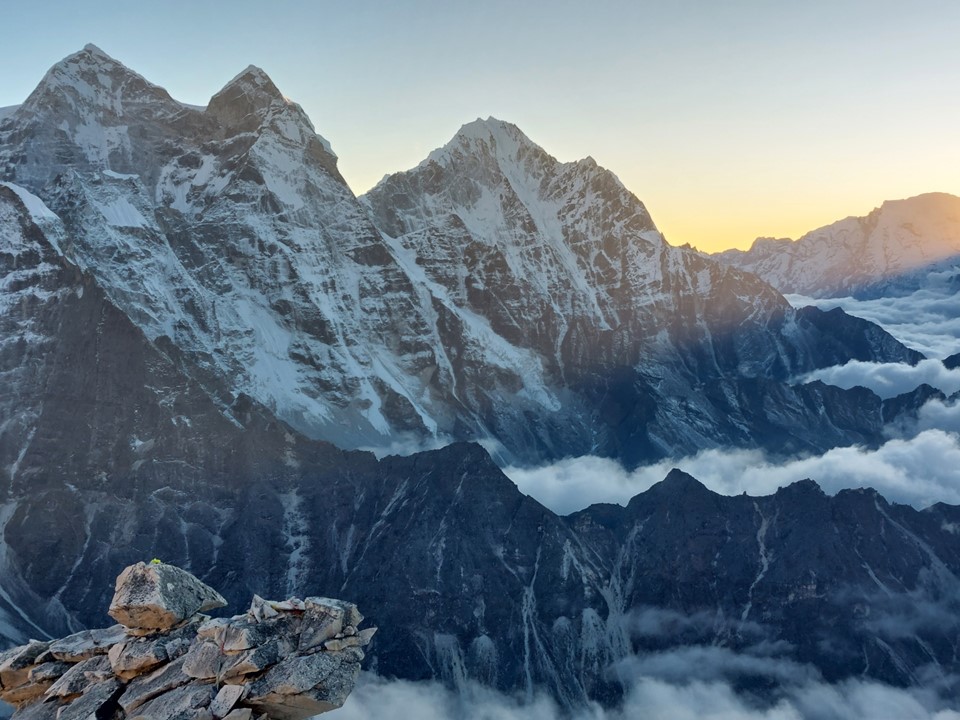
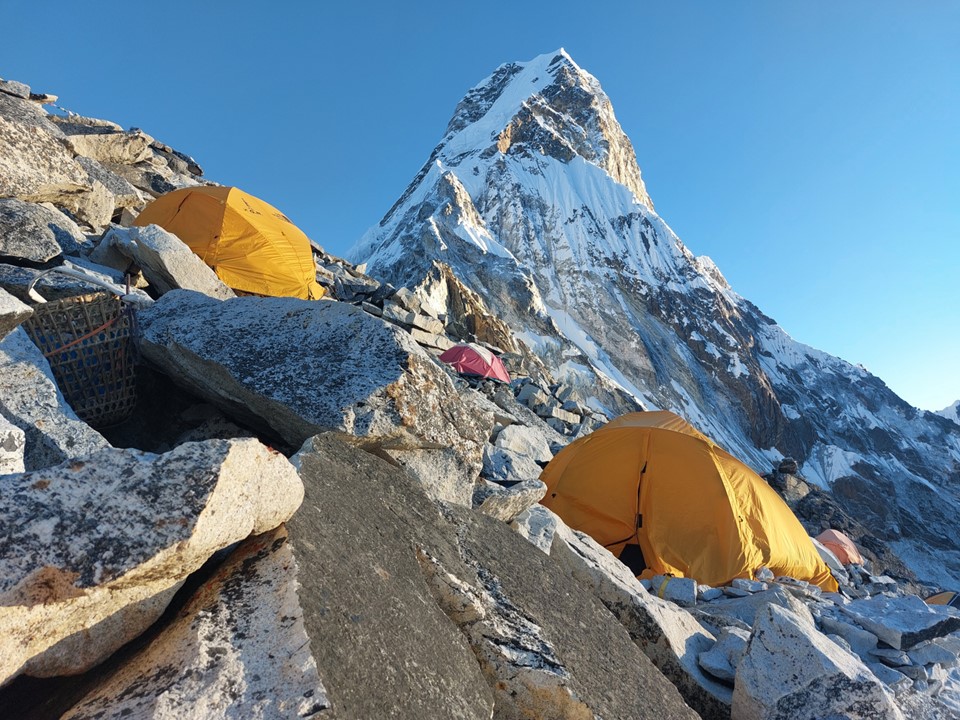
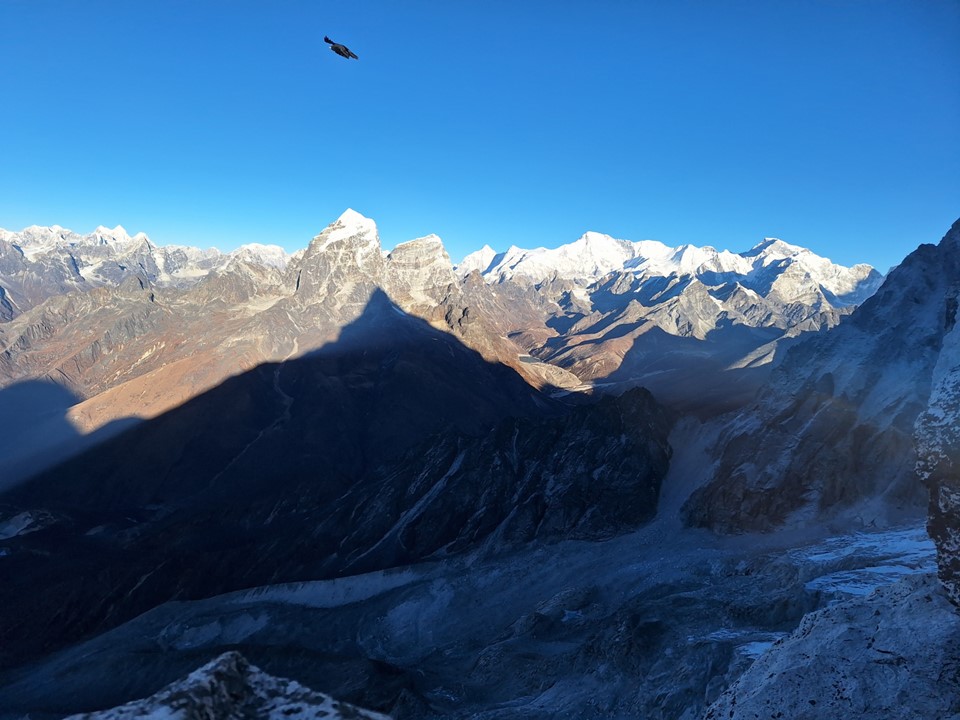
I was feeling a bit better than I was on the previous try, and decided that I was going to enjoy my time in camp one. Last time I had barely looked around or enjoyed the view – this time I was going to put all my warm clothes on and watch the sunset and sunrise, I was going to take photos and I was going to enjoy it. And I’m happy I did – camp one is unquestionably the most beautiful location I have ever been to, and I spent more than an hour that evening and 3+ hours the following morning just absorbing the views.
What follows is some of my favourite photos from this period. Many are the same angle with different lighting.
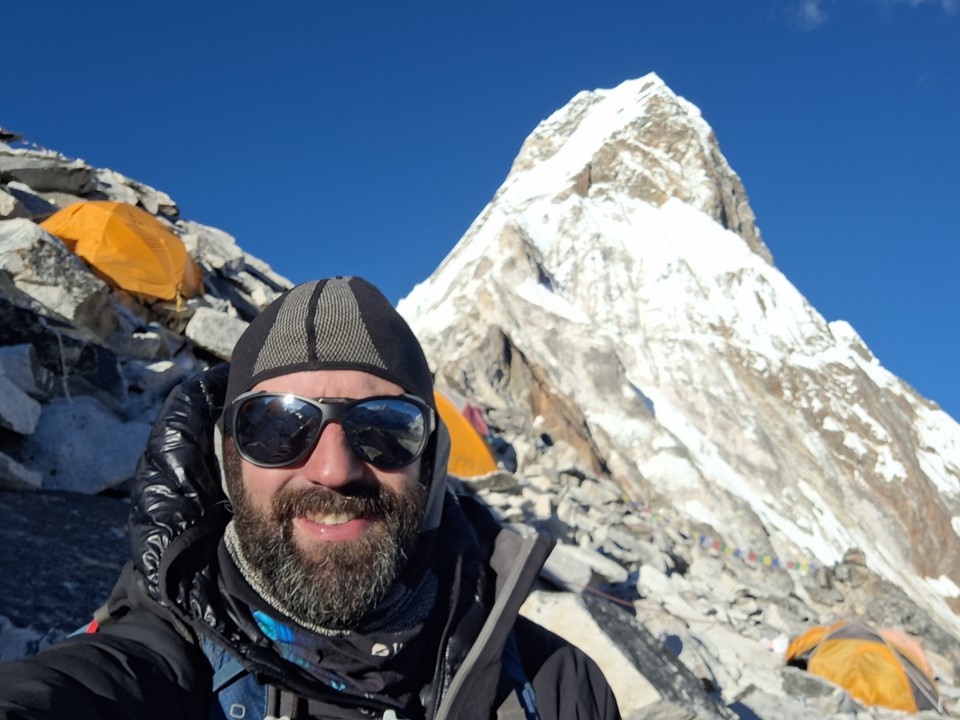

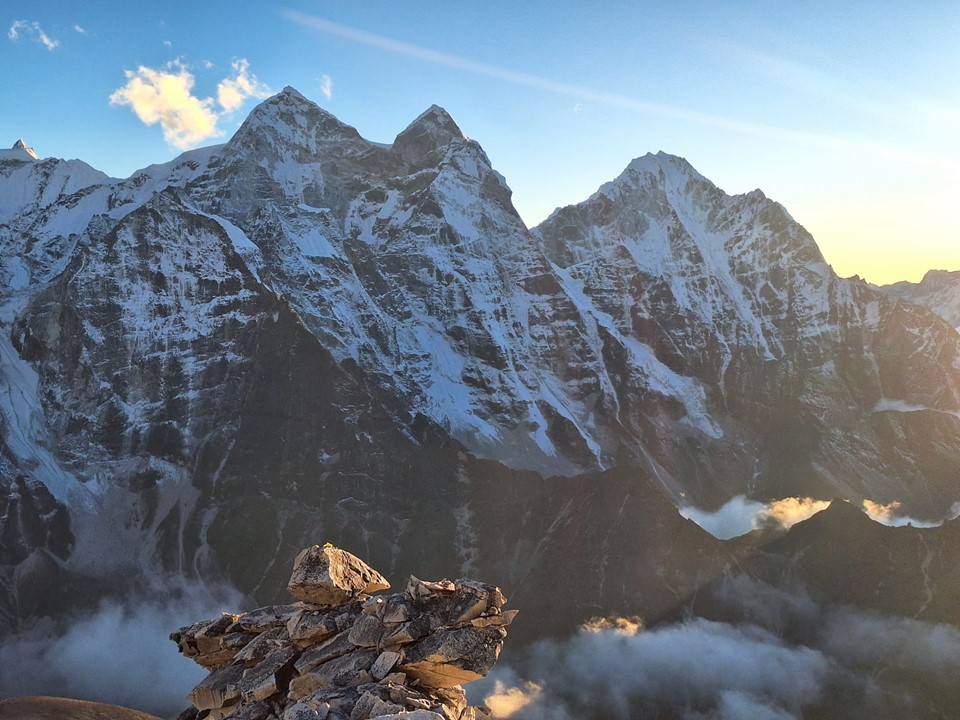
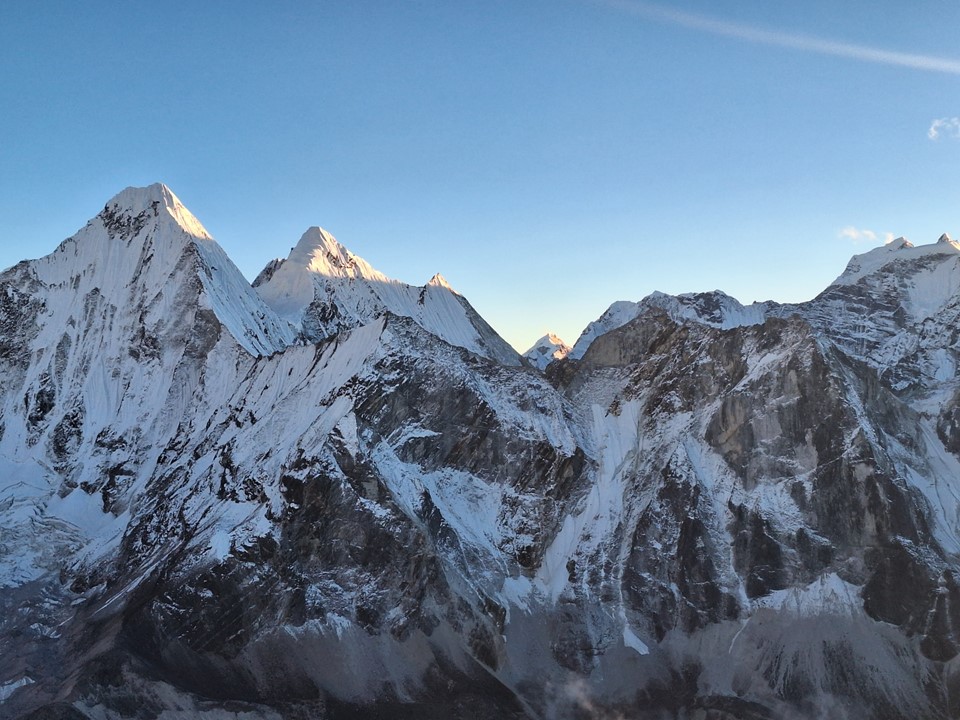
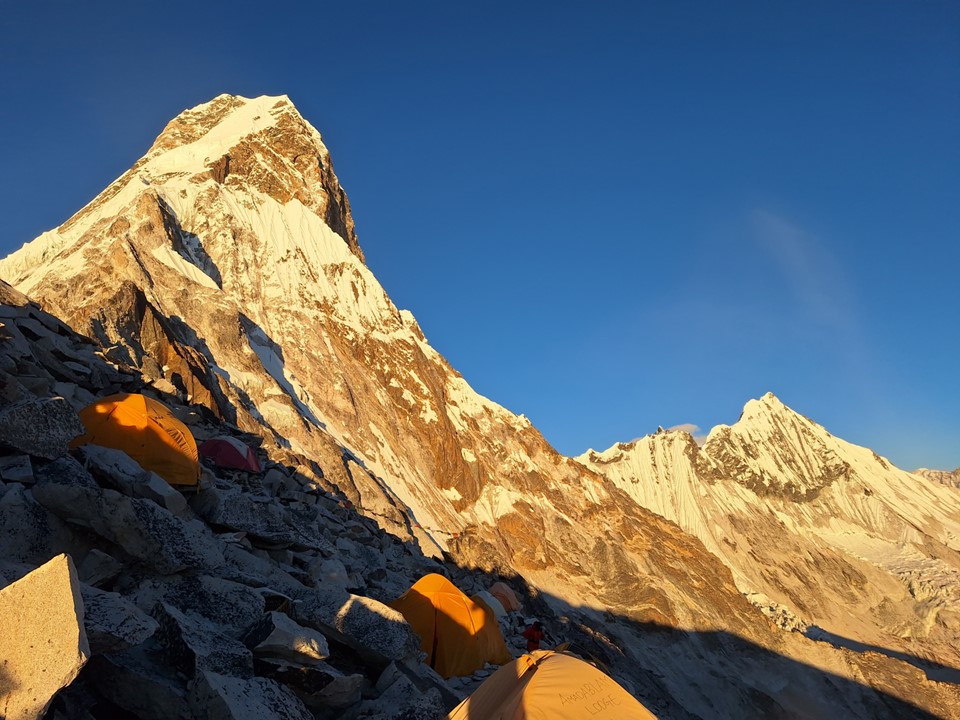
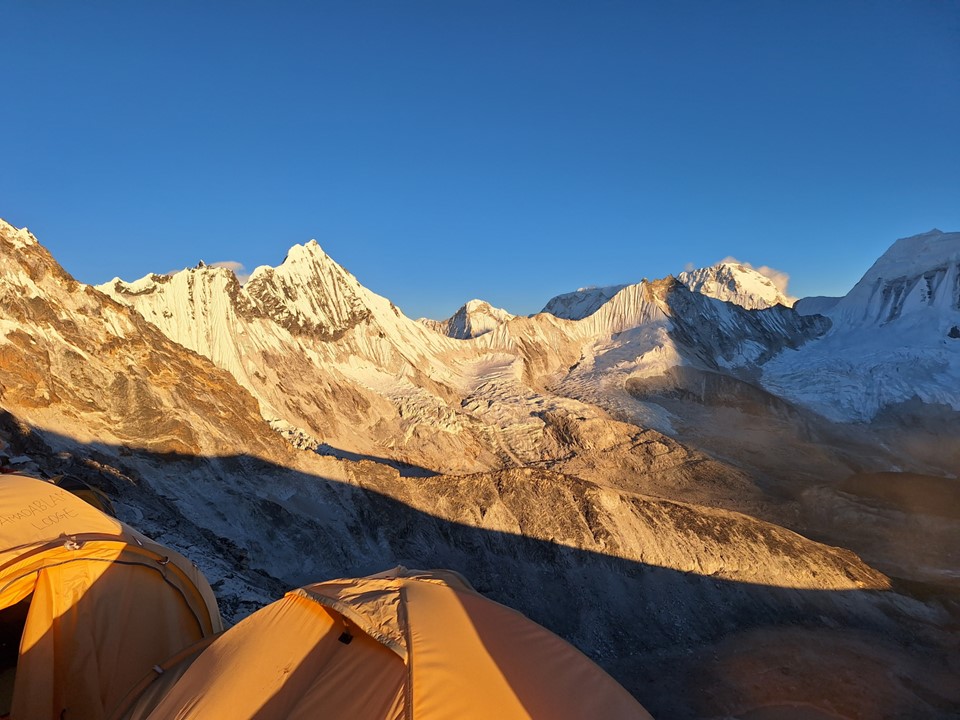



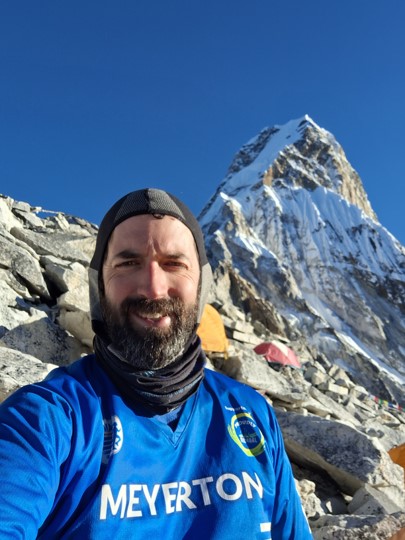
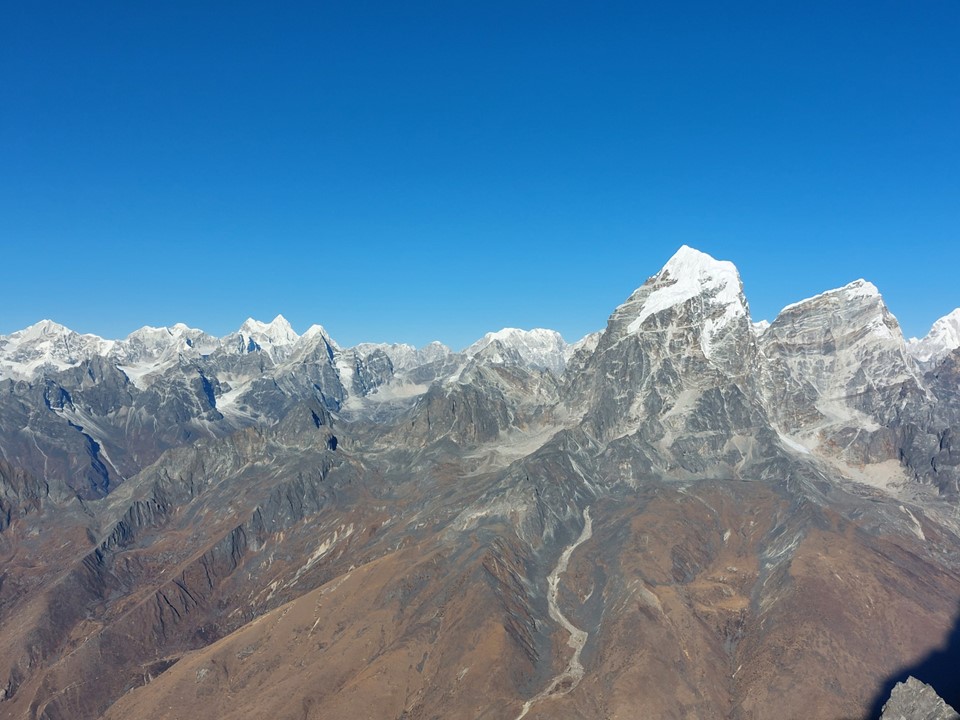
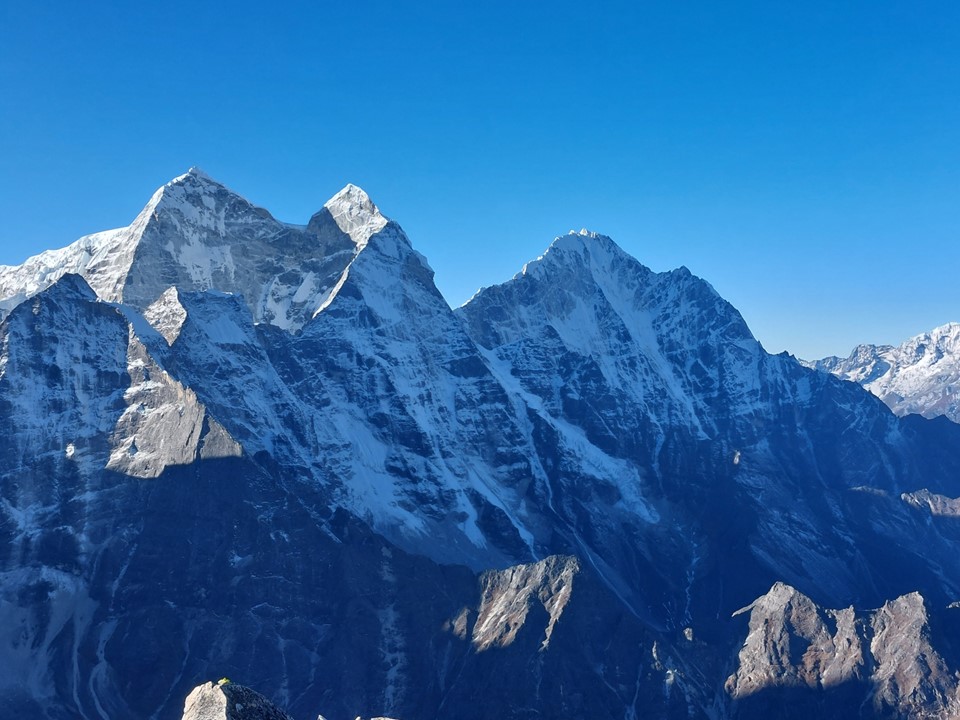
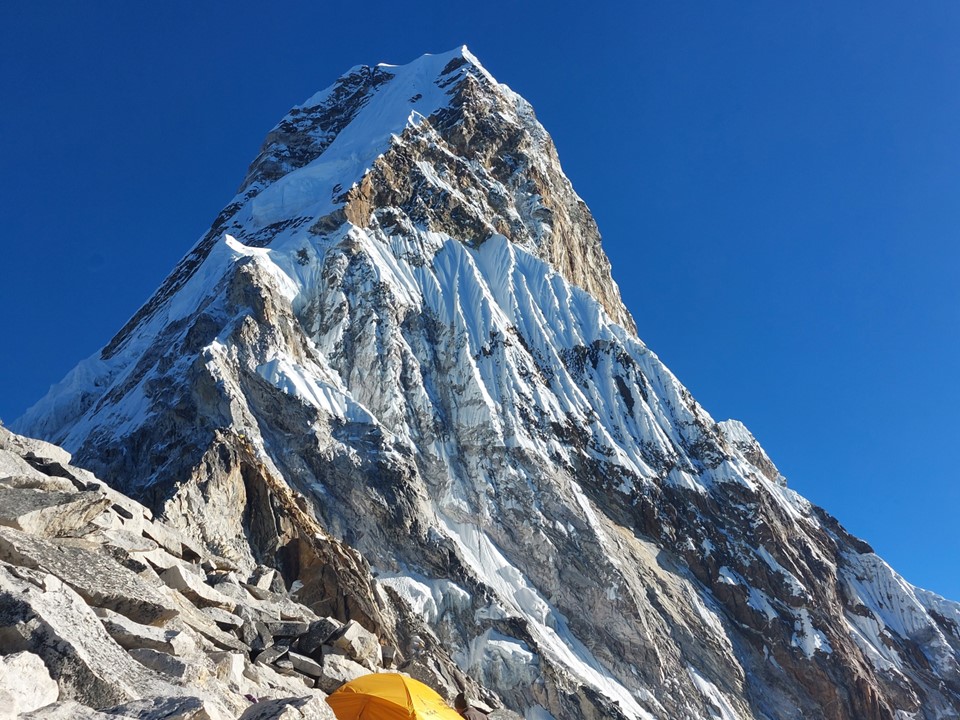
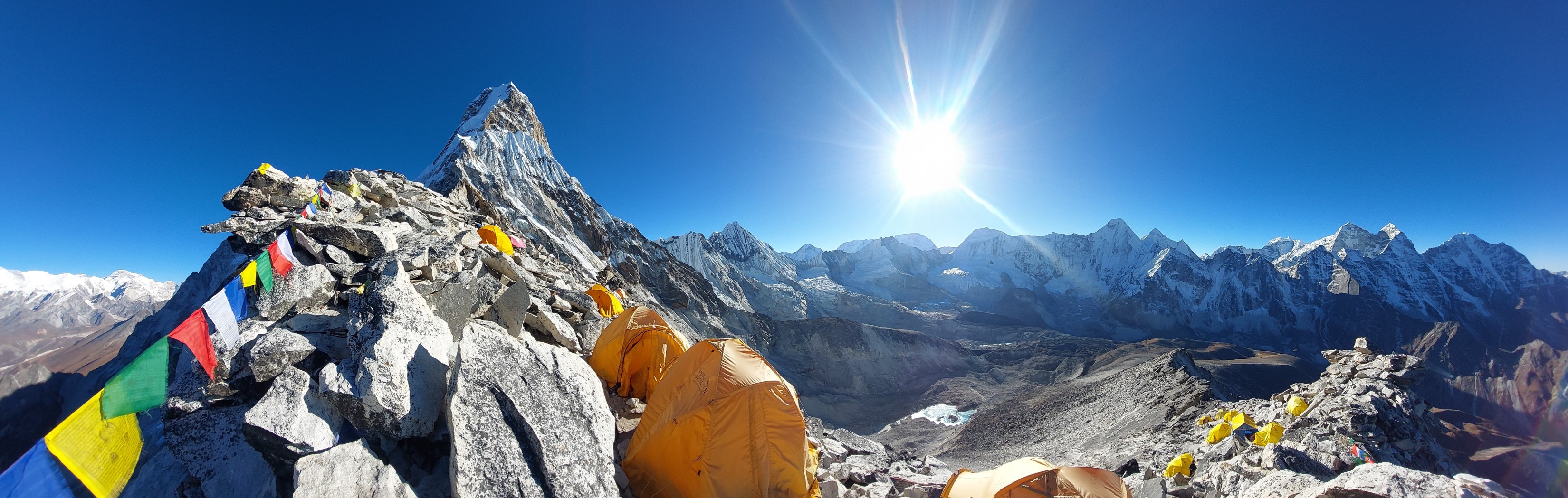
I have a bit of an odd tradition of trying fast raps at higher elevations. I made it halfway through a verse at 5950m on my first attempt up the mountain, but decided to have a go at a slightly easier rap at 5800m just to ensure I had completed a rap at higher elevation. I almost lost it a few times, but managed to push through – not perfect by any means, but still the highest elevation I’ve managed to complete a verse at.
Chuldim returned from the gear stash around 11, and soon we were on our way back down the mountain. Before I set out I had said the primary goal was to get home safely without any major injuries – on the bright side, I was set to achieve this. Admittedly I had hoped to at least reach camp two, and one might ask why I didn’t at least try for camp two if I was feeling a bit stronger on the second try – to put it simply: I don’t know if I’ll ever attempt this mountain again, and I didn’t know if I had the strength to reach camp two on this attempt in any case. I wanted to sit and enjoy the amazing location while I could – and that is not a decision I regret by any means.
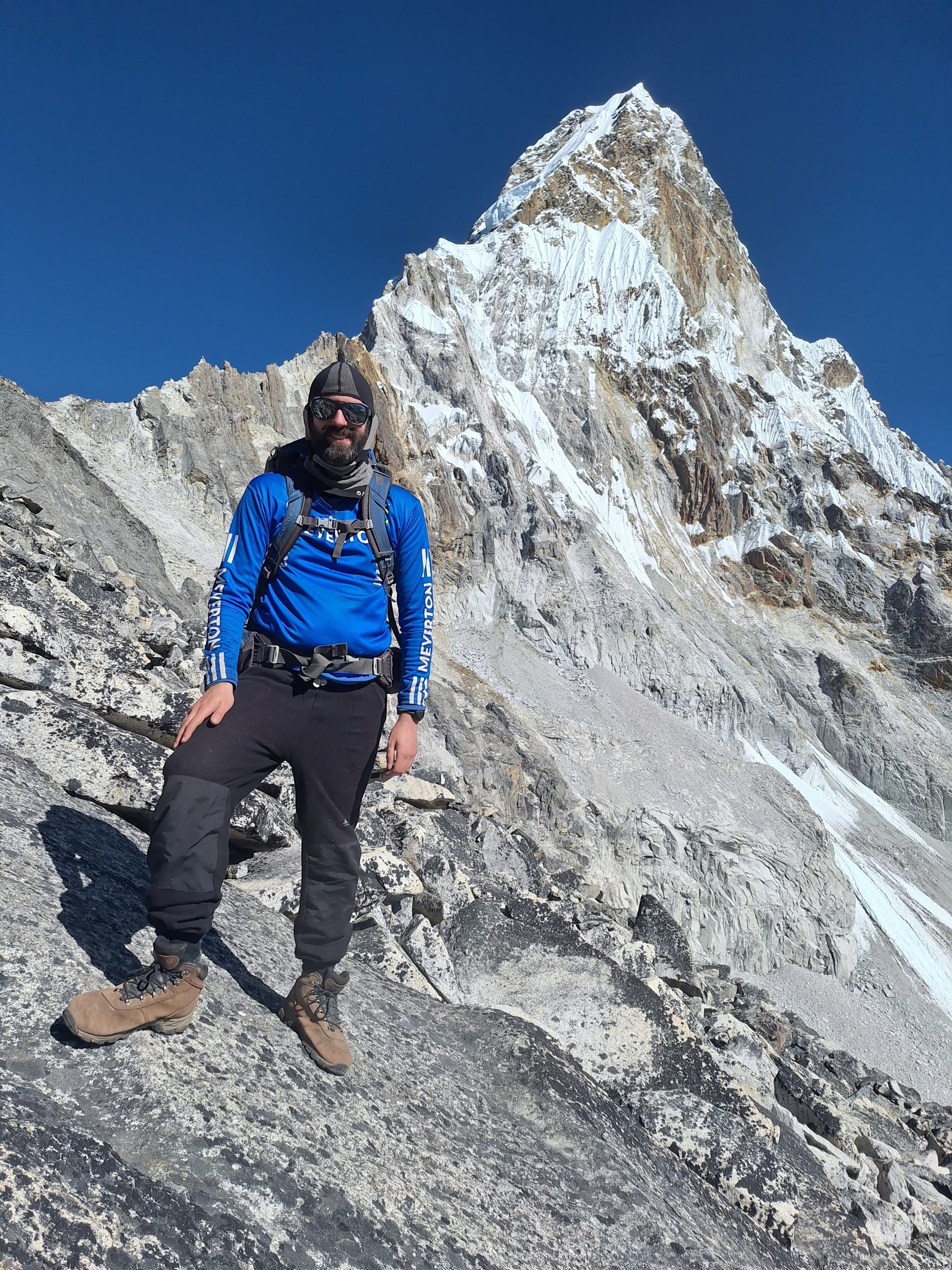
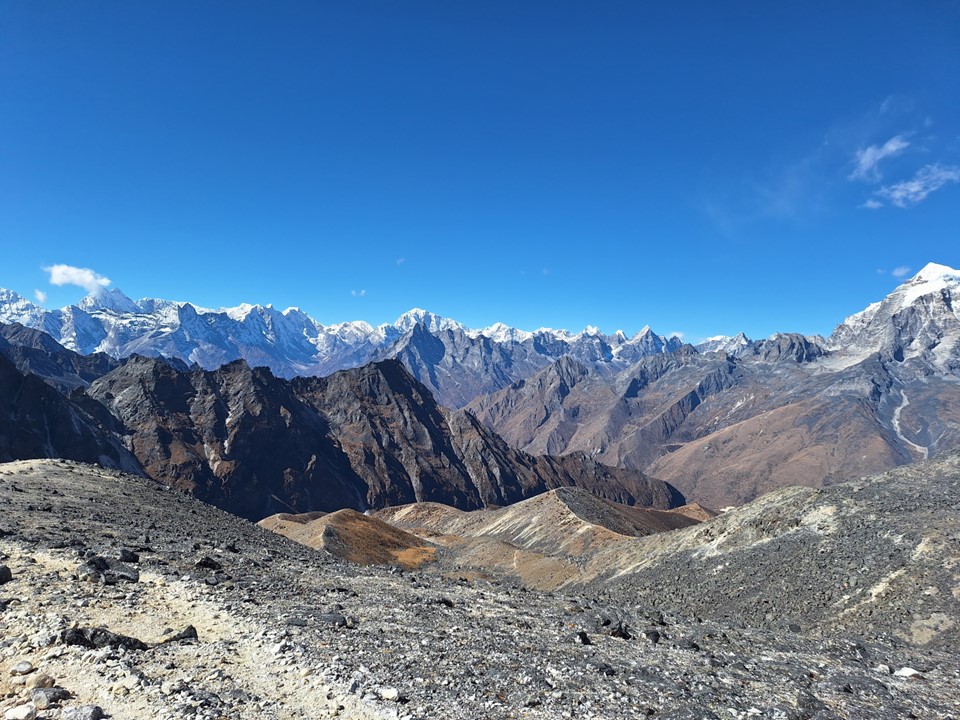
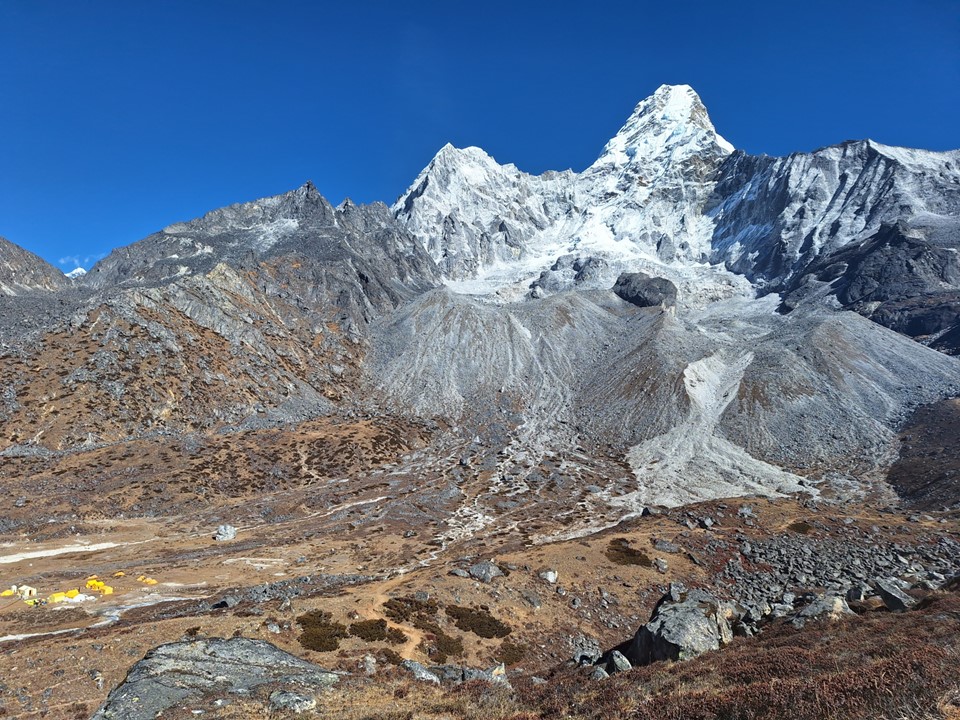
The walk down to basecamp was uneventful, and this time we were back well before dark.
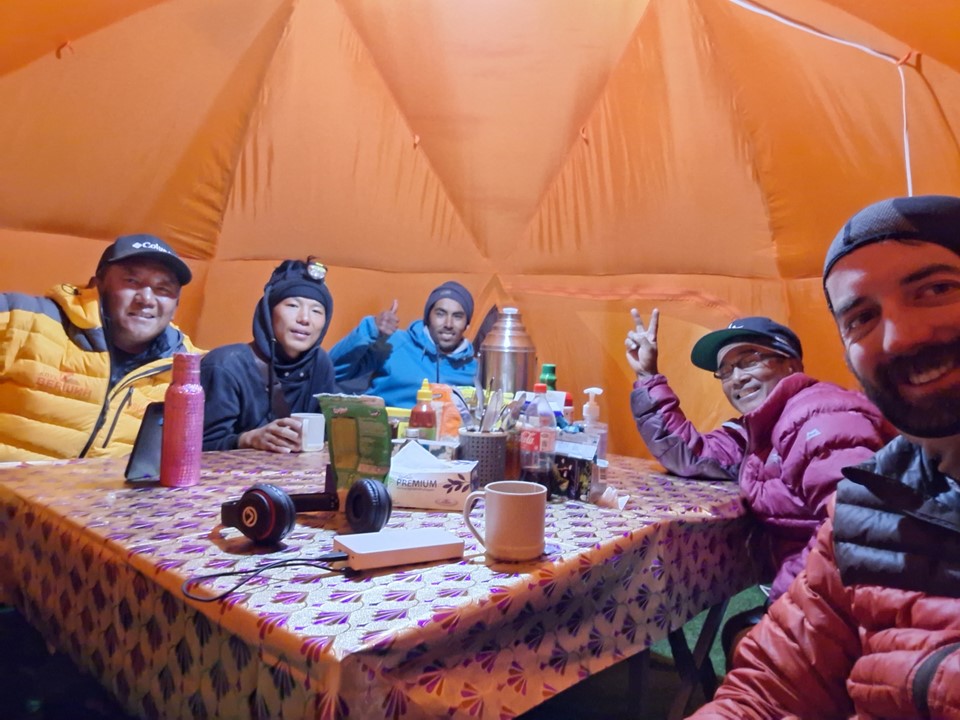
L-R: Chuldim (guide), Basanta (porter) and the cook and his assistant whose names I unfortunately didn’t write down. I’m on the right.
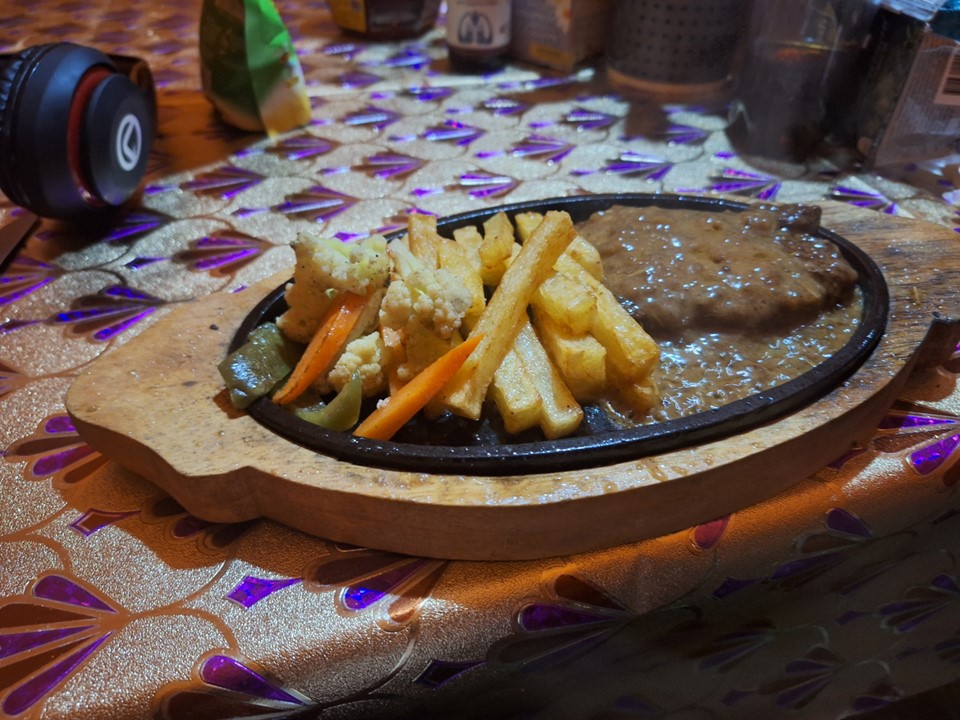
We had a celebratory dinner of buffalo steak and chips, and a cake for dessert. This was the end of the season – most of them will have to wait for March before they can get paying work again. An economy that relies so heavily on seasonal mountain tourism will always have this problem – a point one must remember before trying to bargain down the guiding fee for a trip.
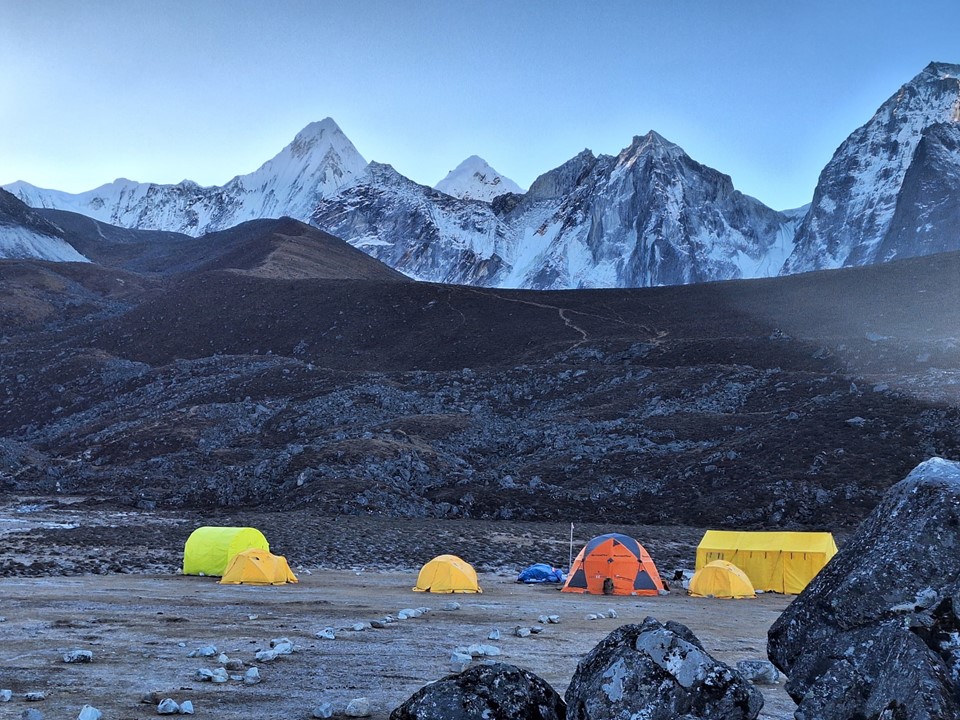
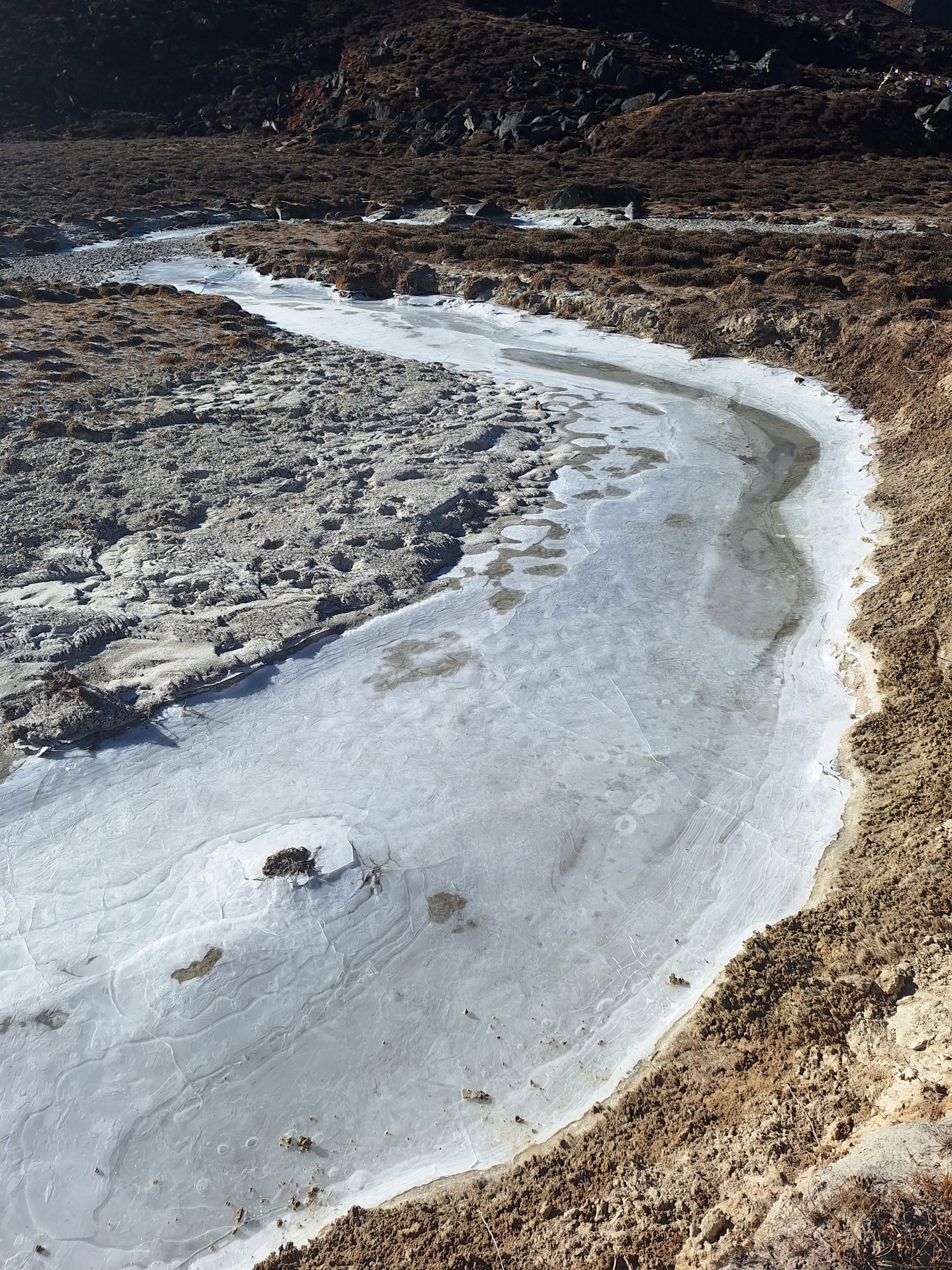
Waking up in basecamp for the last time was sad. I knew I would soon have better food and better accommodation, but whether or not I’ll ever find myself back in Ama Dablam Basecamp is a different question. I don’t know if I’ll ever attempt Ama Dablam again – there are so many mountains on this planet that I’ve never even seen, so to retry one I’ve already spent so much time on seems counterproductive. That being said, maybe some day in the distant future I’ll find myself there again trying it one more time – I definitely can see myself returning to the Solukhumbu Region someday.
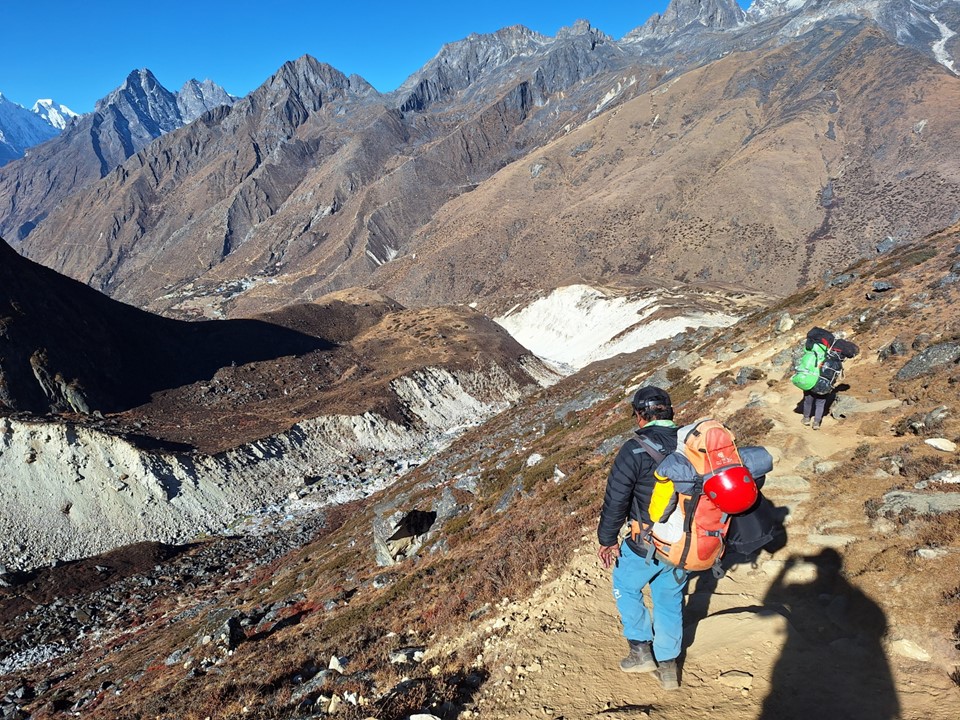
As we got down the hill, we got phone signal for the first time. I posted some messages and photos, and we kept going.
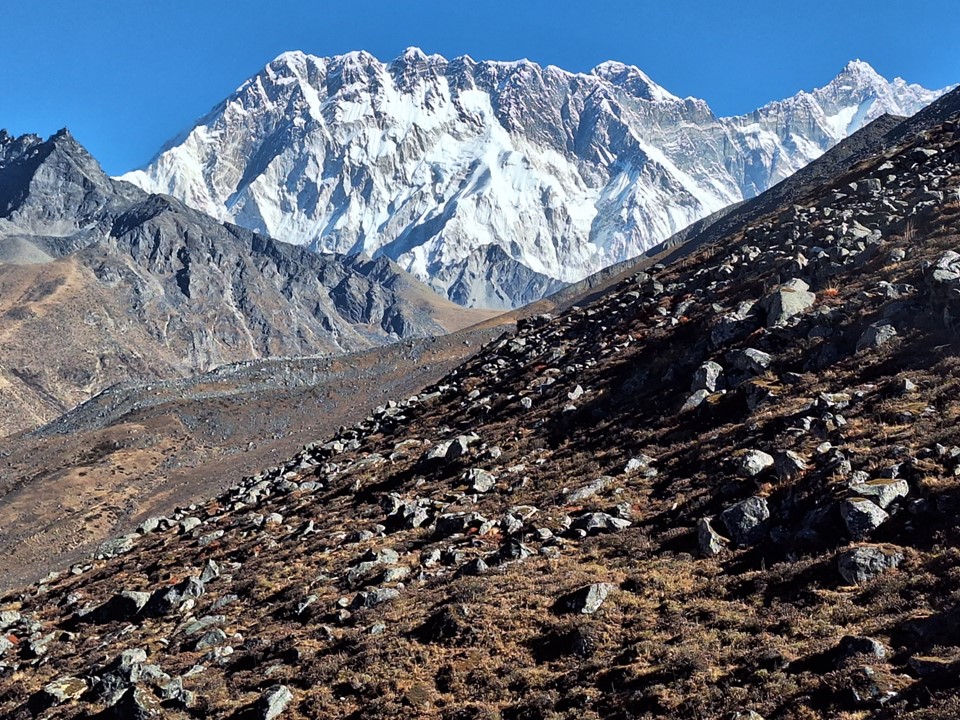
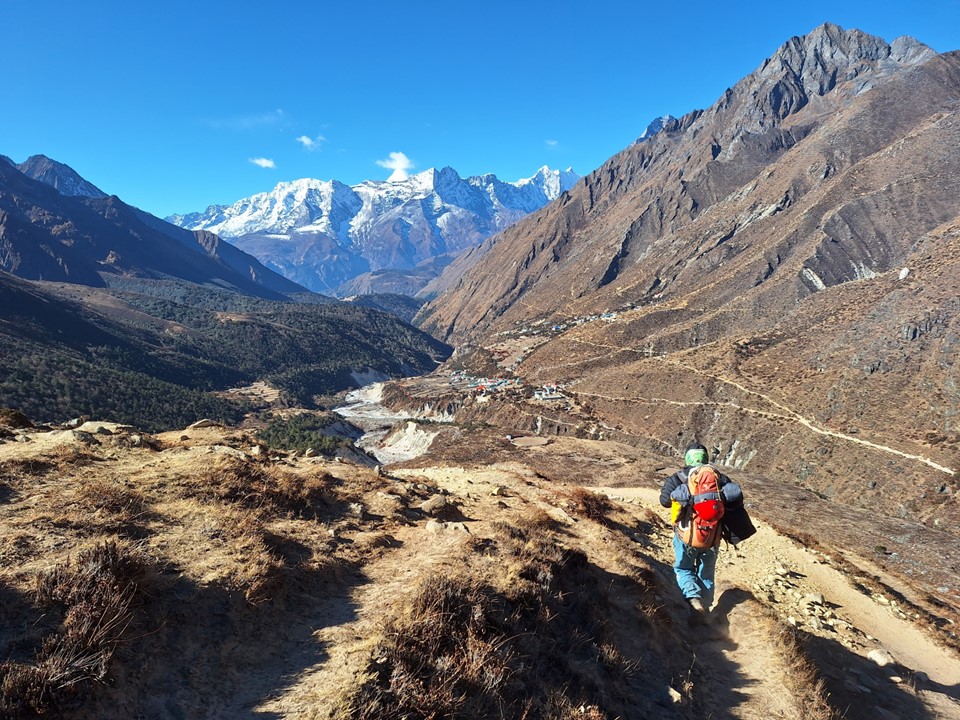
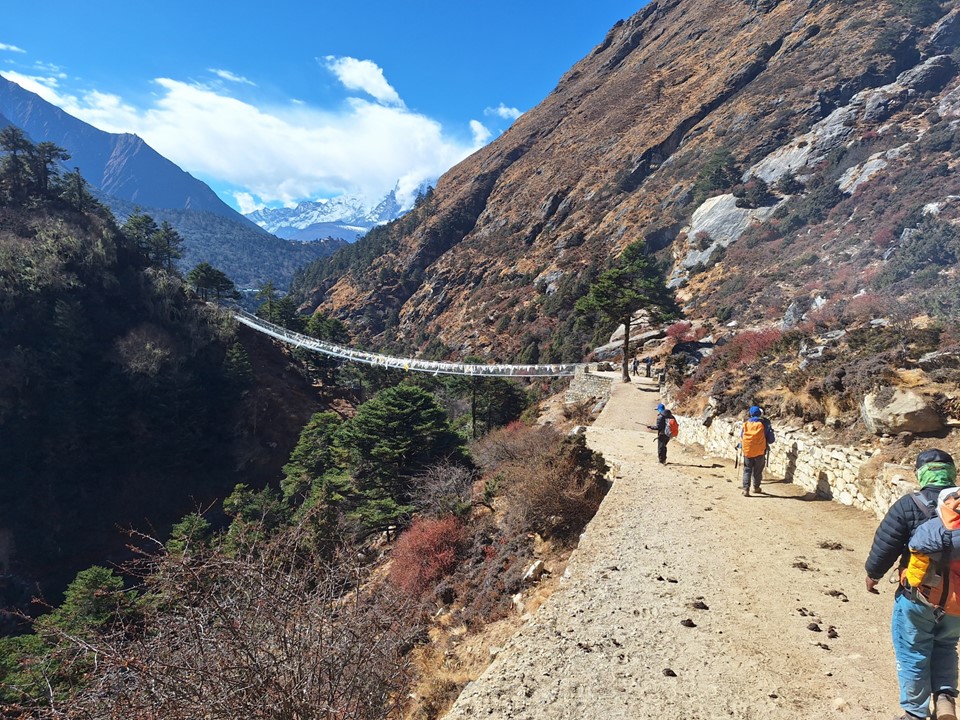
This time we would be taking the standard tourist route down the valley, trying to cover ground as quickly as possible – it is a long way from basecamp to Khumjung.
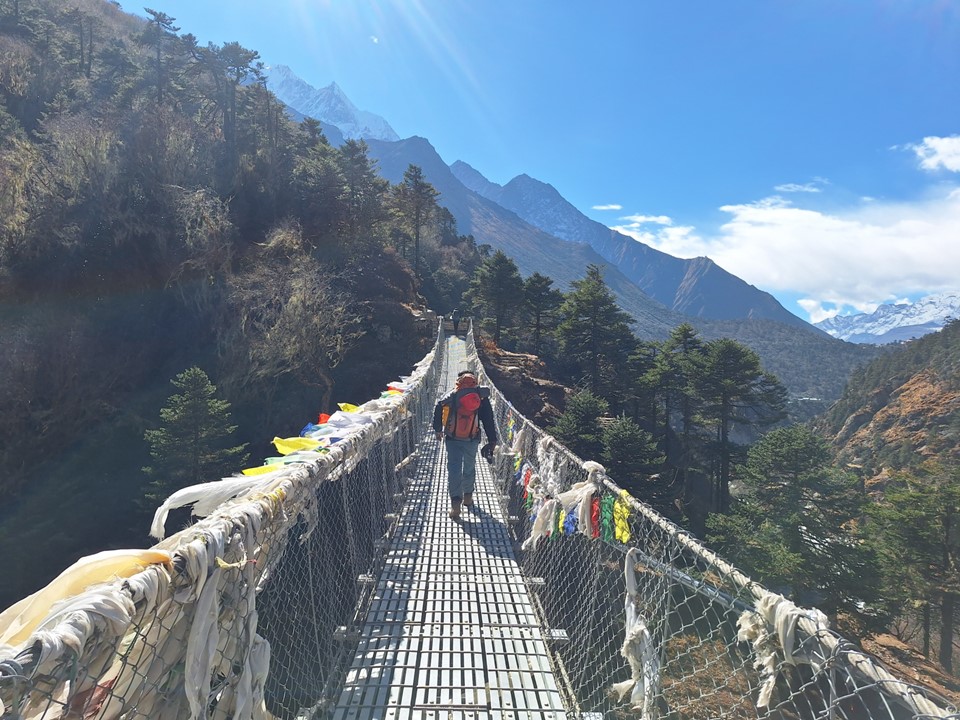
At one of the stops, I checked my whatsapps, and amongst a series of “good effort, better luck next time” and “maybe next time do blah blah blah”, there was a message from someone at work with an emergency I would have to deal with – no one else could sort it out. The rest of the day would be spent with my mind very far away from Nepal and not able to enjoy the location I was in.

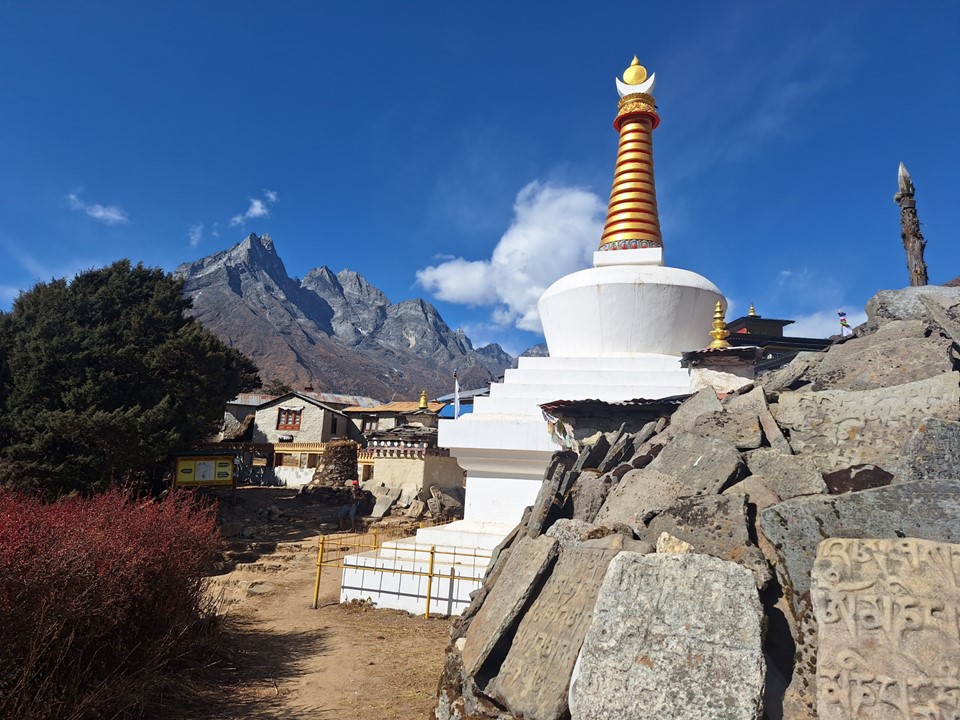

On the way down the hill from Tengboche, I saw a Comrades Marathon cap and stopped to chat to the hiker. Turns out it was a runner from the Jeppe Running Club – a club I often encounter during road races. Always great to meet someone from South Africa out in the mountains!
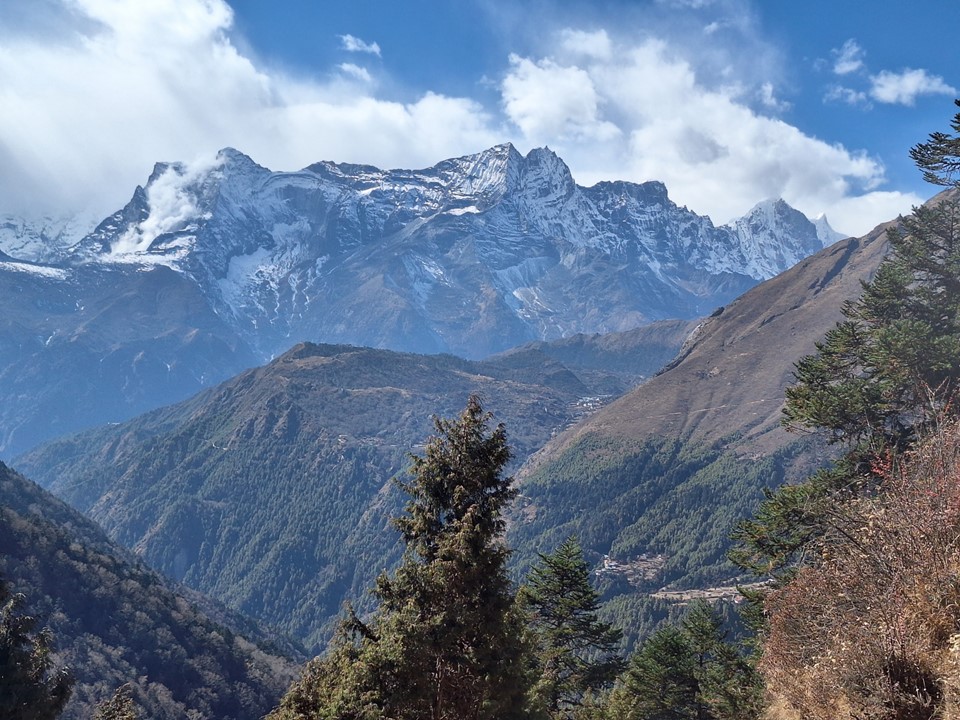
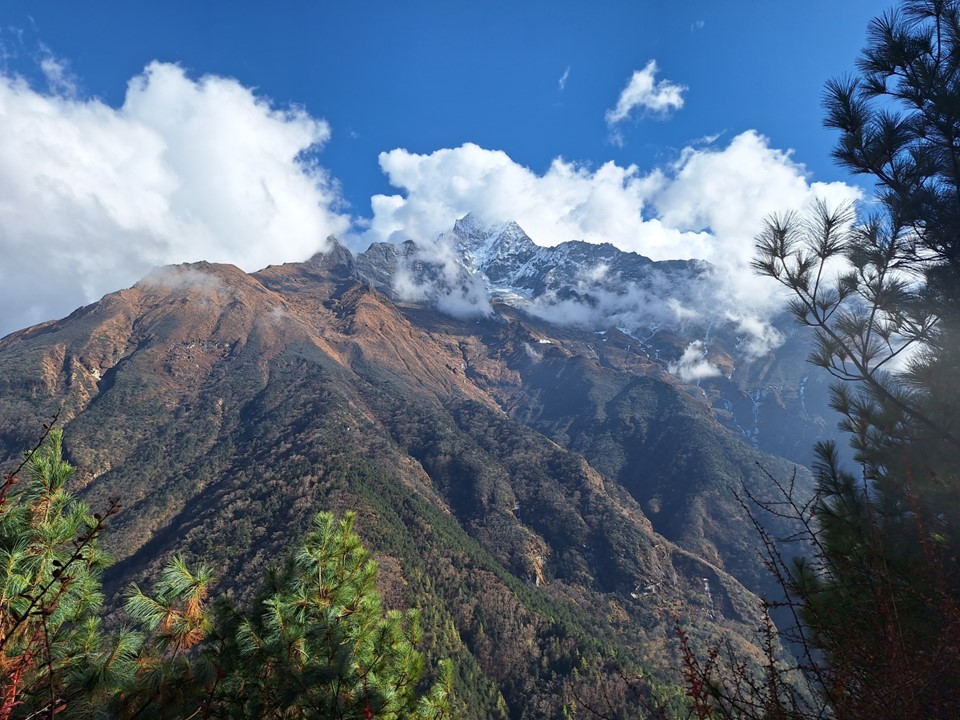
As we neared Khumjung, we saw some mountain goats. We had seen one near Phortse on the way up, but this time it was a fair number of them, and right next to the trail. I got out my DSLR and my large lens to get some photos, although we actually got very close to one of them.
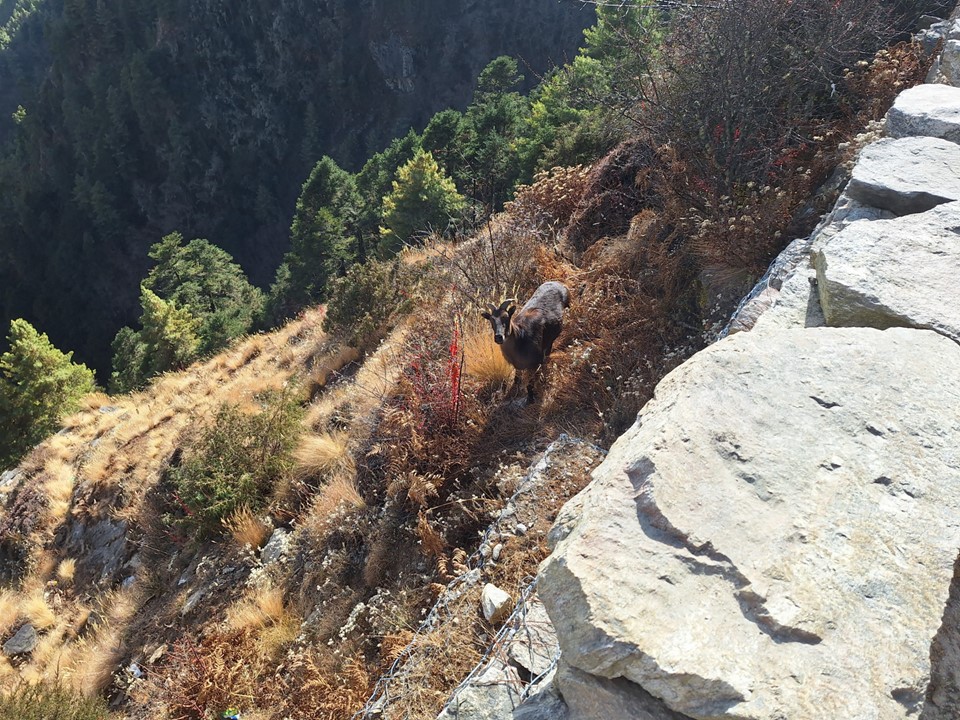
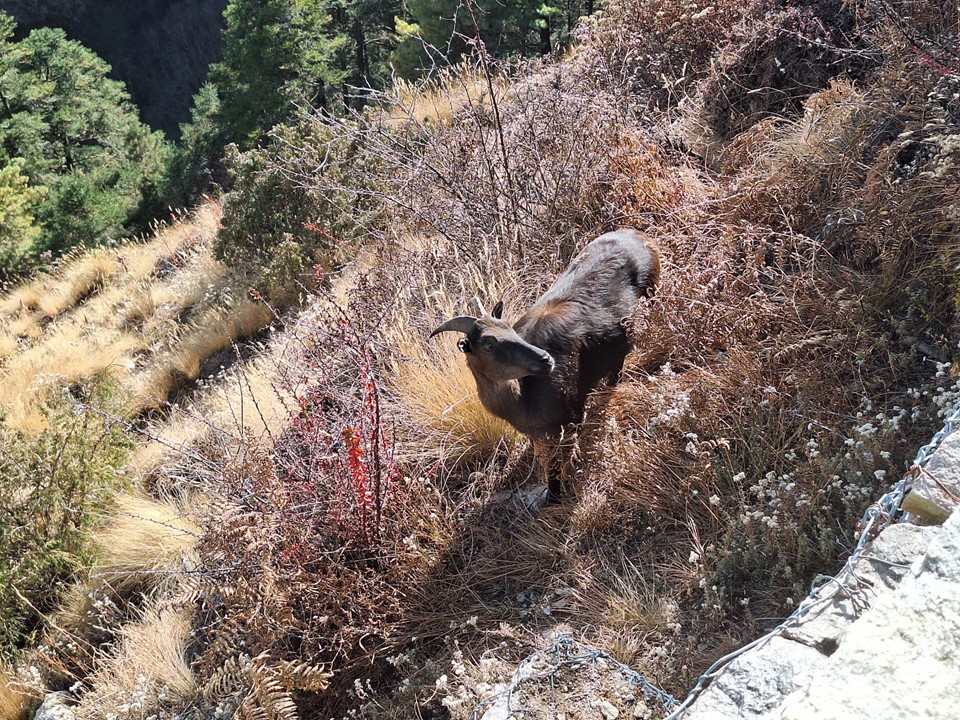
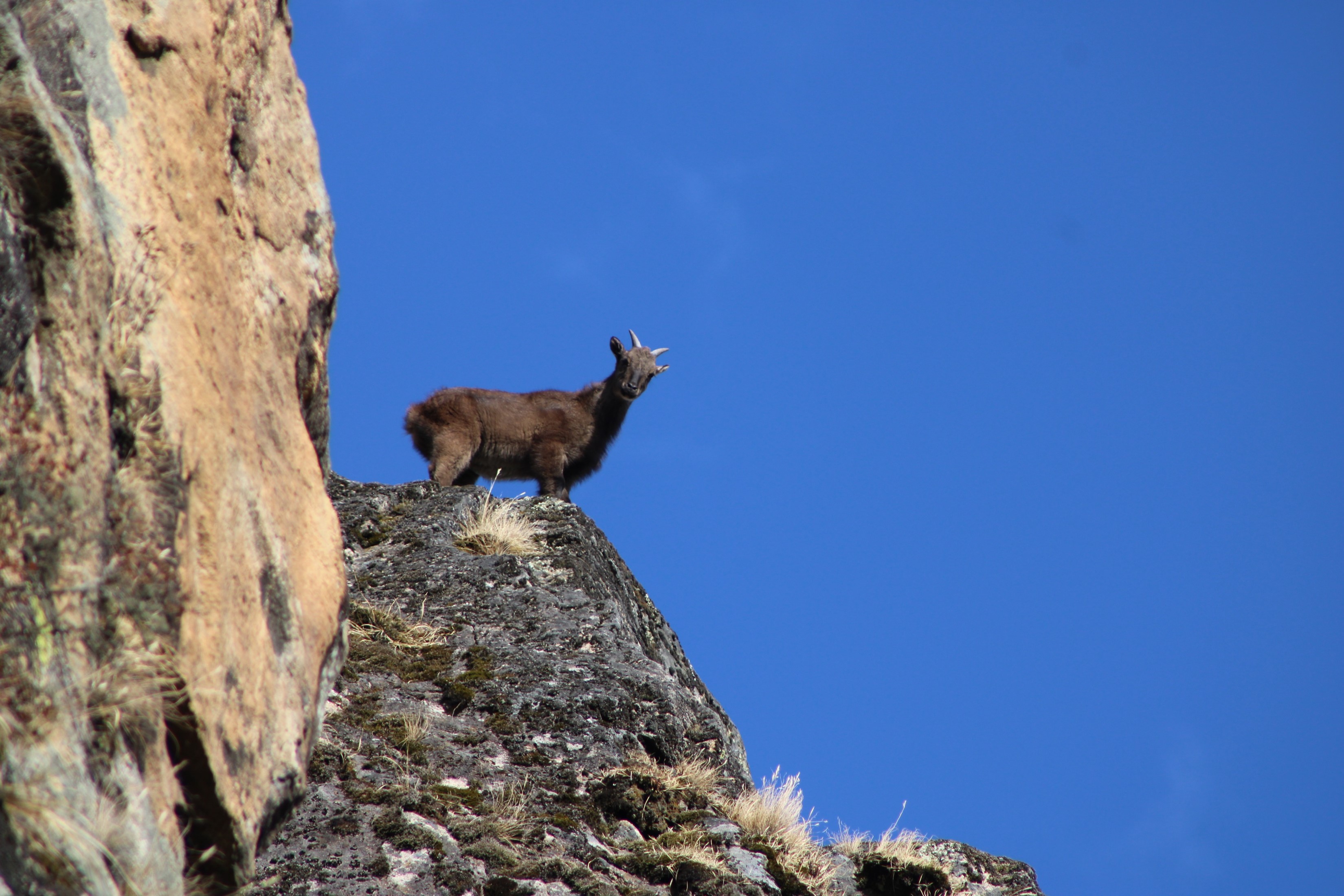
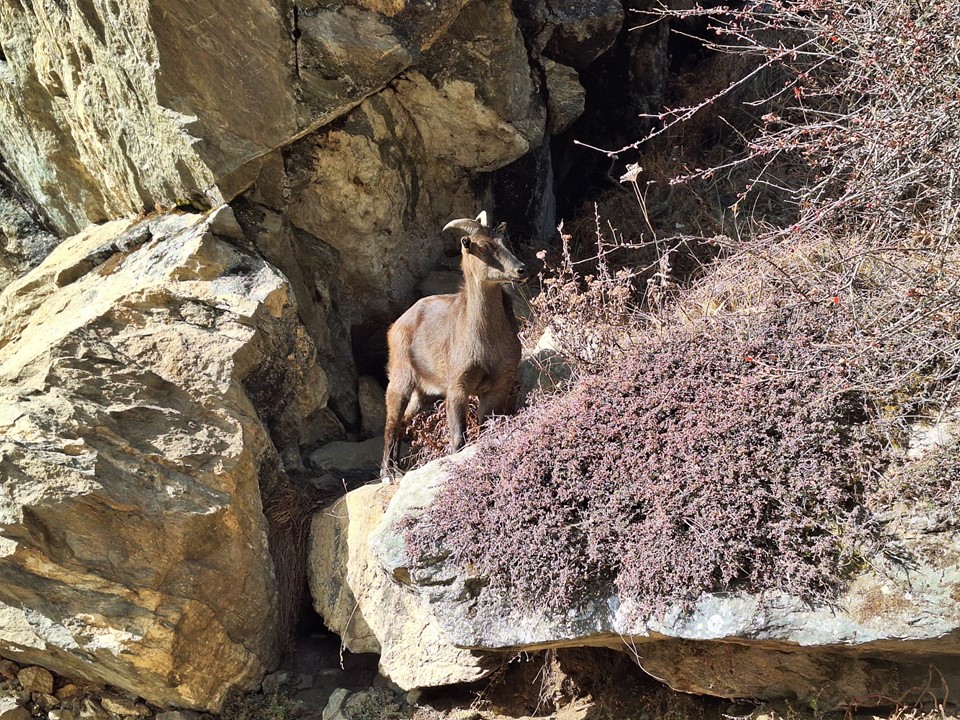
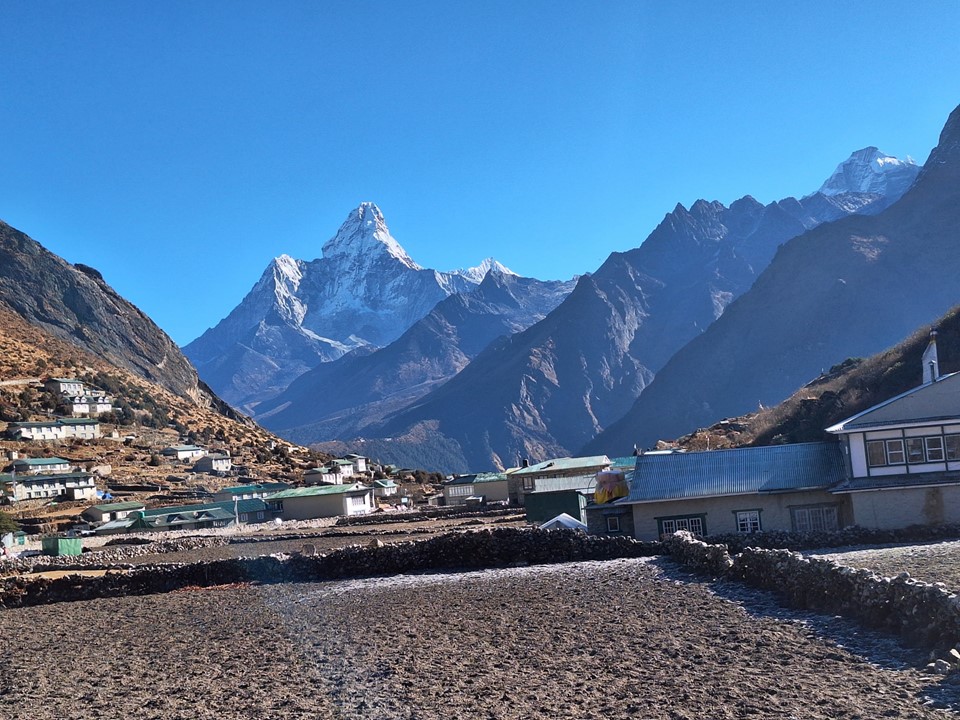
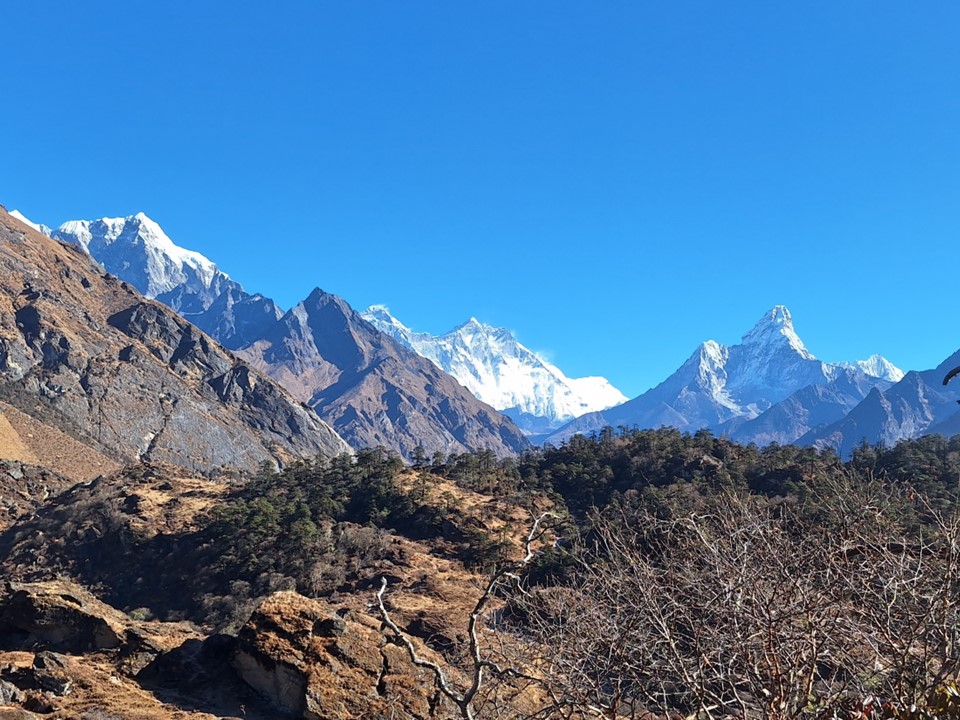
We were soon back in Khumjung. The amazing views of Thamserku and Ama Dablam, good food, definitely one of my favourite towns in the Khumbu.
After saying farewell to Pasang, we set off for Lukla. I had a series of work meetings later in the day and wanted to reach Lukla in time so I would have good signal, so the plan was to start early and go fast. Well, that was my plan anyway.
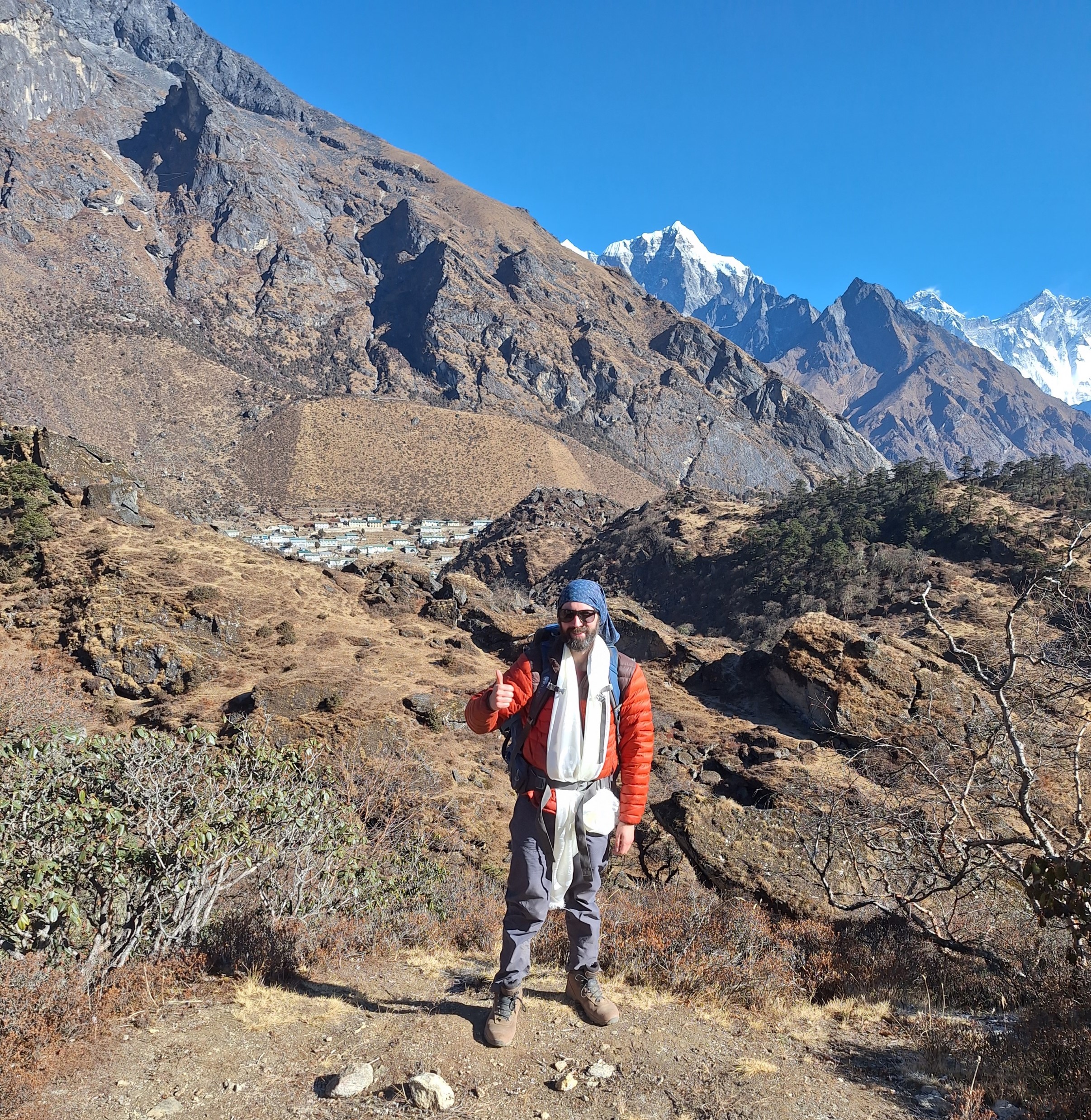
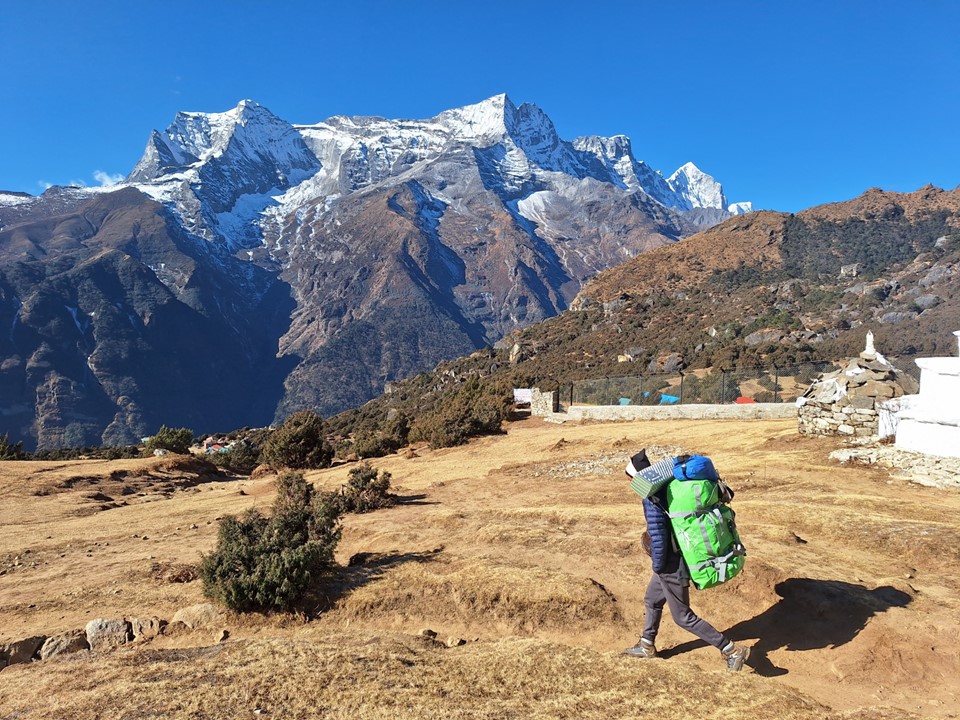
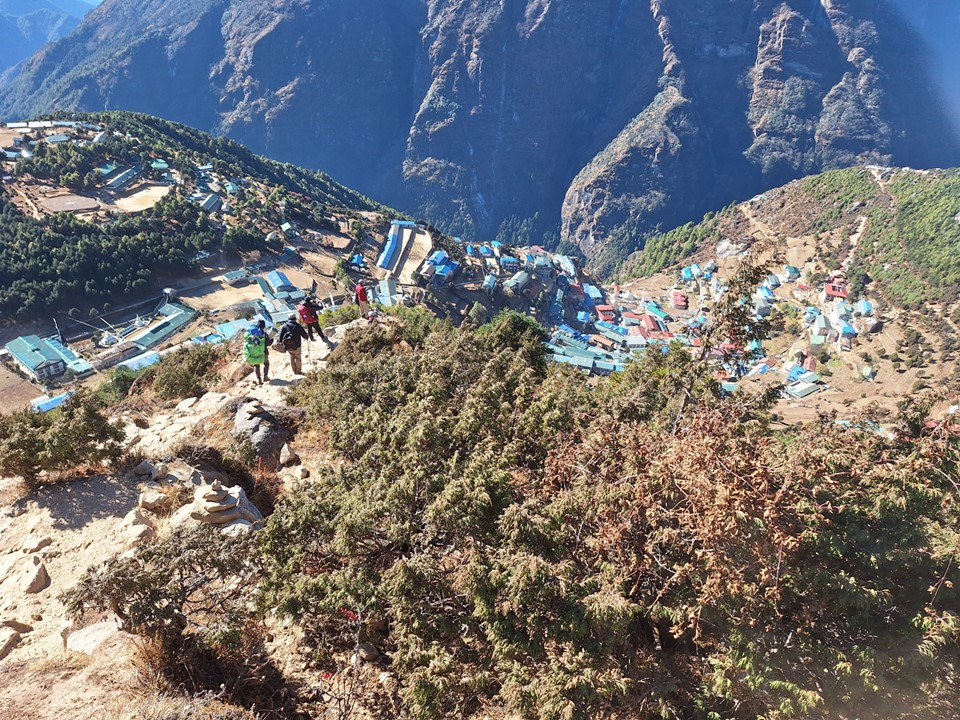
We stopped for tea in Namche, a break that was far longer than I would have liked.
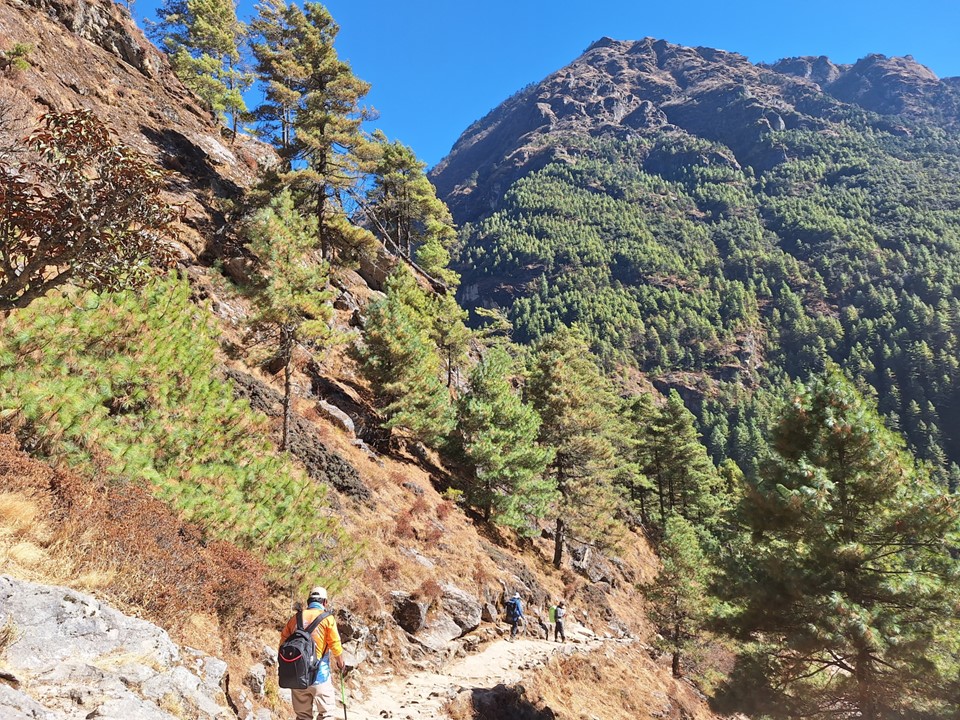

By the time of my meeting, we were still 8km from Lukla, and finding reliable signal wasn’t easy. I eventually found a ledge I could stand on with signal that held for most of the time. These three meetings took close to two hours, and I was very grateful for Chuldim’s patience during this. The good news was that it was agreed that I didn’t need to rush home to sort everything out. It was Friday afternoon, and I had to do the expedition debrief at the Tourism Office in Kathmandu before I could fly home – failure to do so would get me a lifelong ban from ever returning to Nepal, so it wasn’t a simple case of racing back to Kathmandu and moving my flight.
I had decided to spend my last few days in the country in Pokhara. I needed to be somewhere with signal to resolve any work issues, and I really didn’t want to spend a week in Kathmandu.
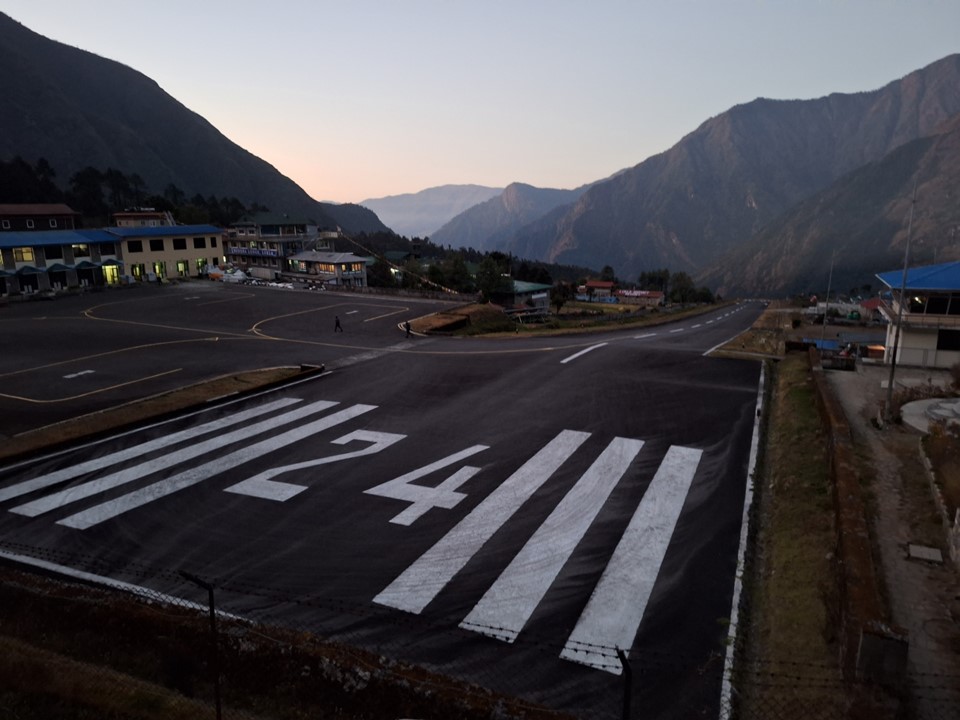
We arrived in Lukla as it was getting dark. It had just started raining as we walked in – in my 43 days I have spent in Nepal (all autumn), this was the only time it ever rained.
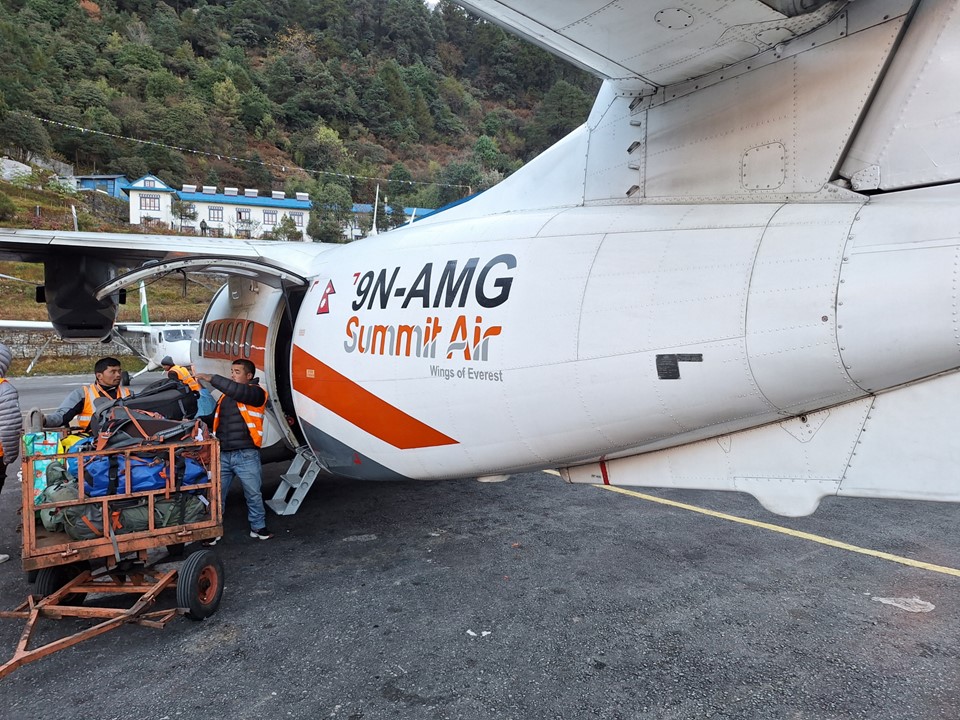
Pasang had managed to get me on the first Summit Air flight from Lukla directly to Kathmandu – so I had managed to skip Ramechhap yet again. It is always crucial to be on the first or second flight as the third flight often gets cancelled. He had also booked me an afternoon flight to Pokhara for the same day, in something reminiscent of my visit to Nepal in 2022.
Landing in Kathmandu, his son – Mingma – picked me up at the airport and took me to the Fuji Hotel to drop most of my gear off. We got some lunch and got a map of the Annapurna Region (I had left my one at home as I assumed I wouldn’t need it) and I was dropped back at the airport.
Pasang suggested I ask to be moved to an earlier flight, which I did. The person at the ticket counter apologised that I coundn’t be moved to the flight that would start boarding soon as their system doesn’t allow them to move people to a flight that was already supposed to have landed on the other side. I was instead moved to the next flight for the afternoon, which was supposed to take off around the time my ticket was issued. It would only depart two hours later.
My story of my time in the Annapurna Region will follow soon.


 Ghaznavid Hiking