As someone who goes hiking multiple times a month, I tend to destroy trail shoes fairly quickly. The most distance I have ever managed to get out of a trail shoe was my first pair of Hi-Tec Flash Forces back in 2015 – which I got 753km Drakensberg distance out of before having to retire them. I would proceed to destroy another two pairs of these shoes.
When the Flash Forces were discontinued about 5 years ago, it left a gap for a really good mountain hiking trail shoe, so when I discovered that Hi-Tec had released their new Geo-Trail Pro shoes, I was keen to try them out, and Hi-Tec SA agreed to send me a pair to test.
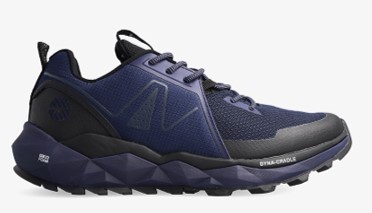
My first impression of the shoes was that they are very sturdy. It is always crucial to pick the correct tool for the job you are doing – if you want to win a 15km trail race on reasonably worn trails, a good lightweight shoe is needed. If you want to hike hundreds of kilometers on rough ground, a lot of which is off trail, then a sturdy shoe is an absolute must. Or for that matter, if you want to get decent distance out of a pair of shoes – a sturdy pair is essential.
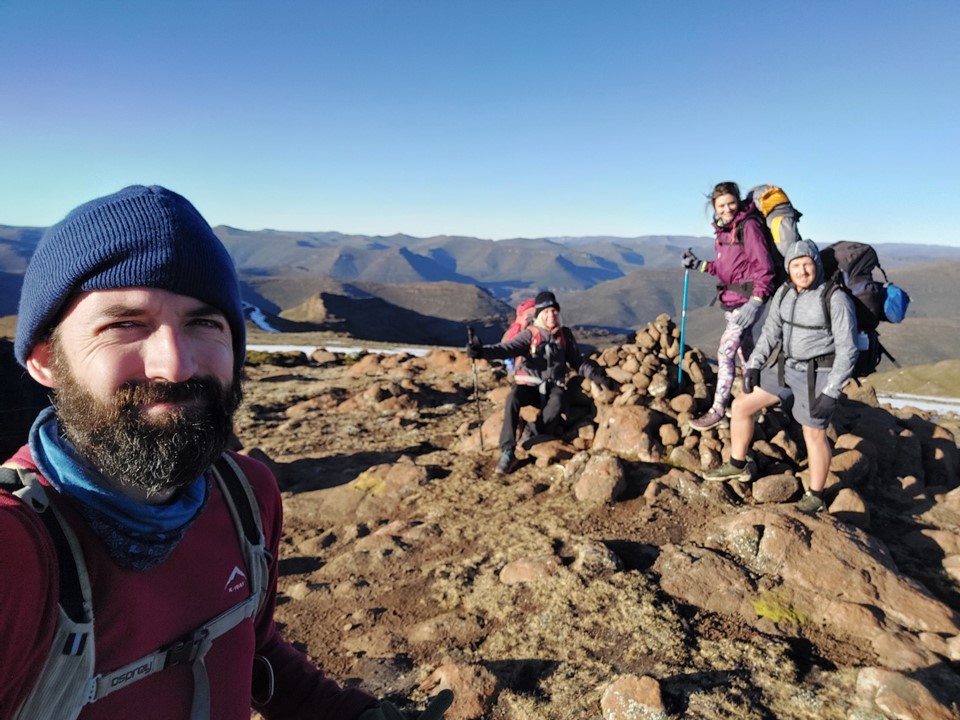
To test these shoes, I wore them in around town. I usually find Hi-Tec shoes don’t need much wearing in before their first proper use, but this pair did take a while to properly wear in – as one would expect for a sturdier shoe. I then proceeded to climb Mafadi in the Drakensberg, the 3451m peak that is the highest point in South Africa, in the shoes to give them a proper test in their intended environment.
Grip
One of the key aspects on any shoe used on more technical ground will be the grip. These shoes use a M-D Traction rubber outsole, which promises grip on all terrain types.
I have tested these shoes on Drakensberg sandstone, Drakensberg basalt and Gauteng quartzite – and have found the grip to be very good, even on wet rock. I have also used them on snow and mud and have been very impressed how they hold up. Don’t get me wrong – I wouldn’t use these shoes in deep snow, that’s the wrong terrain for trail shoes in any case, but they held up fine when crossing snow patches without the use of crampons or spikes of any type.
Weight
The shoes are roughly 440g each (i.e. 880g a pair) for the size 9, so not the lightest shoes around. The soles are reasonably thick and the back and sides are solid, so they are clearly not built to be ultra-light shoes in any case. This weight is about what I’d expect for a shoe that is midway between a hiking boot and a trail shoe, such as these.
Comfort
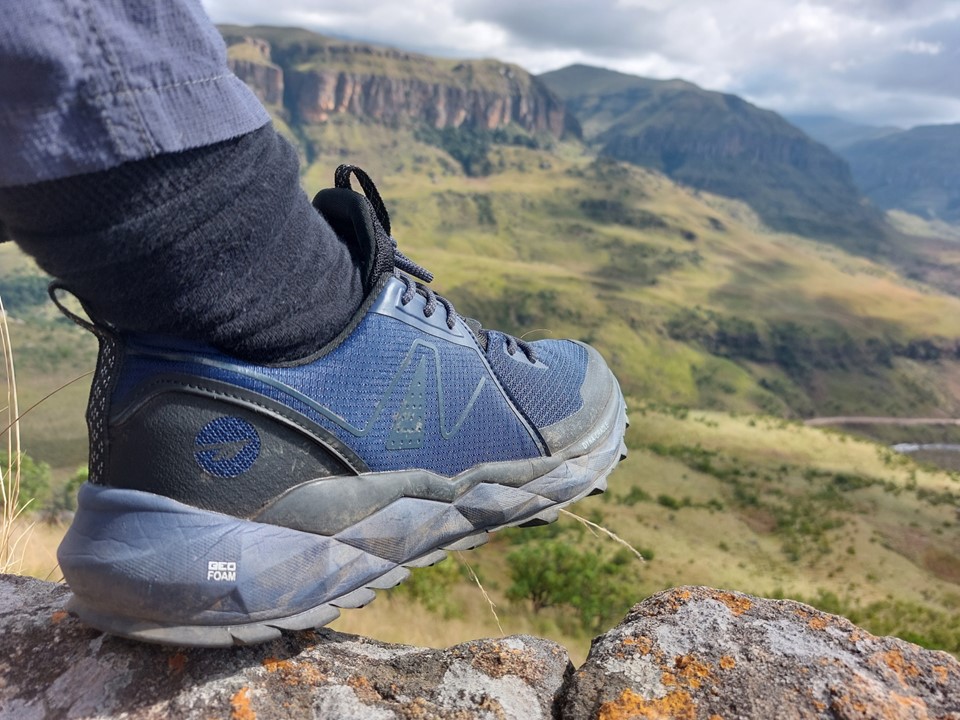
The shoes did take a bit of time to wear in, but once properly worn in they are very comfortable. The insole is fairly thick, which is great for absorbing impacts on less stable ground – which helped a lot when coming down Leslies Pass!
General notes
Ankle support isn’t something that trail shoes are generally designed to provide, but I find the ankle support on these shoes to be surprisingly good for a trail shoe.
The standard shoelaces that come with the shoes are a bit short. That’s easy to rectify – since a new pair of shoelaces isn’t exactly an expensive item to buy. The standard ones work fine, though, so this is a minor flaw. I haven’t actually replaced the laces on mine.
Overall opinion
These shoes fill a key role for trail runners who are looking for a durable shoe that will last a while, or for more strenuous hiking use. It would also make a great transitional shoe for those used to hiking in hiking boots but looking to switch to trail shoes.
My pair will mostly be used for those rugged no-trail mountains I want to climb that wreck shoes in no time. With the heavier duty materials used, it will likely outlast most shoes in terms of distance before retirement.


 Ghaznavid Hiking